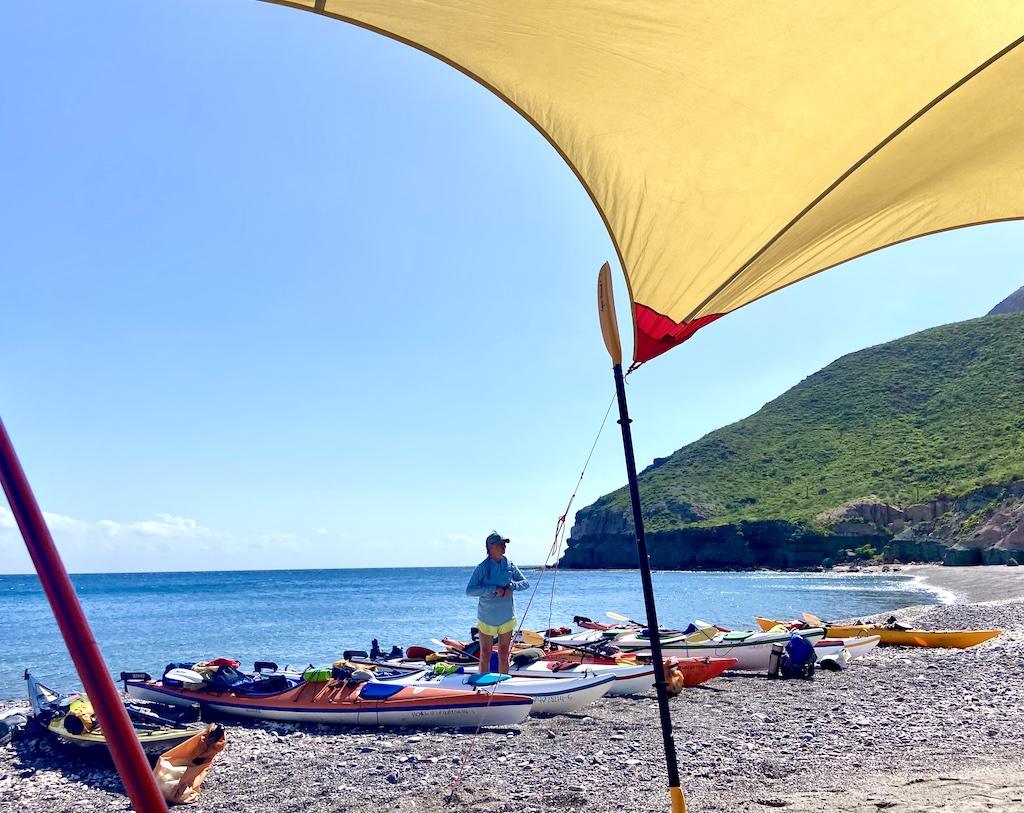
In my many years of paddling, I have enjoyed amazing international sea kayaking trips all over the world. These international sea kayaking trips are much more complicated to plan than paddling expeditions I’ve done in the United States. In this article, I will use my experience to share the best tips on planning an international sea kayaking trip.
Posts may contain links to products and services I love. I may make a small commission from them, at no extra cost to you. Thank you for supporting my blog. Visit the privacy policy for more information.
Planning the Route on an International Sea Kayaking Trip
I consider the following parameters in planning a destination for a sea kayaking trip.
Sea conditions
The sea conditions to take into account include waves, swell, currents, tides, wind, water temperature, and exposure to open ocean.
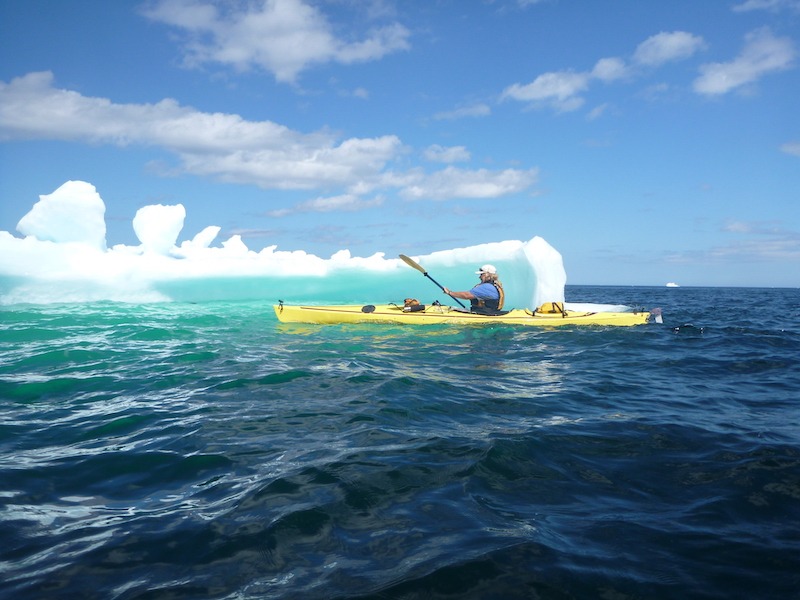
The kayaking skills of trip members will determine the sea conditions you can manage. For example, I have led many trips for beginners in the warm waters of the Caribbean. Amazing kayaking places like Belize, the Bahamas, and the Virgin Islands have water temperatures that make tipping over a reasonable rescue situation. Comparatively, I wouldn’t take beginners on my paddling trips in Alaska and Newfoundland. When kayaking with icebergs, your rescue skills need to be spot on.
Climate and Season
When is the best weather for your destination?
The best kayaking season might not be when you expect. I was surprised to learn that the Australian winter is an excellent time to sea kayak near the Great Barrier Reef. Plus, plane tickets from the US are cheaper then, so it was a no-brainer to plan an expedition in the Whitsunday Islands then.
Remoteness
Decide whether you want a remote wilderness route or one closer to civilization and safety.
Remote sea kayaking trips mean that an evacuation to medical facilities may take more than 24 hours. Therefore, planning a remote expedition requires gathering information about available rescue services, frequency of boat traffic, and using communications such as a Garmin InReach. You should also have a well-stocked first aid kit and training in wilderness first aid.
On the other hand, you may desire a trip with more paddling infrastructure. This might mean established kayak routes, outfitters who can tell the ins and outs of the paddling routes, designated campsites, reliable water sources, and rescue services.
Resources to Use in Planning an International Sea Kayaking Trip
Use Trip Reports
Online reports by paddlers who have previously done an expedition are excellent sources of route and conditions information. For example, for sea kayak adventures in the waters around the United Kingdom, I use the UK Sea Kayak Guidebook. A search of the forums on Paddling.com will often yield information about routes to explore.
One caveat is not to take the trip reports at face value. Paddlers reporting on their trips may have different skills, risk tolerance, physical abilities, and styles than you do. Use the reports as a base to search out more information.
Inquire Locally
Local sea kayakers will know their home turf well. I have used local paddling groups or clubs to learn more information about an area. I’ve even used Facebook groups to find people or companies willing to answer my questions.
Of course, the best source of local information is the outfitters that have trips in the area. Be sensitive that they are running a business, not a free information library. Therefore, I only inquire of companies I rent a boat from, use their shuttle services, or buy gear from.
Use Navigational Aids
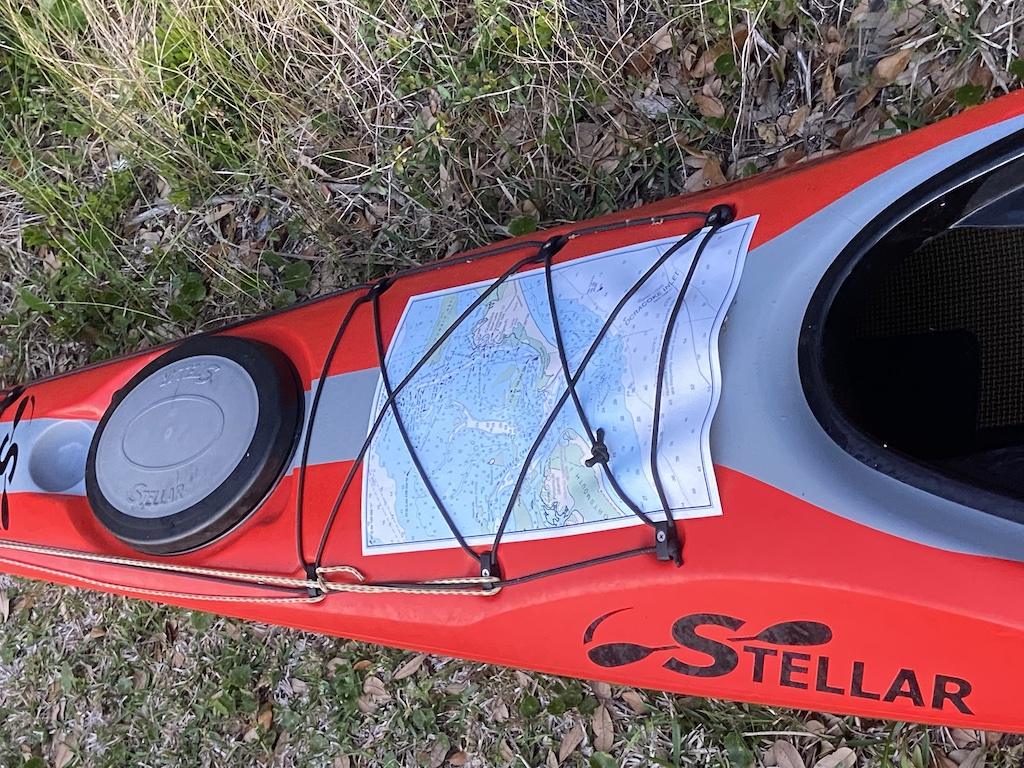
A detailed study of the navigational charts of a kayaking region will help you fine-tune the route. I wait until I’ve decided on the area before buying the charts, as they are expensive. Downloadable paper charts can be procured from Nautical Charts Online.
Certainly, one of the handiest navigational aids for US waters is the NOAA BookletCharts. These free downloadable charts are excellent for sea kayaking as they are the perfect size to fit in a chart case on your deck. They have all the information of a full-size chart in a booklet form. And did I mention they are free?
Tide and current charts are also important sources of information to use in planning. Some areas are more affected by tide and current. In the Bahamas, for example, strong currents can pull you off course if you are not careful. For my paddling trips in the Bay of Fundy in New Brunswick and the Gulf Islands in British Columbia, sea kayaking with the tide is a must, as fast tidal currents often make it impossible to paddle against them.
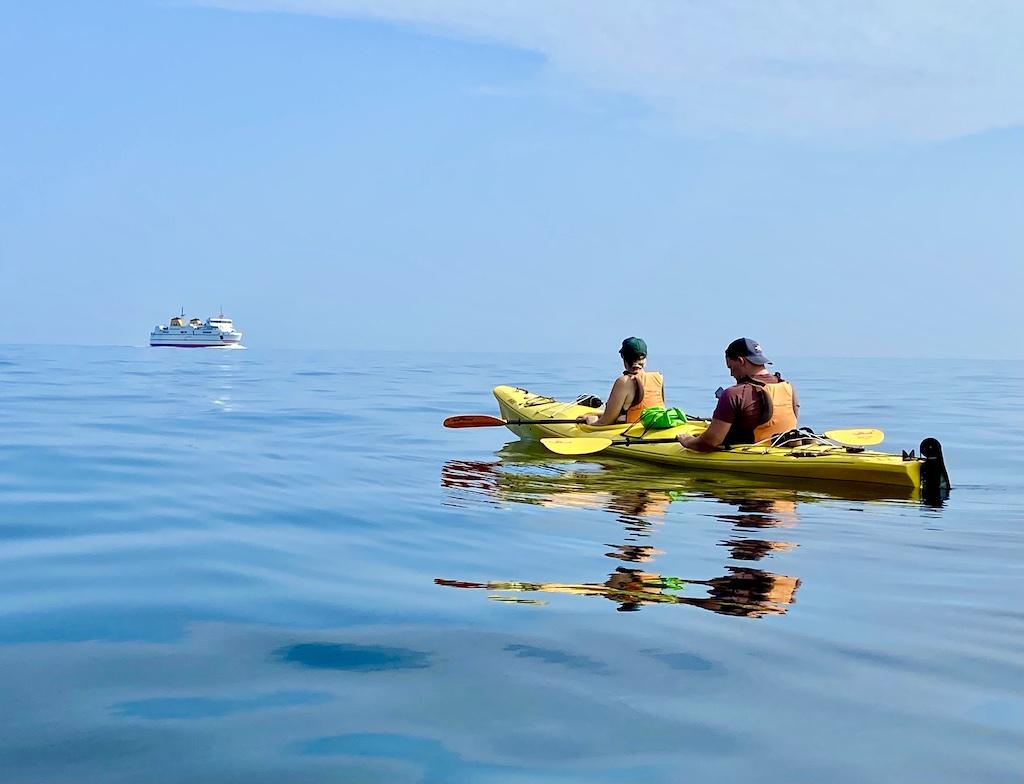
Related post -> Amazing Sea Kayaking Adventures on Grand Manan Island
International Sea Kayaking Trip Guides
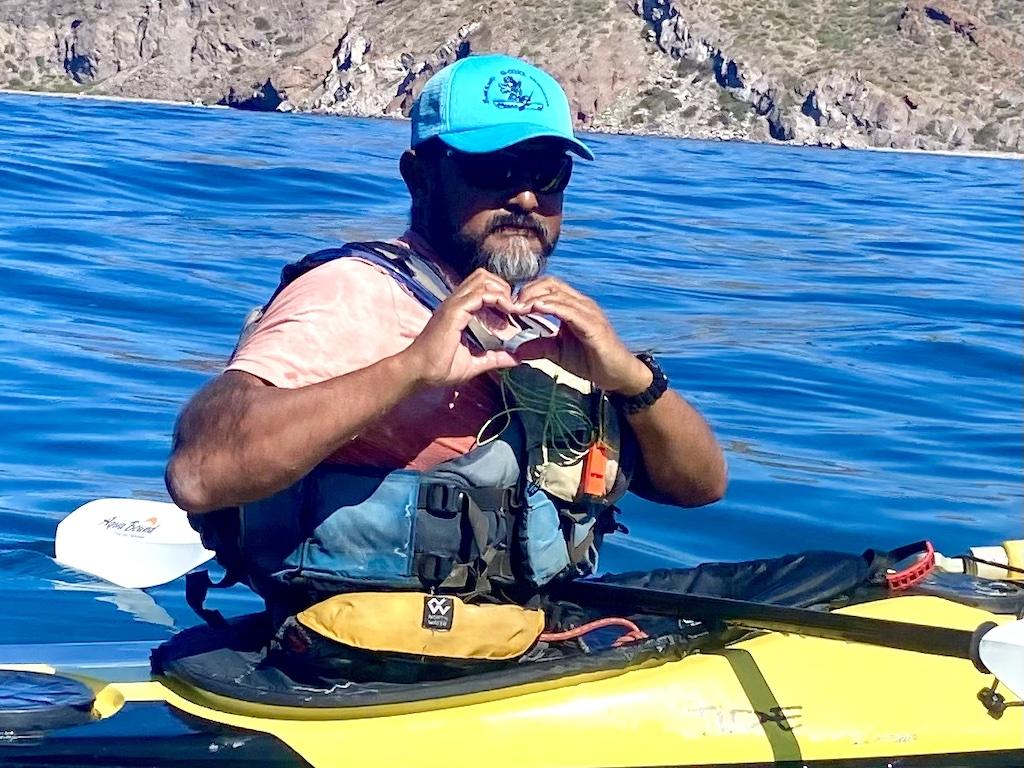
The first question is whether to hire a guide or do a self-guided trip. Certainly, a skilled sea kayak guide with knowledge of the local paddling destination is invaluable. An experienced guide has detailed information on the route, campsites, weather conditions, and hazard locations.
Self-guided Internation Sea Kayaking Trips
However, sometimes you just want to do it yourself without a guide coming along. This desire might be due to trip group dynamics, budget, or the feeling of accomplishment of self-guiding. Certainly, I suggest this option only if you and your group have the skill level to venture out into unknown waters on your own.
Hiring a Guide to Join You
There have been times when I hired a local guide to accompany the sea kayaking trip I’m leading. Their knowledge of the sea conditions, local weather patterns, prime camping spots, and history and wildlife on the trip is invaluable.
You can get much of this information before the expedition from the outfitters or by researching the area. However, if your budget allows it, a guide can be a real asset.
I’ve led many multiday trips in the Bahamas Exuma Islands and used this strategy. The first time I did the trip, I hired a guide to come along. The guide showed us the best places to camp, fish, and paddle while explaining the prevailing winds and tides. After the informative experience with him on the route, I was comfortable leading subsequent 11-day sea kayaking trips in the Exumas without a guide.
Choosing a Guided Tour
Many times a guided tour is the way to go for an incredible sea kayaking expedition. While more expensive, the ease of someone else doing the logistics and leading justifies the cost. If you are traveling solo or as a twosome, joining an established multi-day trip makes sense for safety. Also, day tours tend to provide good value to those who want to explore a new destination and learn about the natural and cultural history of the coast. For beginners, day trips are a great chance to learn basic paddle strokes and boat entry and exit skills.
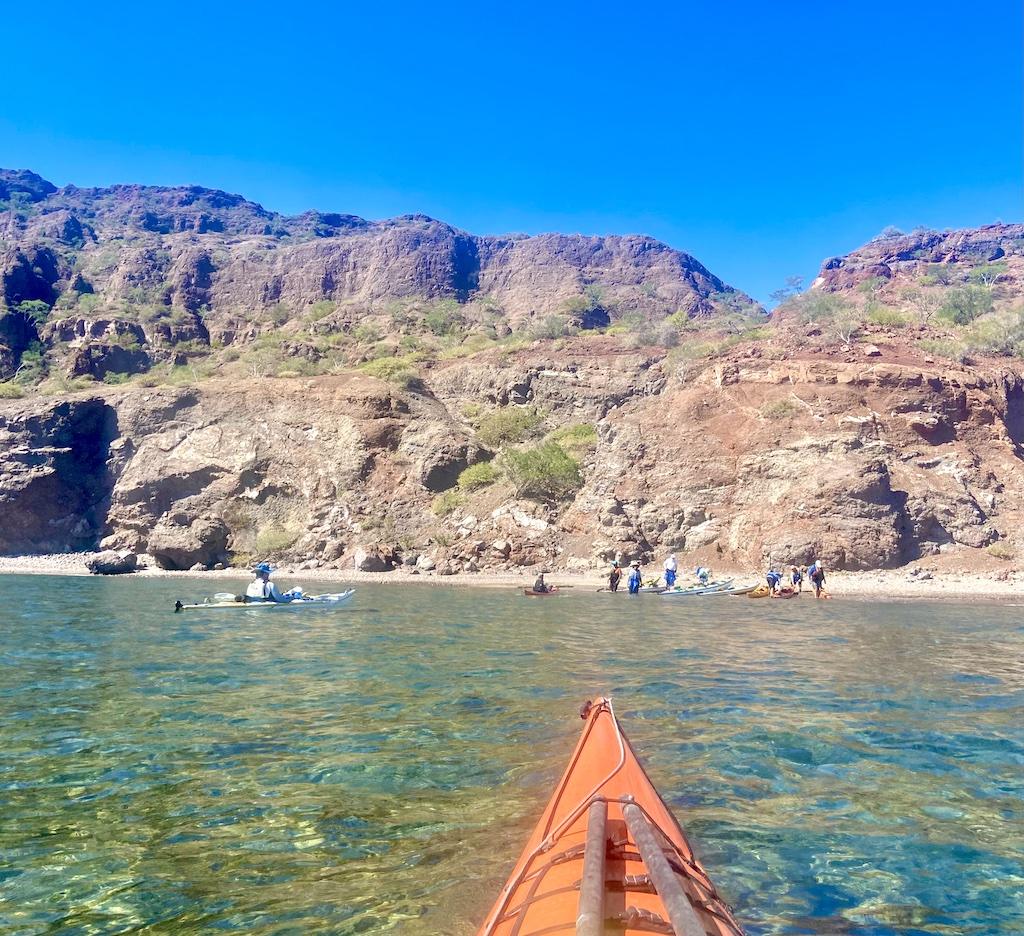
Sea kayaking along the Baja Peninsula in Mexico had been on my bucket list for a long time. When I heard several of my friends had signed up with a reputable company for a 10-day paddling trip in the Baja, I decided to join them. The remoteness and complicated logistics of the trip made a guided tour a good choice. The trip was for experienced sea kayakers, so we had some marvelous adventures. The guides were exceptional, full of stories about the area, and knowledgeable about the weather and tides. I also loved that they not only planned the food but also cooked all the meals. Pure luxury.
Procuring Boats for an International Sea Kayaking Trip
Bring Your Own Boat
Having your own trusted sea kayak on an international expedition is often the best-case scenario, as you have familiarity with how the boat performs in different conditions. You also already know how to pack it and transport it. It can also be cheaper and logistically less complicated than renting a kayak at the destination.
The number of excellent portable kayak models has blossomed in the past decade. Now it is quite reasonable to fly your kayak with you to an international sea kayaking destination.
The Equipment Guide, a respected outdoor gear review company, has tested and rated the best inflatable kayaks. It’s important to choose the right inflatable kayak for expedition touring. Look for PVC construction to reduce punctures, a hull design that tracks well, enough storage for gear for a multi-day trip, and a total weight below airplane baggage limits.
Pros and Cons of Bringing Your Own Boat
The biggest reason to bring your own craft is that you already know how your kayak handles in wind, waves, currents, and rough water. You also know where everything fits, and it is outfitted specifically for you.
Another advantage of traveling with an inflatable kayak is the freedom to travel by yourself to the put-ins. You are not dependent on outfitter shuttles, which may be inconvenient or costly. With your own boat, you can paddle in locations where there is not a kayak rental company available.
The cons include having to lug around a heavy piece of equipment. Fortunately, many of the popular inflatable kayaks have a backpack-style carrying case that makes it comfortable to transport them.
If you are staying in a seaside destination and want to do day trips from your base, a portable inflatable kayak is a great choice.
Rent a Boat at the Destination
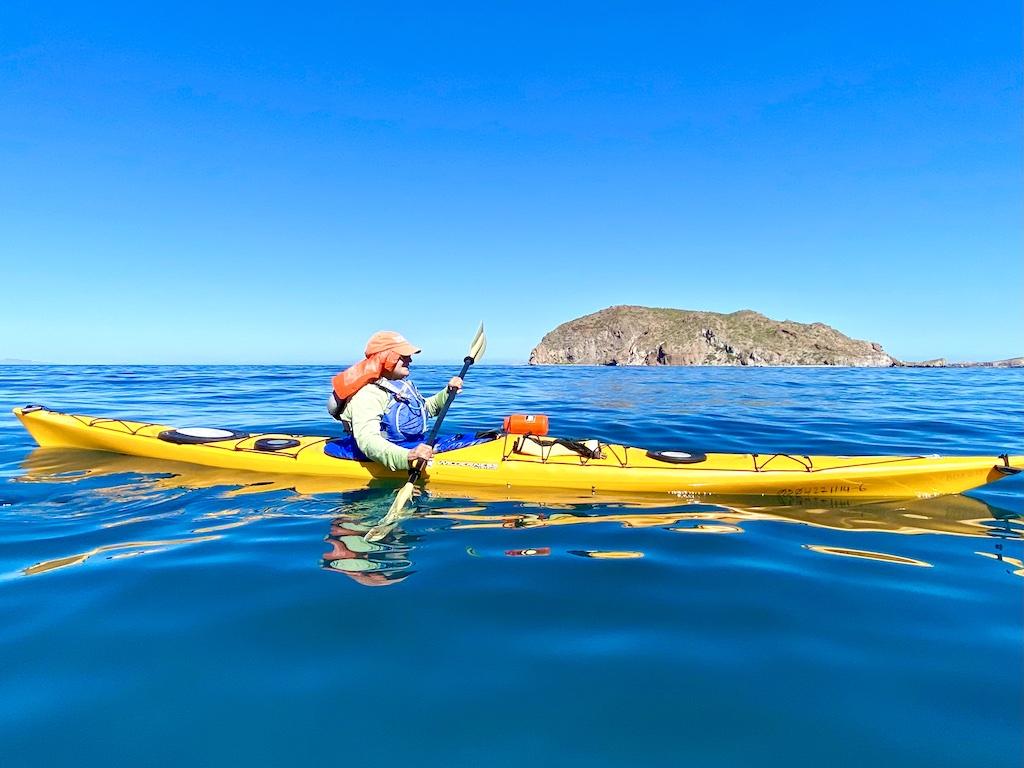
Many of the world’s prime sea kayaking destinations have quality outfitters that will rent boats for your trip. For safety reasons, outfitters will often require that you have a level of kayak tripping experience sufficient to paddle the local waters. Some will require that you take one of their kayak tours or demonstrate rescue skills before setting you off on your own.
I’ve rented sea kayaks for international multiday expeditions lasting a week or longer, so choosing a good outfitter has become an art. I first check the websites of outfitters in the area I want to paddle. I look for how long they have been in business, the quality of their kayaks, their emphasis on safety, and if they offer transport to the put-in.
After finding a suitable outfitter, I email or call them to inquire about the condition of their boats, what paddling, navigation, and rescue gear is provided, prices, including possible discounts for multiday trips, and availability. I ask questions about the routes they cover to suss out their competence.
Pros and Cons of Renting a Boat at the Destination
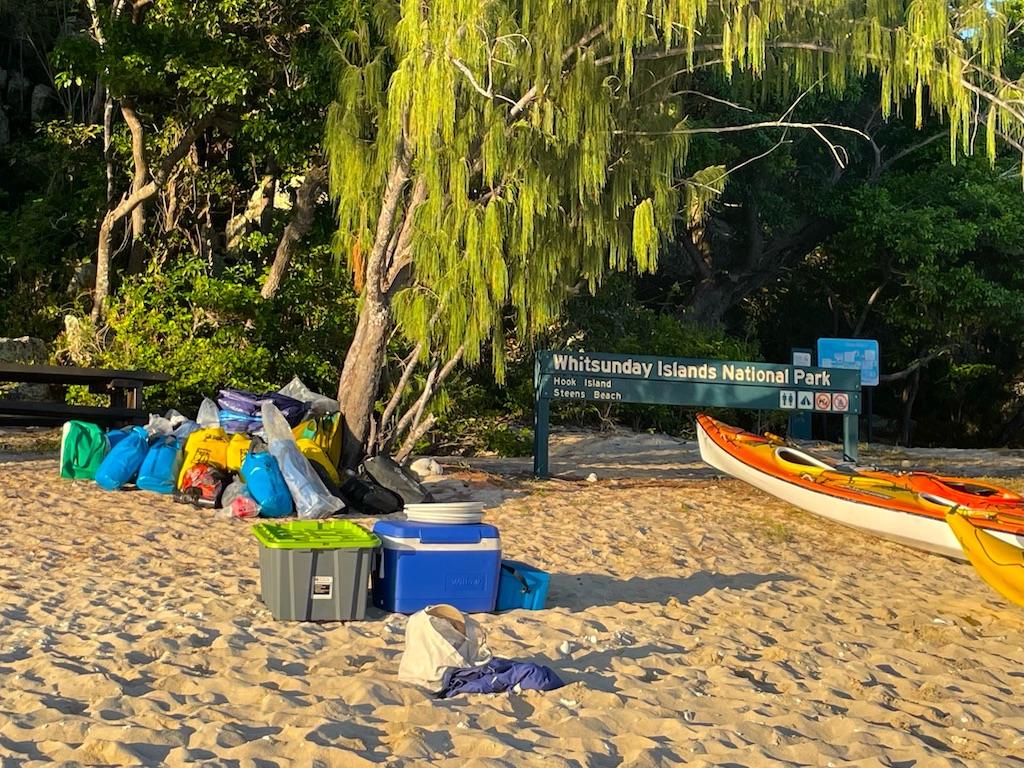
An advantage of renting a boat from an outfitter is that they have extensive knowledge and tips about the paddling routes so you can customize a trip for your ability and goals.
For example, on a week-long paddling trip in the Whitsunday Islands in Australia, we were excited to visit the best snorkeling spots. I spent hours researching a route that would include prime reef areas. However, when I presented it to the outfitter, he quickly came up with the perfect route to achieve our goals because he had information I would never be able to find on the internet.
A disadvantage of renting a kayak at your destination is that you may not be familiar with the rental craft. In addition, the quality of the kayaks is not guaranteed. On the first day of a trip to Belize, I was paddling with the group on a three-mile crossing between islands. I started to fall behind the group as my boat got harder and harder to paddle. It turned out that the hatch seals were defective. Therefore, I took on so much water it felt as if I was paddling a block of cement.
Food and Equipment Planning for an International Sea Kayaking Trip
Food Planning
Food for a multi-day sea kayaking expedition must be compact, mostly non-perishable, and have enough calories for energy expenditure during hard paddling. I personally believe it should also be delicious.
The first question is whether to bring all or part of your food prepackaged or buy it at the destination. Keep in mind that many international areas where you want to sea kayak may have a limited variety or unfamiliar foods available in stores. You will also spend time repacking the food you buy to fit in your kayak. On the positive side, buying food at the destination exposes you to the local foods.
I like to do a combination of both styles of procurement. I will often bring lightweight meals that I have dehydrated and packaged, as well as popular foods such as peanut butter, energy bars and trail mix, and freeze-dried fruits and vegetables that are hard to find in some locations. Then I will buy fresh foods when I get there. Things such as cabbage, potatoes, yucca, citrus fruits, cheese, and bread will usually last the trip.
On a 7-day sea kayaking trip with my daughter in Alaska, I knew we would be camping in grizzly bear country. Since all our food for the week needed to fit into 2 bear canisters, I carefully dehydrated meals and squished all our food and snacks into the bear canisters. I then mailed the canisters to the sea kayaking company where we were renting our boats to hold for my arrival. It worked out great, except I took all the little dessicant packages out of the jerky to save space, but in the hot warehouse of the outfitter, all the jerky spoiled. Lesson learned.
Related post-> My Stories from the Field: Sea Kayaking with Whales in Alaska
Equipment Planning
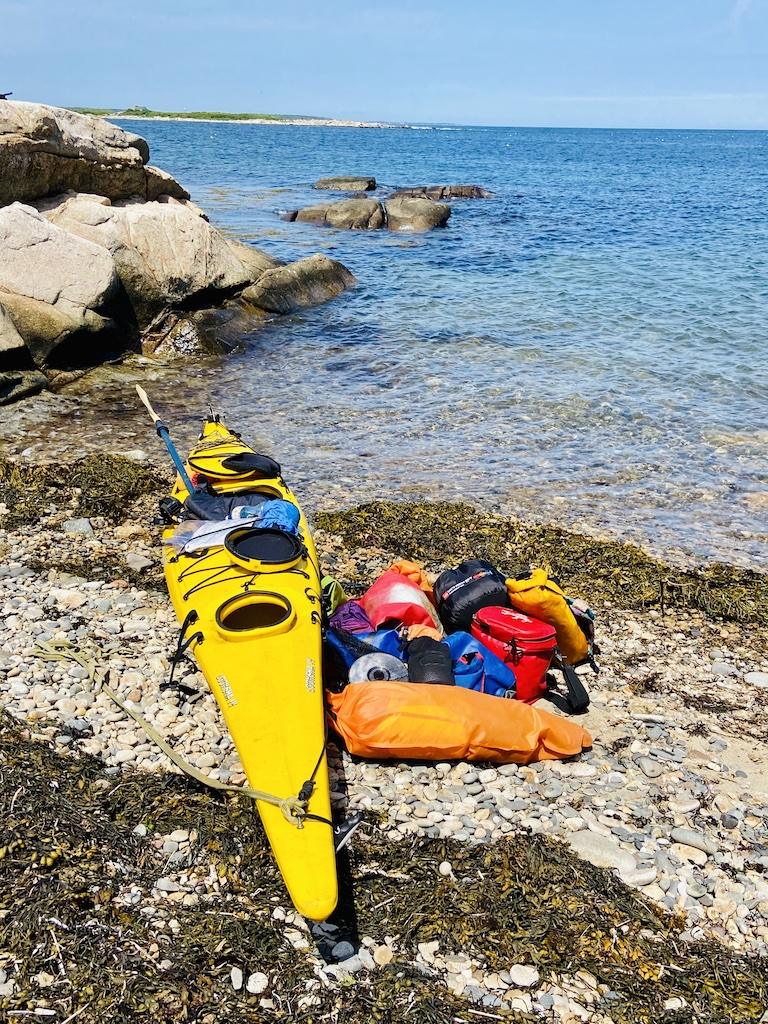
Sea kayaking is the most equipment-intensive outdoor activity I do. You will need to ask yourself if you want to haul all that gear to your kayaking destination. I have done it on trips where gear at the destination was not available. Having my own trusted gear is definitely an advantage that makes schlepping worth it.
Other times, I’ve rented some of my gear from an outfitter I’m working with. Even if most equipment is provided, many paddlers will bring their own PFD and paddle to ensure good fit and comfort. On my Baja trip, I used a company-provided life jacket that didn’t fit right. Consequently, I suffered the whole trip.
For my recommended equipment for multi-day sea kayaking trips, check out my post The Best Gear for Fantastic Sea Kayaking Camping Adventures.
If you are going out on day trip with a sea kayaking company, the following is my basic list for gear:
Wrap Up of Planning an International Sea Kayaking Trip
While this post has focused more on multi-day international sea kayaking trips, most of the advice is useful for arranging a day trip in another company. Sometimes, a well-reviewed Get Your Guide paddling trip will be perfect. Or maybe you find a wonderful sea kayaking company to rent a boat and venture out on your own. Perhaps you will bring your own inflatable kayak to a quaint oceanfront cabin for a week or so of exploring.
An international sea kayaking trip takes careful planning, but the rewards are worth the effort when you’re paddling through a beautiful coastline far from the usual tourist crowds. With the right preparation, equipment, and a little flexibility for weather and unexpected adventures, you’ll be ready to make the most of every day on the water.
Pin It!



5 Comments
Mary Ann · August 13, 2026 at 9:46 pm
This is alot of good information on kayaking trips. My son kayaks and takes his kayaks many places. I never realized how much goes into planning. It makes me think of holiday gifts for him. Thank you for all this info. I learned alot.
Katelynn K. · August 13, 2026 at 9:49 pm
I’ve never thought of planning an adventure like this! I do enjoy kayaking, but I’ve never done more than a few hours out on the water. The picture of all the gear you pack into that kayak was impressive! I wonder how much weight that adds to your kayak?
caroline · August 14, 2026 at 8:28 am
This sounds like a superb adventure… I’ve never done anything like this. Didn’t know there were guided kayaking trips – although that makes complete sense because you have biking trips, skiing trips etc. Although, I don’t think my skills are quite as good (yet) to undertake this right now… saving this for later!
Trisha · August 14, 2026 at 9:10 am
I loved how thorough your planning guide was and I’m curious which piece of gear felt most essential once you were actually on the water
Cass · August 15, 2026 at 3:44 am
really appreciate this as I feel like it could be so easy to get caught out by something as simple and important as food planning! I think doing a guided trip would be a fun way to get to grips with it before going for a lone adventure!