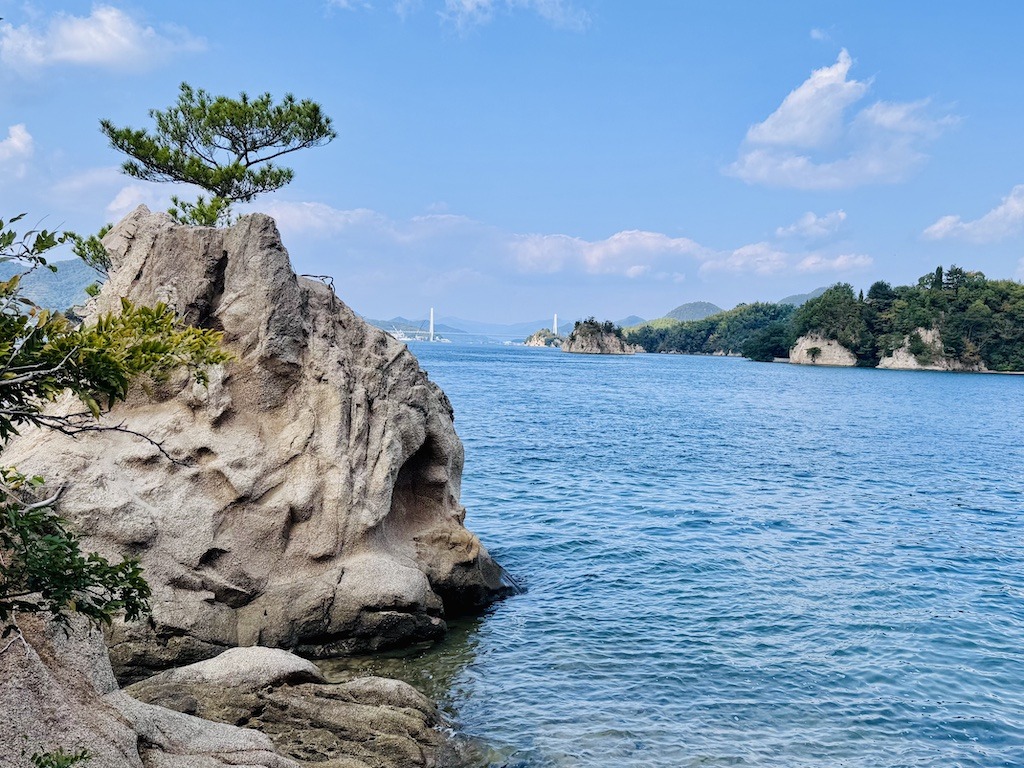
A biking trip on the Shimanami Kaido and Yumeshima Kaido may be the best way to see the true essence of Japan. As my travel companions and I traversed the islands of the Seto Inland Sea, we experienced the tranquility, delicate beauty, and timeless rhythm of island life. We rode beside gentle waters, pine-clad hills interrupted by bamboo stands, the architectural wonder of bridges, and quiet fishing villages. We visited shrines, temples, and Japanese family homes.
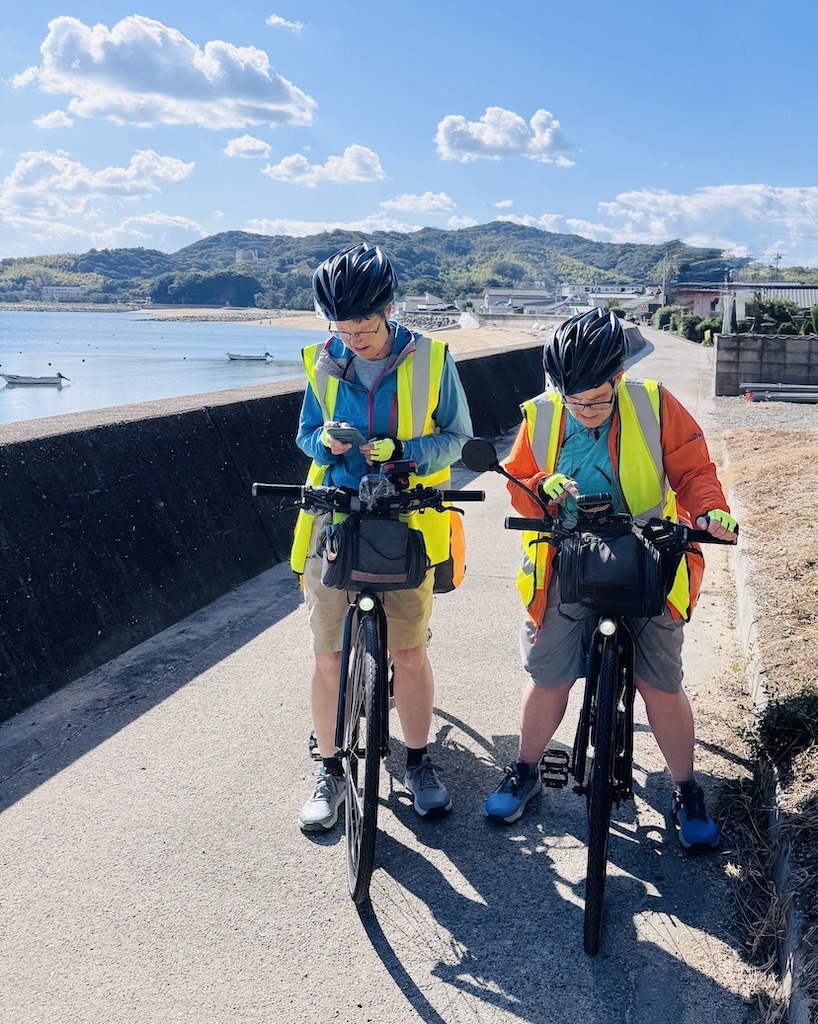
Most people who cycle in this area complete the Shimanami Kaido in one or two days. However, we decided to slow down to discover the many magical sites of the islands. We got off the blue line that defines the marked cycle path, and explored the less-biked back sides of the islands. We added the Yumeshima Kaido, which traverses the four islands of Kamijima. Therefore, our trip was 6 days/5 nights in the islands.
The practice of slow travel seems aligned with the simplicity of Japanese life. Further, absorption into nature and the rich culture of Japan can only be accomplished by slowing down.
Therefore, I share the details of our 6-day bike trip across the islands of the Shimanami and Yugeshima Kaidos.
Posts may contain links to products and services I love. I may make a small commission from them, at no extra cost to you. Thank you for supporting my blog.
What are the Shimanami Kaido and the Yumeshima Kaido?
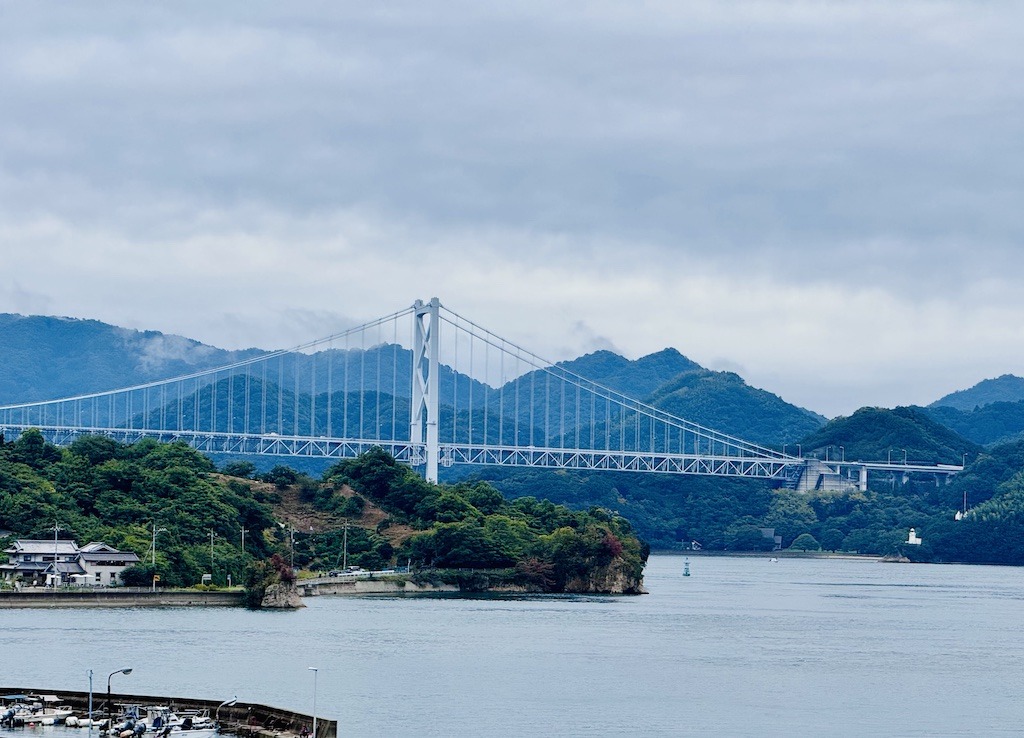
The Shimanami Kaido and the Yumeshima Kaido are idyllic cycling routes through islands in Japan’s Seto Inland Sea.
The Shimanami Kaido is a spectacular 70-kilometer route linking Japan’s main island of Honshu with the island of Shikoku across the Seto Inland Sea. Spanning six small islands connected by a series of elegant suspension bridges, it’s celebrated as one of the world’s best cycling routes. The path offers breathtaking sea views, citrus groves, and coastal towns, blending natural beauty with cultural charm. Cyclists can stop at viewpoints, beaches, temples, and local cafés while crossing the engineering marvels of the bridges. The cycling route is well-marked by a blue line on the pavement. Bike rental and drop-off stations are abundant. The route is suitable for cyclists of all skill levels. Besides cycling, the Shimanami Kaido offers hot springs, island guesthouses, and opportunities to explore local life in fishing villages.
The Yumeshima Kaido connects the small islands of Iwagijima, Yugejima, Ikina, and Sashima in Ehime Prefecture. Linked by bridges and short ferries, it offers tranquil cycling with views of blue waters, citrus groves, and quiet fishing villages. The islands of the Yumeshima Kaido are east of the main Shimanami Kaido. This cycling route is less visited and is known informally as the “Mini Shimanami Kaido”. The entire cycling route is about 50 km.
Logistics of Biking on the Shimanami Kaido and Yumeshima Kaido in Japan
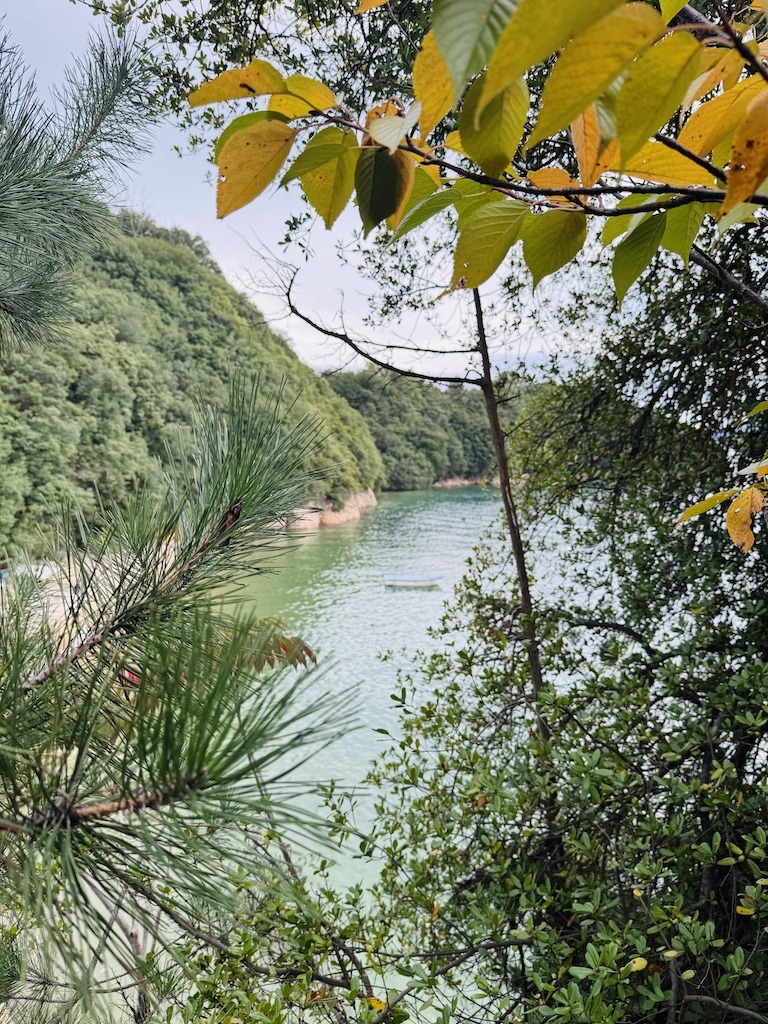
The cycling route for the Shimanami Kaido runs from Onomichi in Hiroshima Prefecture to Imabari in Ehime Prefecture. While you can do the route in either direction, we went from Onomichi to Imabari and back. We took the train from Hiroshima to Onomichi to start the trip.
Bike Rental for Biking on the Shimanami Kaido and Yumeshima Kaido
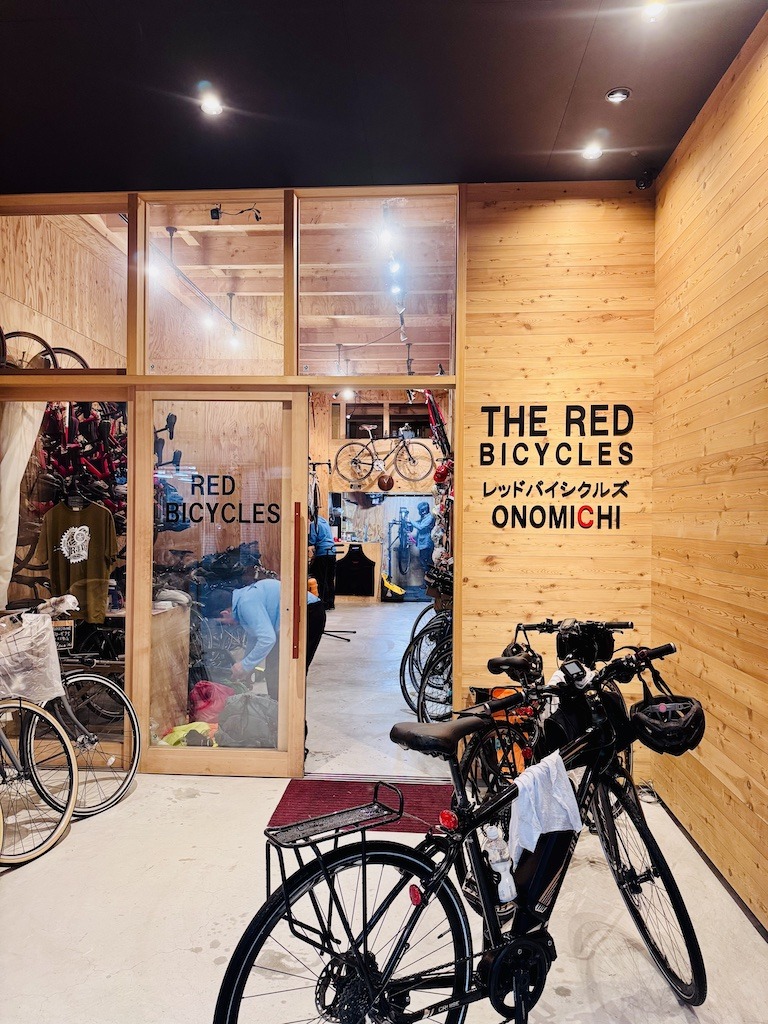
We rented e-bikes and panniers from The Red Bicycles in Onomichi. The owner, Ko, was super friendly and helpful. He had some of the best biking gear to rent I have ever encountered from a cycling outfitter. Well-maintained ebikes and new Ortlieb panniers made our journey a breeze. The bikes are properly sized beforehand, so they were ready when we arrived.
You can also rent bicycles from Giant or the 10 public cycle terminals along the Shimanami Kaido. Giant restricts e-bike rentals to one day, while with the public cycle terminals, you must return to a facility each day to recharge the bike. Therefore, we found a multi-day rental of e-bikes with charging cables provided fit our needs better for off-route cycling. Plus, the bikes from The Red Bicycles were in much better shape.
The bikes needed to be returned to the shop in Onomichi. That worked well for us as we were making a circular journey. Conversely, you can pay for a cycle transport service such as WAKKA if you want to ride one way. Make sure to reserve the bikes and transport services in advance as some cycle shops were sold out when I inquired.
Navigation for Biking on the Shimanami Kaido
There are many maps available for biking this world-class route. The two we found most helpful were, first, the English version of the Shimanami Kaido Cycling Map, which is available at most tourist information shops in the area. Secondly, we used a Google map created by a local cyclist that had detailed information on sites to visit along the route. We especially like that he provided alternative graded cycling routes to the main blue line route. Therefore, we spent many hours cycling the alternative routes to enjoy off-the-beaten-path sights and adventures.
To have reliable data for precise navigation, we all used e-SIMs in our phones. I tried Sim Local’s unlimited e-SIM for fantastic coverage in all areas of Japan we visited. It’s easy to install, and it worked flawlessly. Use my code OUTDOOR to get 10% off a Sim Local e-SIM.
Itinerary for Biking on the Shimanami Kaido and Yumeshima Kaido
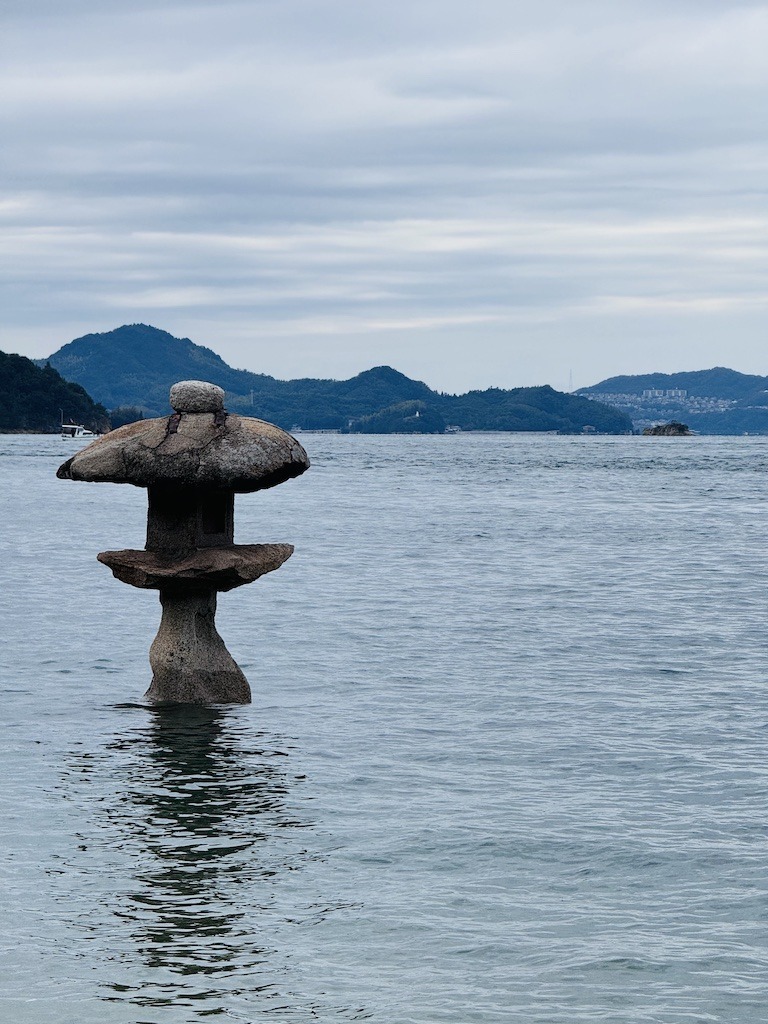
Day One: Onomichi to Mukaishima Island
We stayed the night before our bike trip in Onomichi to get an early start the next day. I found Onomichi to be an enchanting Japanese city. A walk to visit 25 temples perched above the city was a highlight of my time in Onomichi. The 2.5 km wander through the hills and neighborhoods with cute shops and cafes provided excellent views of the islands we would bike over the next 6 days.
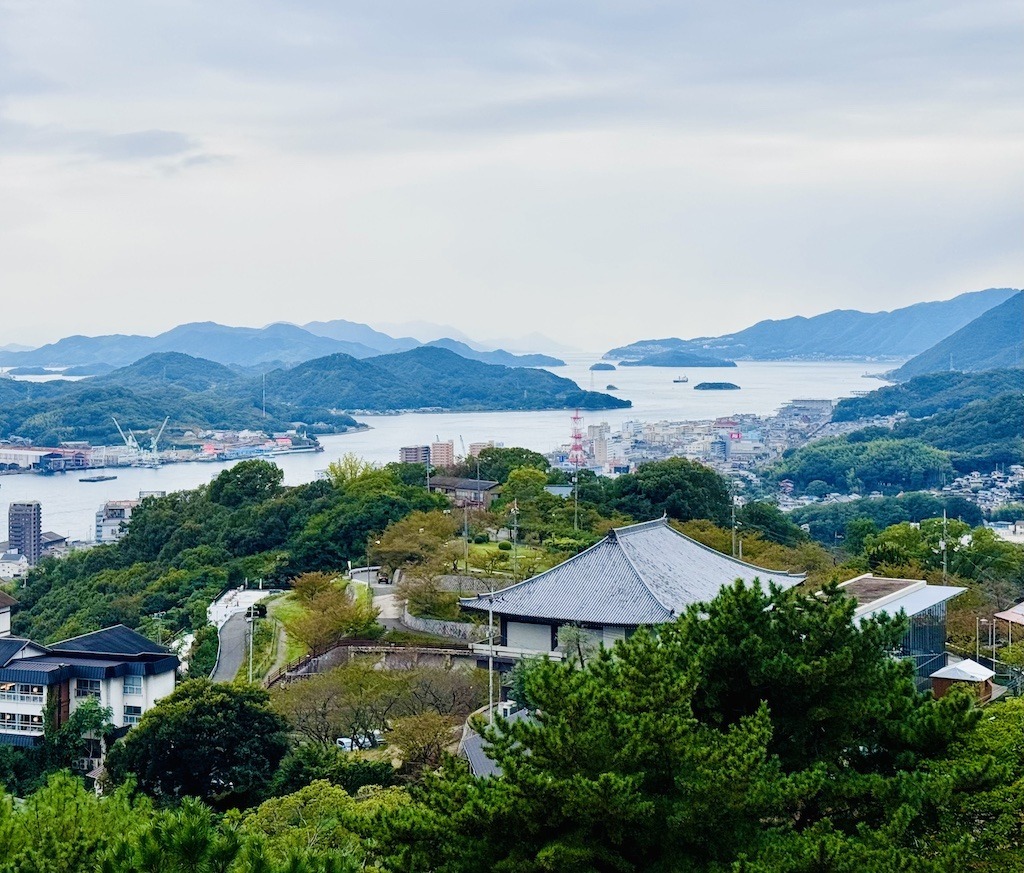
It is also possible to hire a local guide to get the most out of a visit to Onomichi. A guide will inform you of the great significance of the Shinto shrines you will encounter along the way. If I had more time in Onomichi, this tour would have been an excellent way to immerse myself in the culture in the hills above the city.
Mukaishima Island
Mukaishima Island is the first island on the Shimanami Kaido. After outfitting our bikes at The Red Bicycles shop, we took the ferry to Mukaishima Island. The 15-minute ferry cost about $1 and was packed with bicyclists starting their journey.
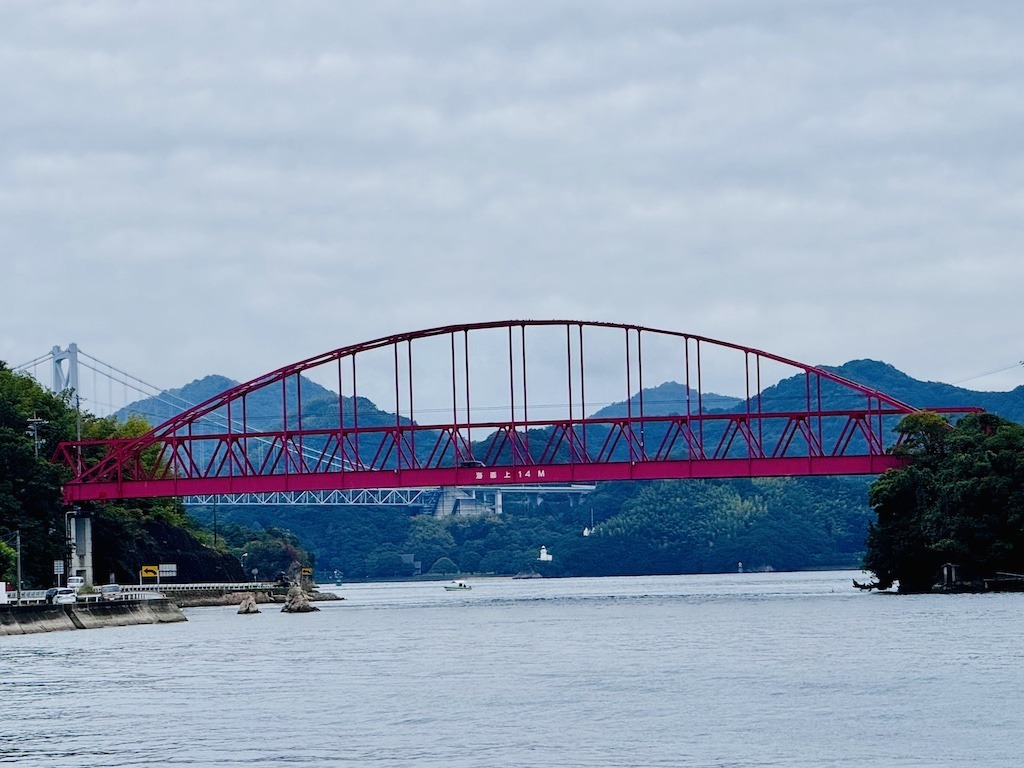
Since we had a short day planned, we decided to circumnavigate Iwashijima Island, which is attached to Mukaishima by an attractive red bridge. I often plan a short first day while cycling to account for all the logistical challenges of getting started. As a result, all the glitches can be solved, and I can still have a realistic first day.
Iwashijima Island
My friends and I still laugh about our time on Iwashijama Island. It started when Ko, our bike rental shop owner, insisted that there was nothing to see there. He emphasized that there was sand on the roads, making them difficult to navigate. We decided to visit anyway, and absolutely loved it.
Visiting Iwashijima Island is like pulling back the curtains to see the rural life of Japan. Rice fields, tiny villages, towering bamboo forests, and shrines lined the route (which, by the way, was not sandy at all).
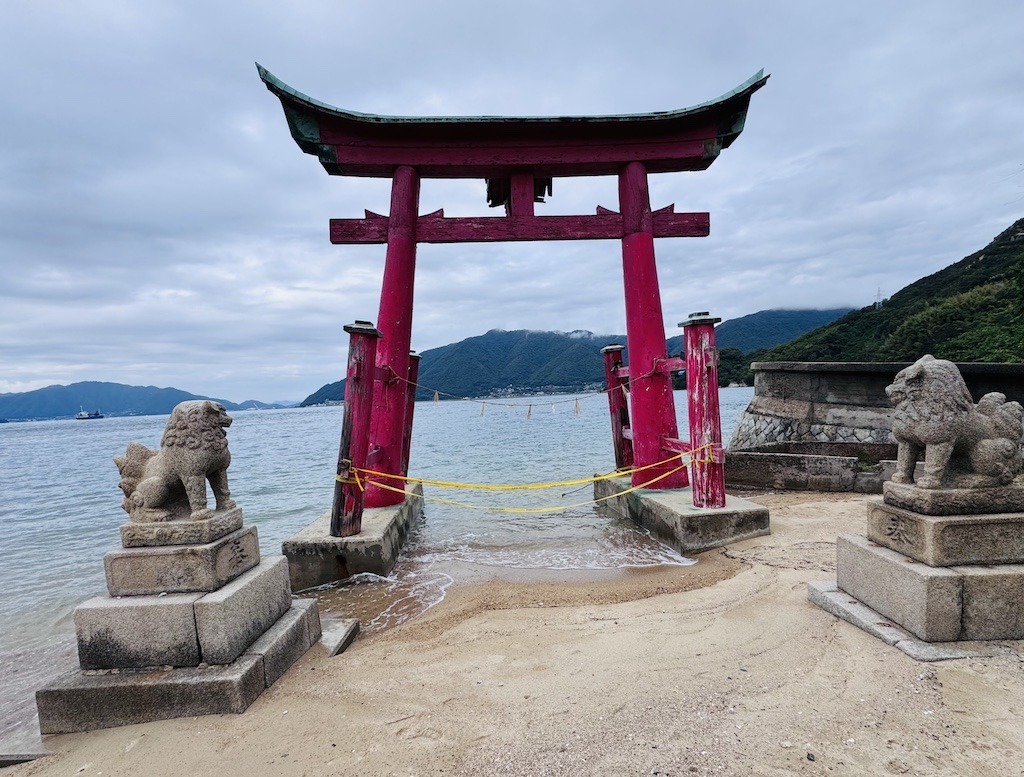
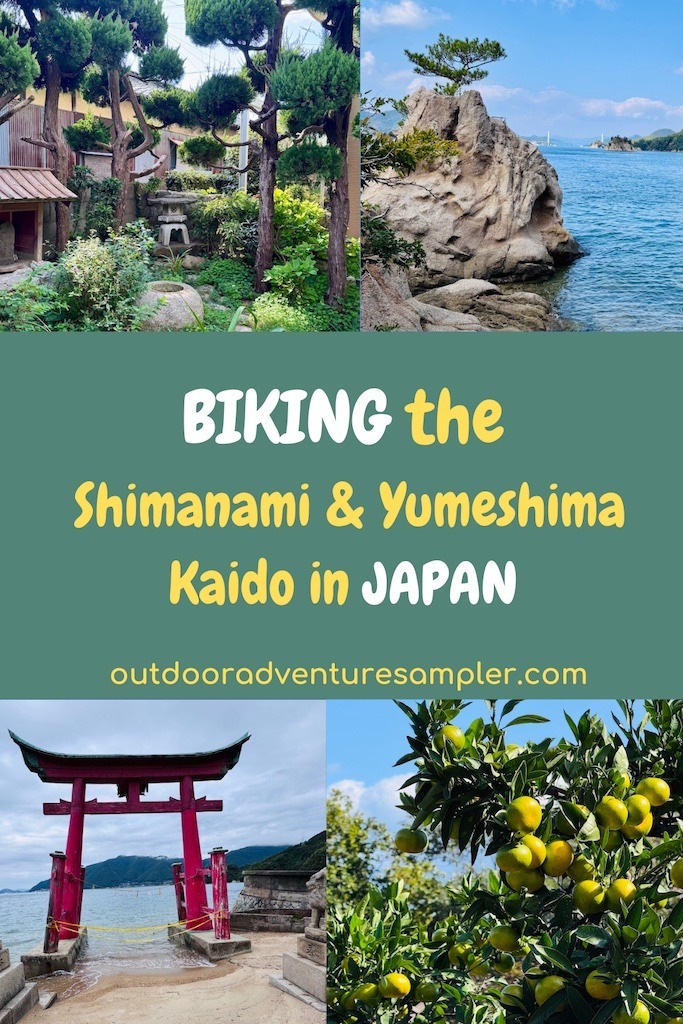
A red torii gate perched oceanside was our first immersion into the rich tradition of Japanese spirituality. We learned the rituals to use when approaching the shrines. A torii gate marks the transition from the ordinary world to the sacred space of a Shinto shrine.
Iwashijima Island illustrated the slow bike travel we strived for in Japan. When there is “nothing to see”, there are usually serendipitous adventures to be found.
With all our stops to admire the sights, we only rode 18 km on day one. We stayed in a charming guest house on the less-traveled side of Mukaishima. Guest House Gamigami is situated on the beach with incredible views of the Seto Inland Sea islands. It’s a perfect destination for bikers with a safe place to store and charge the bikes. The clean and comfortable rooms are suitable for a group or a family.
Day Two: Mukaishima Island to Sashima Island
Our objective on this day was to begin our ride on the Yumeshima Kaido on the Kamijima Islands. We rode on the north side of Innoshima Island to get to Habu Port for the ferry to the Yumeshima Kaido. This section of the route was along the ports and marine industrial plants. In retrospect, I wish we had taken the road through the center of the island to see Innoshima Suigun Castle.
The port town of Habu was our last chance to purchase things we might need before a ferry brought us to the remote Kamijima Islands, where stores are sparse.
The first island on the Yumeshima Kaido is Ikinajima. We cycled the north side of the island, stopping at a seaside shrine. Our goal was the cafe at Hakanda Sound Campground, as it was the only place open to eat on the island. The ride was glorious, and the wild boar burger was delicious.
Sashima Island
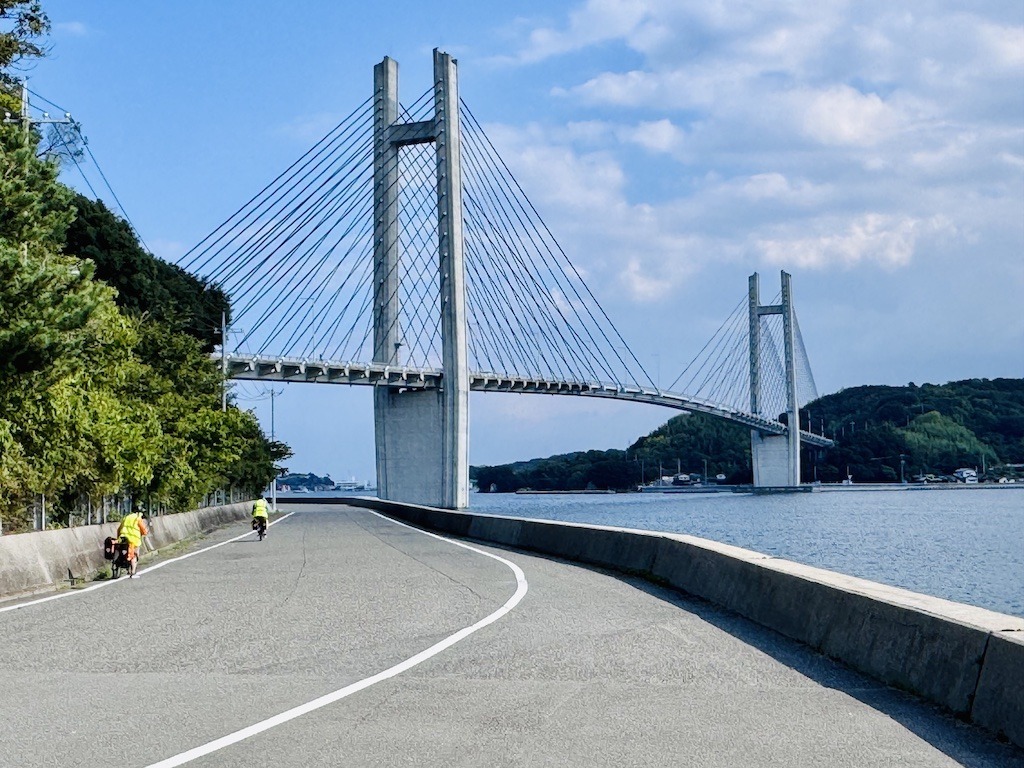
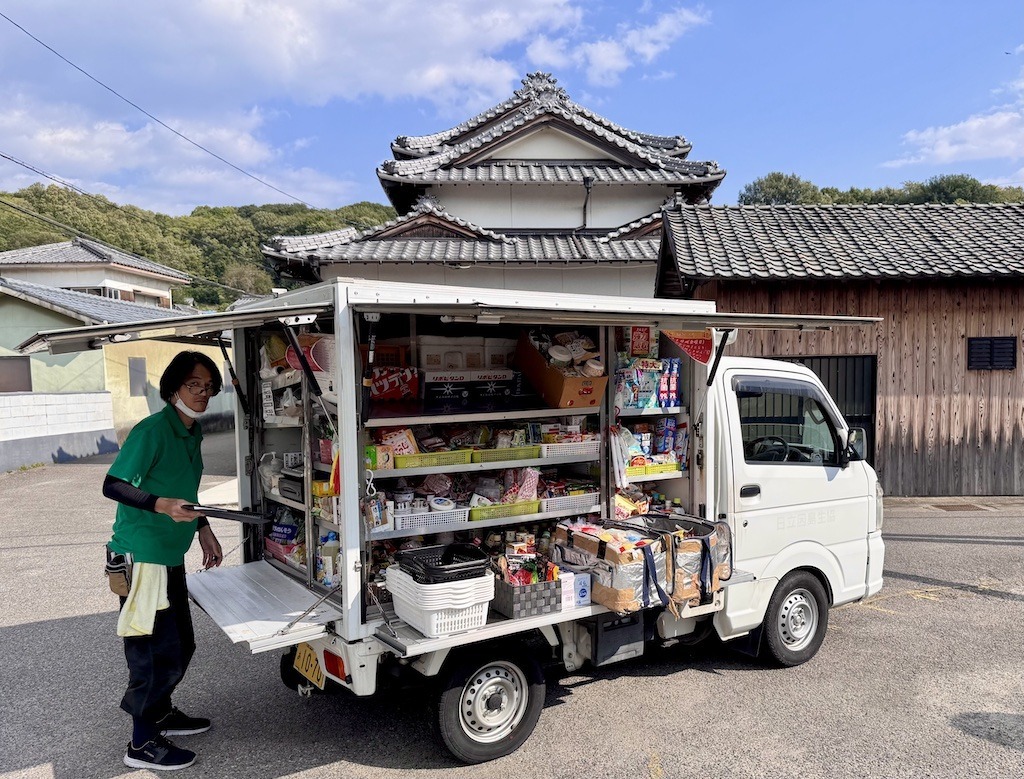
A trip across another spectacular bridge brought us to remote Sashima Island. As we were early for our check-in, my friends explored the rest of the island by bicycle while I walked around the village. An impressive shrine is the centerpiece. In addition, I was awed when a white truck playing music arrived on the square. I thought it was an ice cream truck; however, it turned out to be a mobile grocery store. Residents scurried up to buy fresh veggies and meat. There were also snacks, drinks, and dry goods for sale.
We stayed in a family-run guest house called the Shiomi House. It is a renovated traditional Japanese home. As there are no stores or restaurants on Sashima Island, we loved the feasts they prepared for dinner and breakfast. The meal with the family and the other guests was a wonderful dip into Japanese culture.
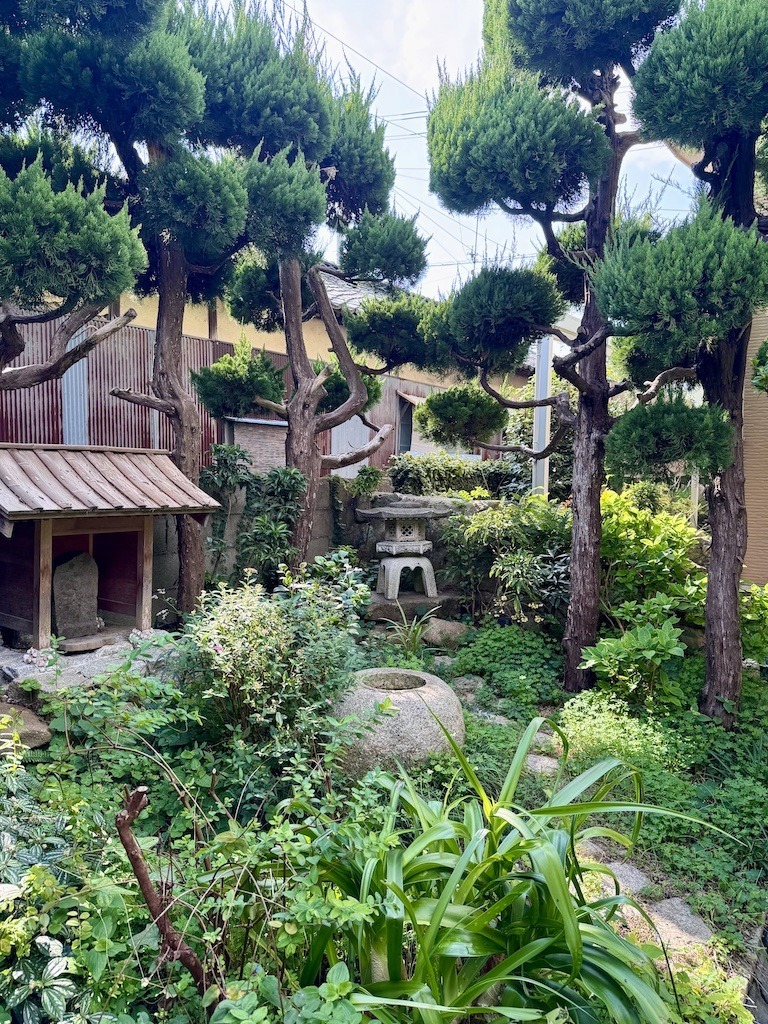
The simplicity of the home and the meals with family were a highlight of my time on Sashima Island.
Day Three: Sashima Island to Ikuchijima Island
My favorite part of our 6-day bike trip was the Yumeshima Kaido. The remote beauty and quiet roads of the islands often yielded surprises. Our first delight was the Kushiyama Observatory Deck on Yugejima Island. After a short hike up from the road, the panoramic view of the islands and bridges where we had been was stellar.
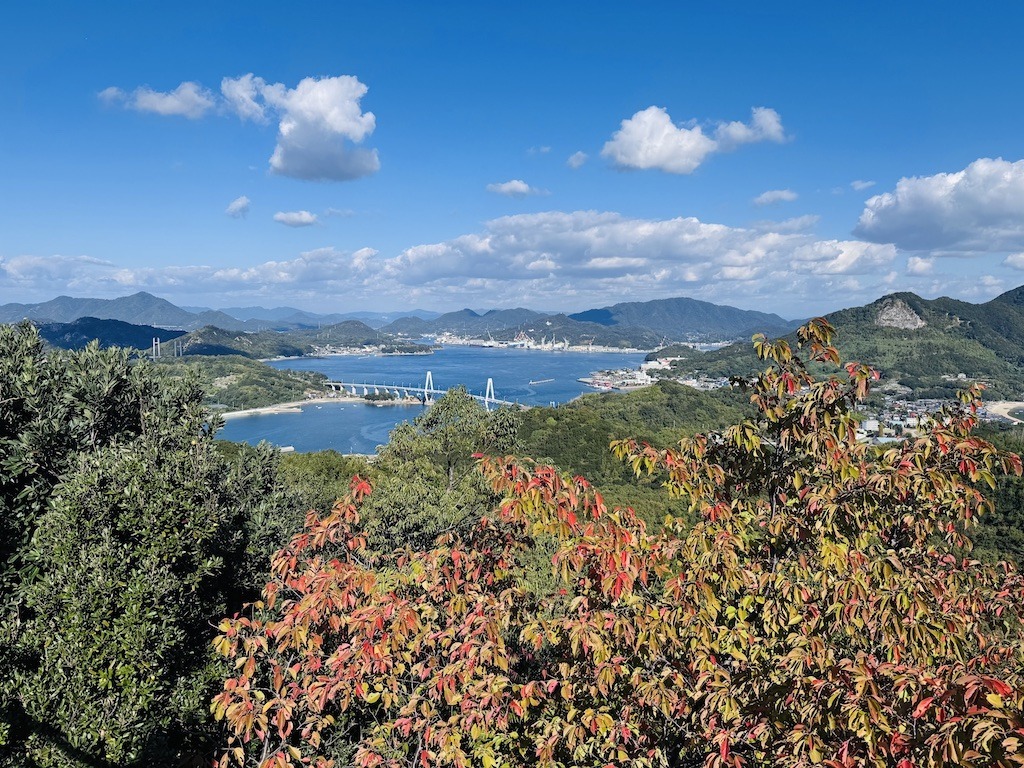
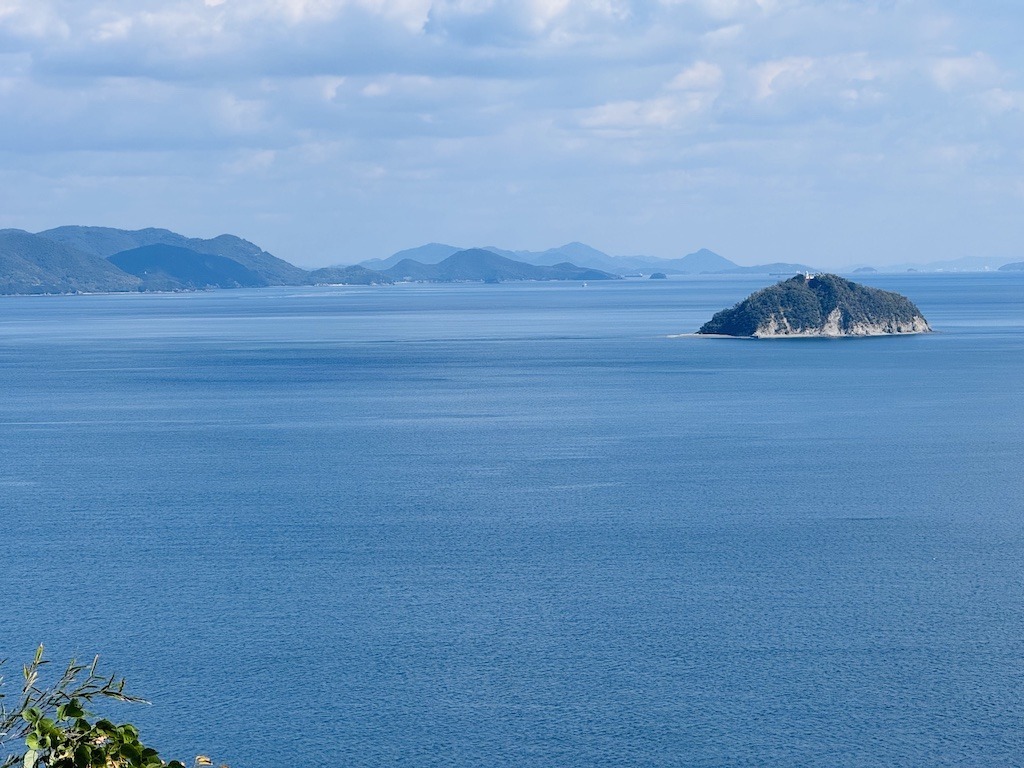
We continued our circumnavigation of Yugejima Island by cycling the hilly road on the southeast side. There were brilliant ocean views on one side and thick forests on the other as we climbed and glided down the winding pavement.
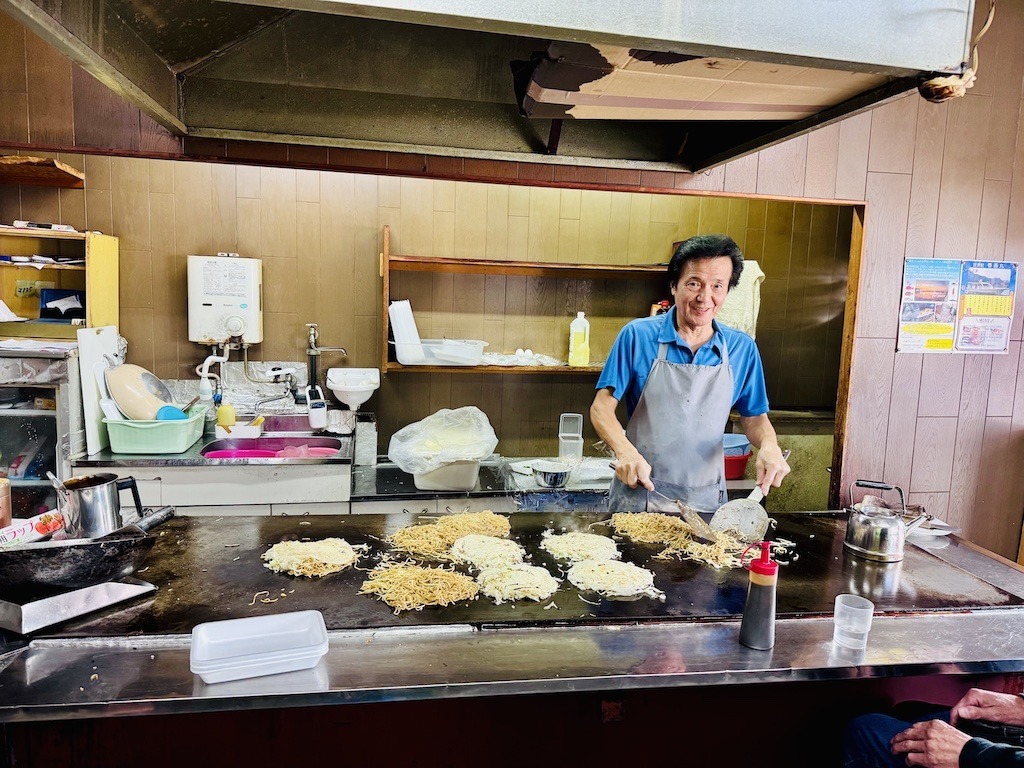
Kamijima town has the most services on the islands. We stopped for lunch at a local okonomiyaki shop. Okonomiyaki is a savory Japanese pancake made from a batter of flour, eggs, and dashi, mixed with shredded cabbage and customized with other ingredients like pork or seafood. We got to watch the owner cook this yummy meal that is a perfect cyclist refueling specialty.
The last of the islands of the Yumeshima Kaido is Iwagijima. Again, we rode the quiet side of the island to the ferry at Sunoe Port. The coastal scenery was worth it.
Back to Biking on the Shimanami Kaido
After a 5-minute ferry ride to Ikuchijama Island, we were back on the Shimanami Kaido. Our destination after about 50 km of riding for the day was an onsen accommodation at Setoda Sunset Beach. Setoda Tarumi Onsen was a welcoming minshuku located right on the beach. They featured a natural hot spring water onsen with a sunset view. Certainly, there is nothing better than an onsen to slip into after a long day. They also serve a delicious complete dinner and breakfast.
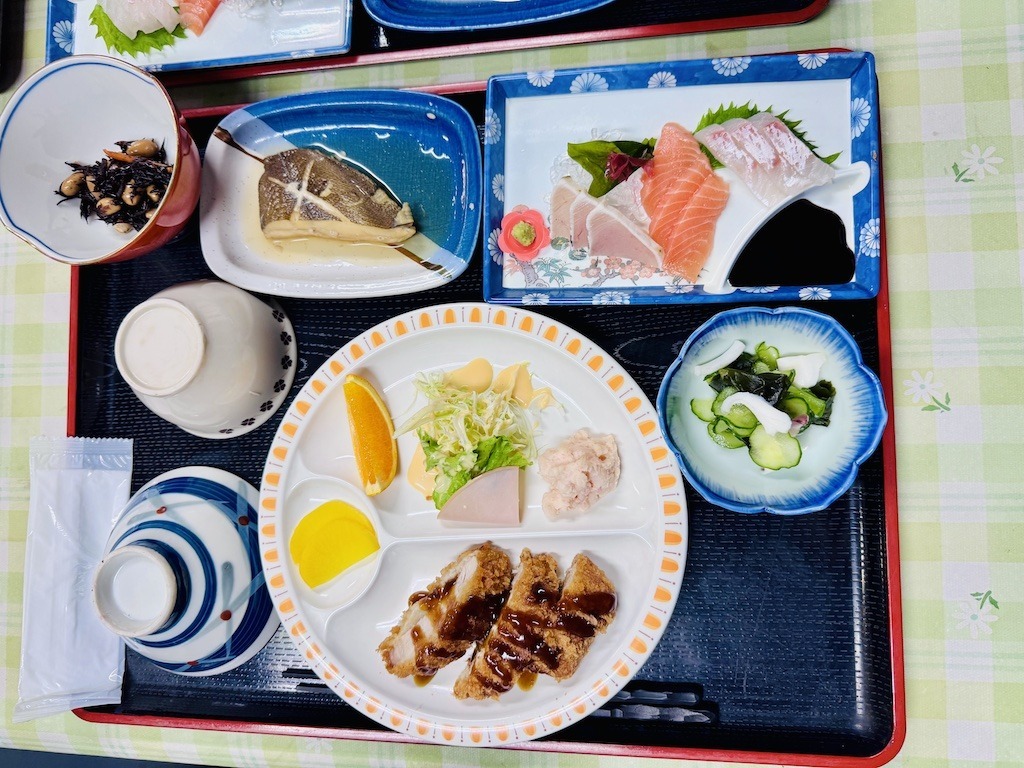
We always reserved the breakfasts and dinners when available when biking the Shimanami Kaido. We were very happy to have traditional Japanese foods. Lunches were usually rice triangles and sandwiches we picked up from the convenience stores to eat at stops along the way. Japanese convenience stores are famous for their tasty meals and snacks.
Related post -> Biking on the Val del Zafán Greenway in Spain
Day Four: Ikuchijama Island to Oshima Island
After the incredible morning light on Setoda Sunset Beach, we headed off on our longest day. Our goal was to finish biking the Shimanami Kaido route and then begin our journey back to Onomichi via the quieter roads. Since the Shimanami Kaido misses most of Ohmishima and Hakatajima Islands, we were intent on riding the coast on the way back.
Ikuchijame Island is known as the “Lemon Island”. Many of the islands have vast groves of lemon trees. Lemon products are sold in the rest stops along the way. Make sure to pick up some to sample the local fruit flavors.
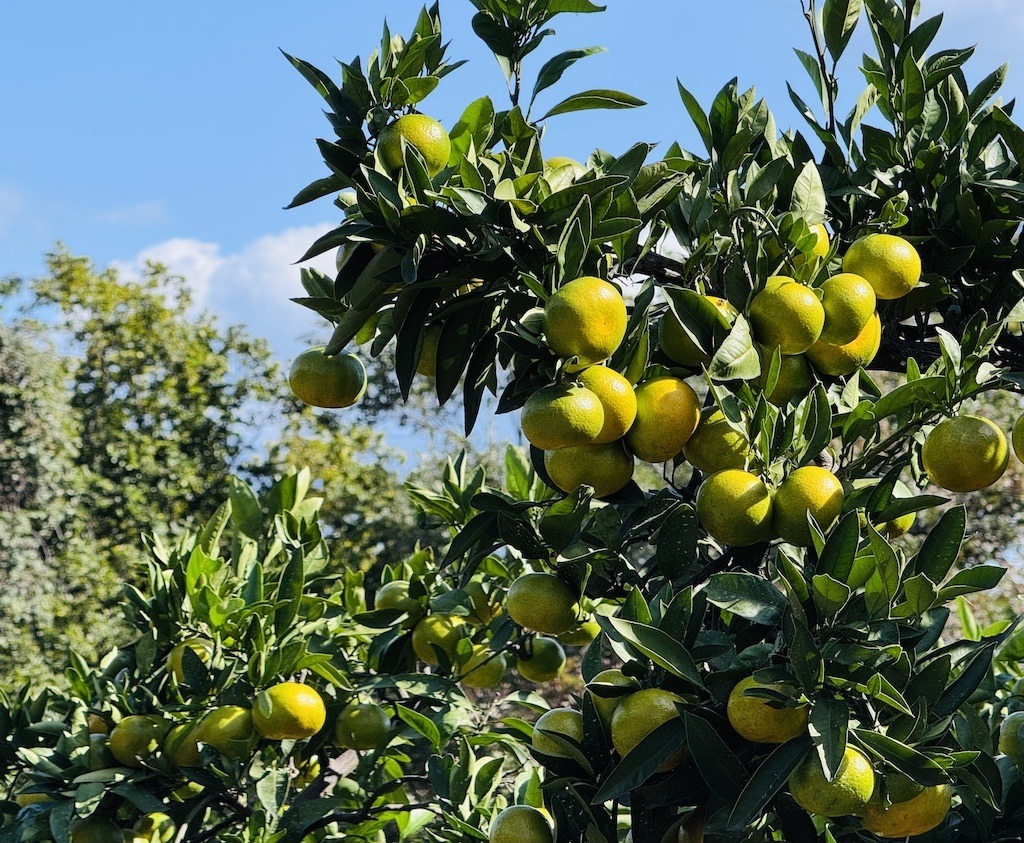
Hakata salt ice cream is another local treat not to miss. It is made with the native sea salt from Hakatajima Island. We stopped at the cyclists’ mecca at Hakata S-C Park to try it. Delicious.
In addition, we rode off the main route to see the famous tidal currents of Funaori Seto Strait. The currents are known to send big boats swirling around in a whirlpool. You can take a full-day cruise of the tidal straits and nearby islands to experience the Seto Inland Sea Islands from the water.
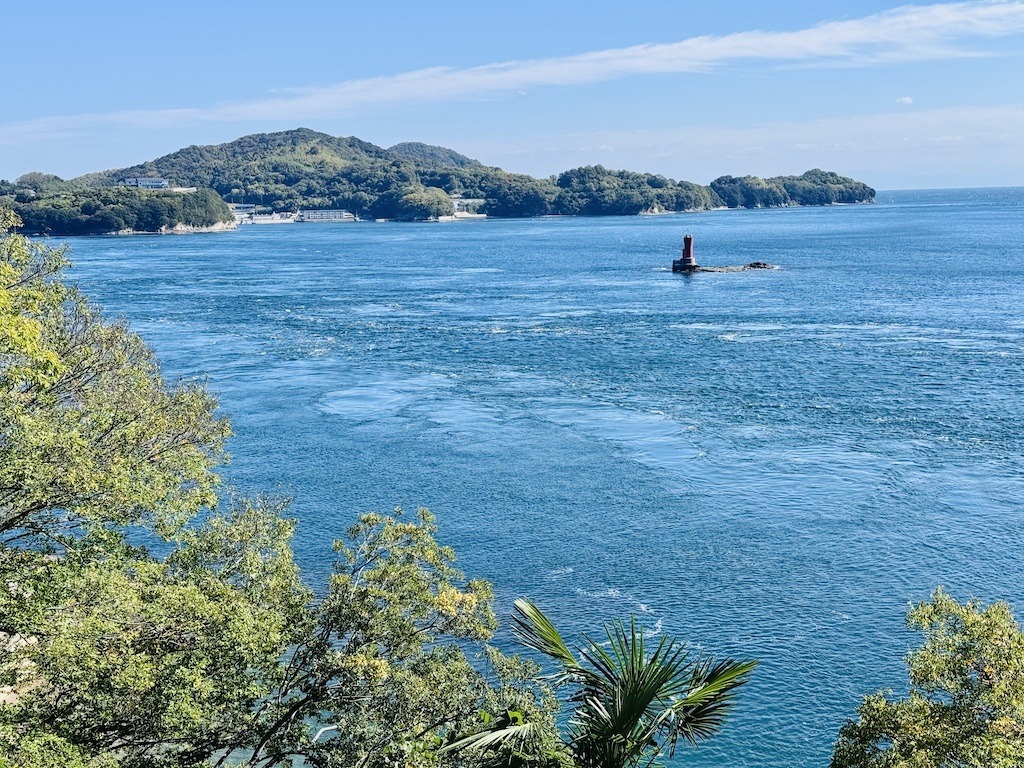
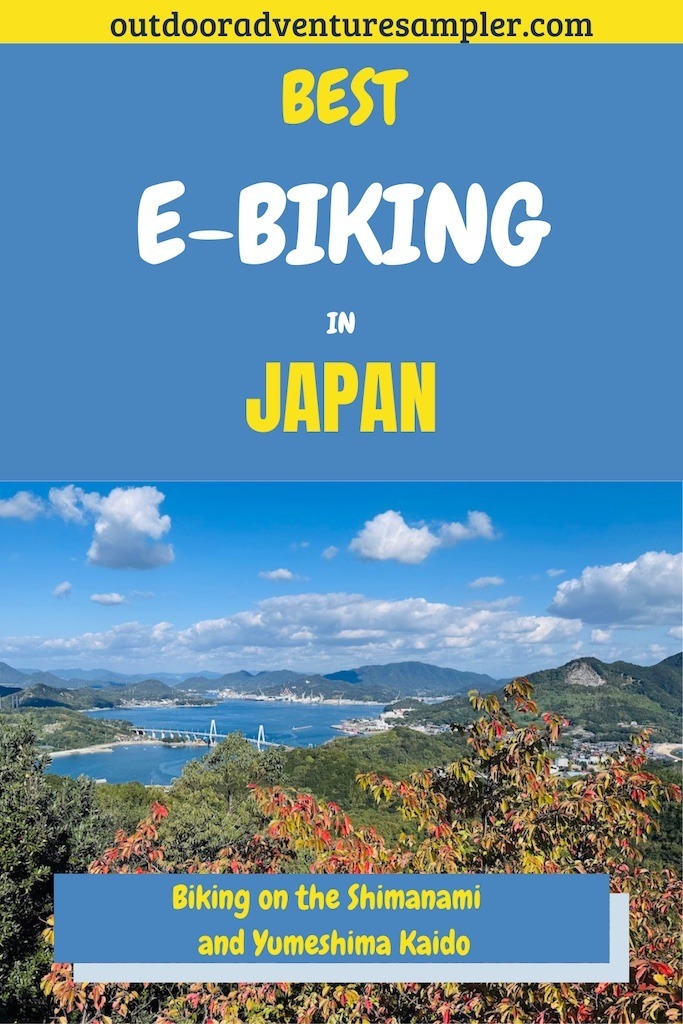
We cycled the main route across Oshima Island. We had lunch at the rest stop with a panoramic view of the Kurushshima-Kaikyo Bridge. The bridge has three successive suspension sections. It was the world’s longest suspension bridge when it was completed in 1999. Although it has since lost its acclaim, it remains a very formidable bridge.
Oshima Island Lodging
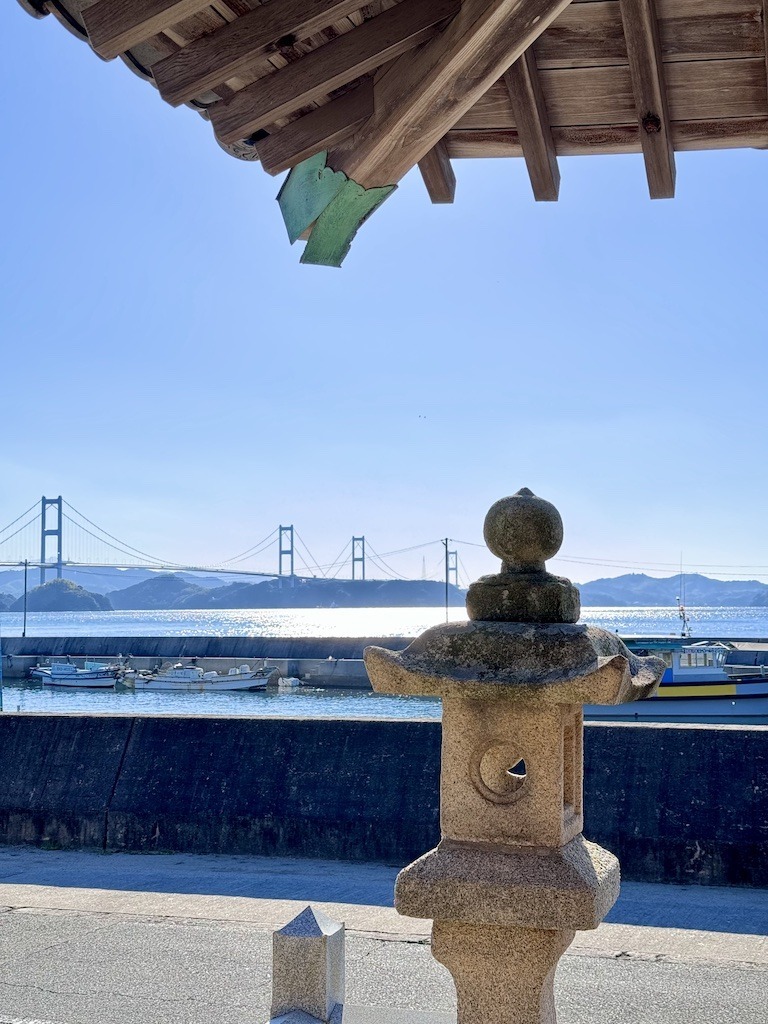
My friends continued across the Kurushshima-Kaikyo Bridge to visit Imabari. I decided to do a multi-stop ride along the west coast of Oshima. On my slow travel afternoon, I explored a Shinto shrine, marveled at the huge ship being assembled at the shipyard, enjoyed a white sand beach, and visited the Yoshiumi Rose Park.
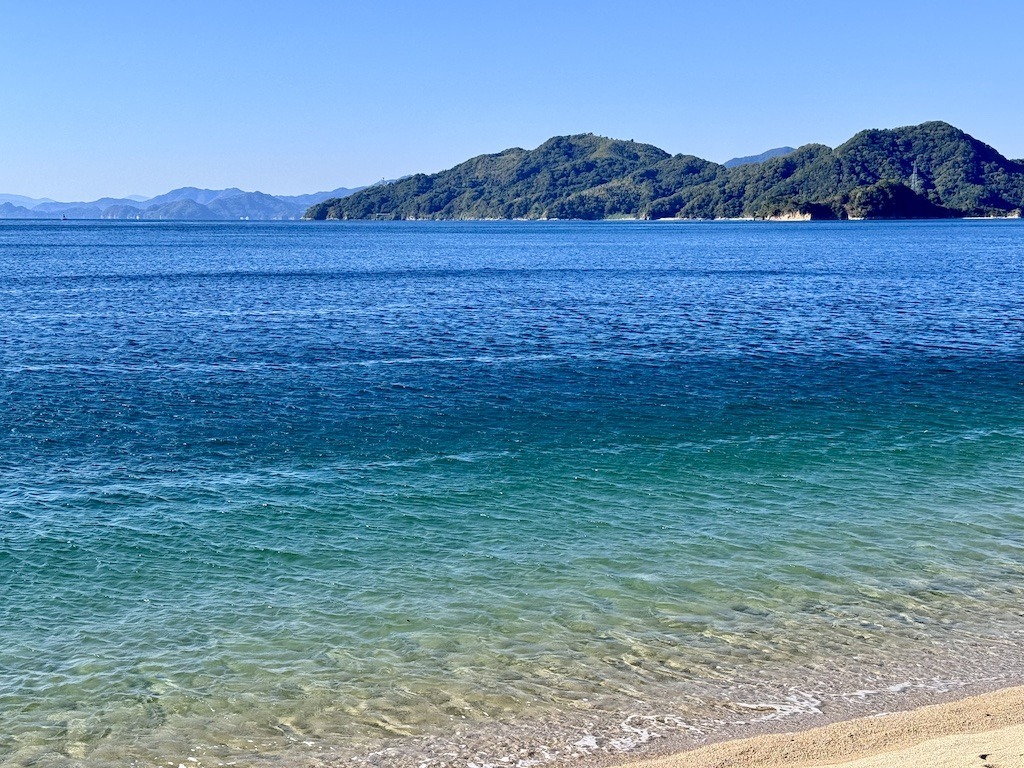
The traditional Japanese guest house accommodations for that night were spectacular. Welcoming amenities in the beautifully appointed rooms greeted us. The owners were so sweet, and the food was amazing. After a while, we started calling it the “it’s all downhill from here house” because we wouldn’t be treated to as much luxury on the rest of the trip.
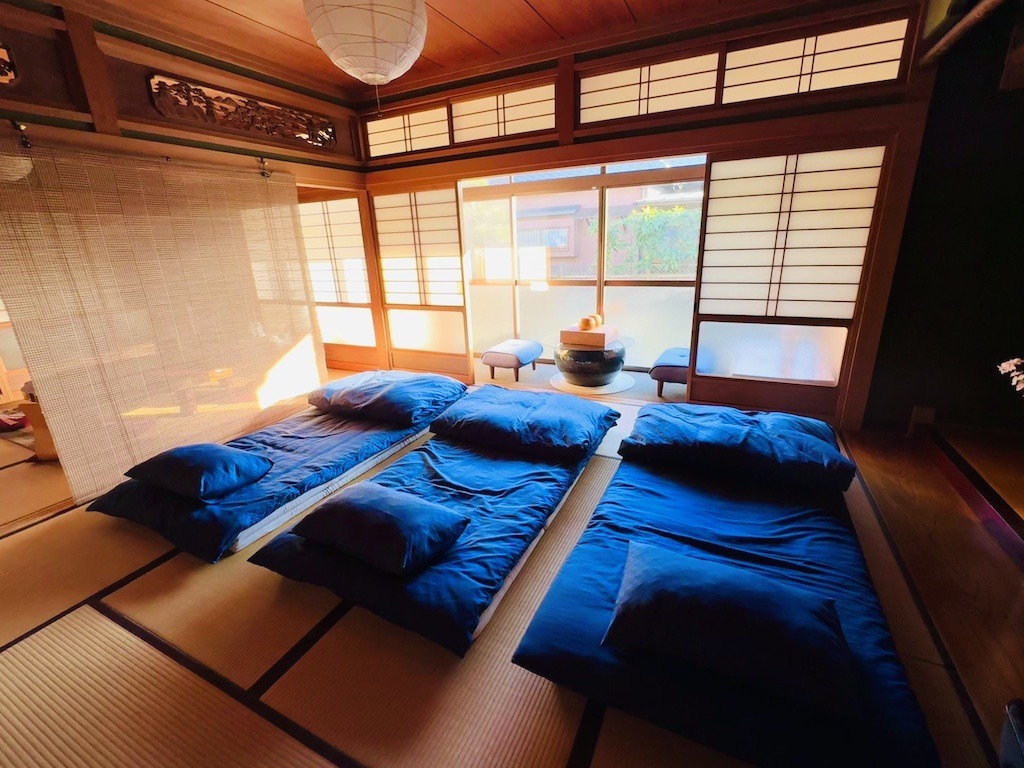
The guest house in Yoshiumicho is called しまなみ海道お宿ぽんぽこ, which means Shimanami Kaido Inn Pompoko. The Japanese kaiseki meal featuring fish dishes served by the hosts was my favorite meal in Japan. It was absolutely worth the 6000 yen each.
Related post -> Recommended Bike Routes of the Eastern Townships of Quebec
Day Five: Oshima Island to Ohmishima Island
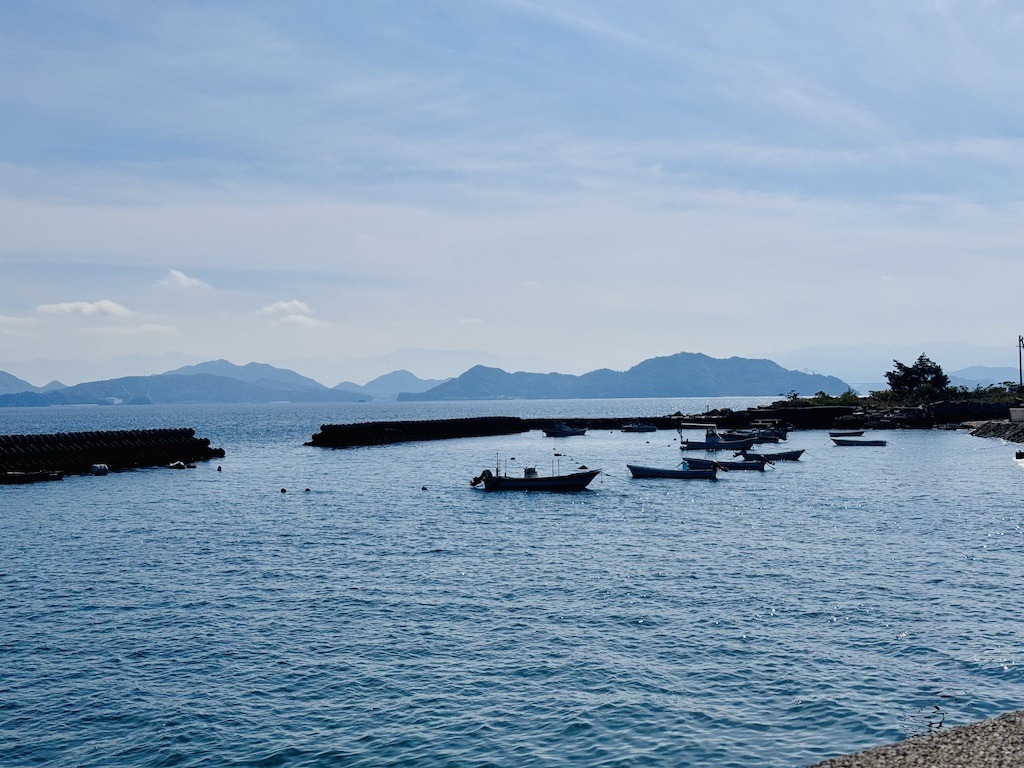
This day was a fabulous exploration of the lesser-traveled roads of Oshima and Ohmishima. Make sure you have stocked up on food in your panniers as there are few services along the way.
The north side of Oshima is a splendid coastal ride. The quarrying industry of Oshima Island is evident in the blue-hued granite along the way. The island’s high-quality granite is used in important construction projects.
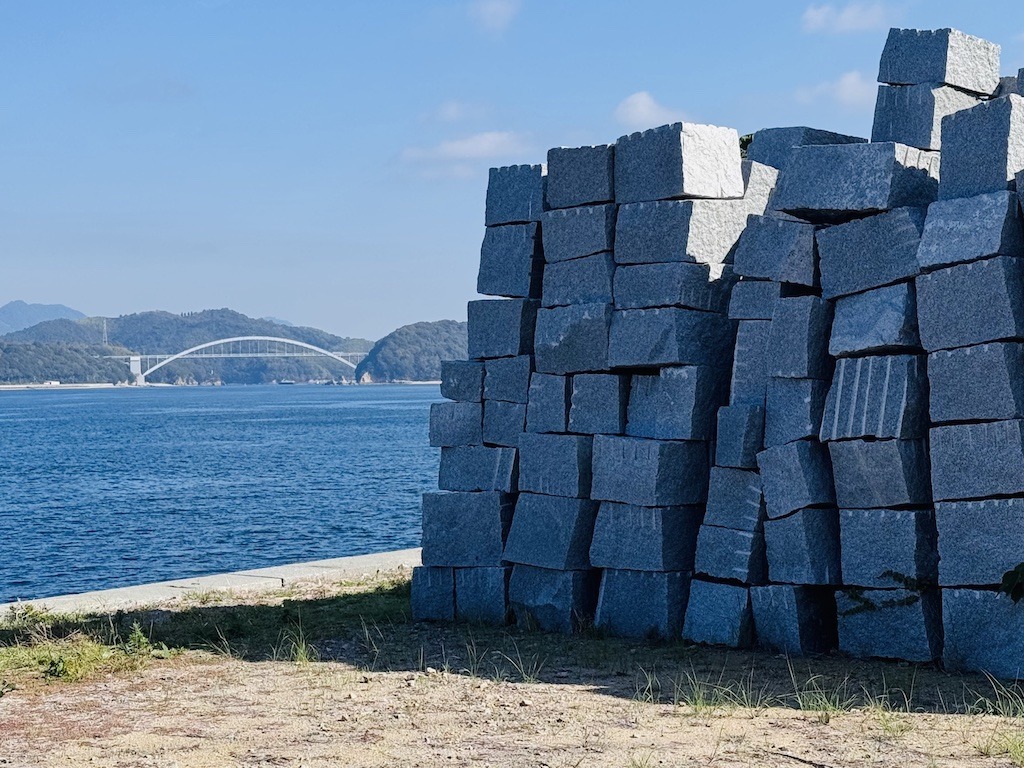
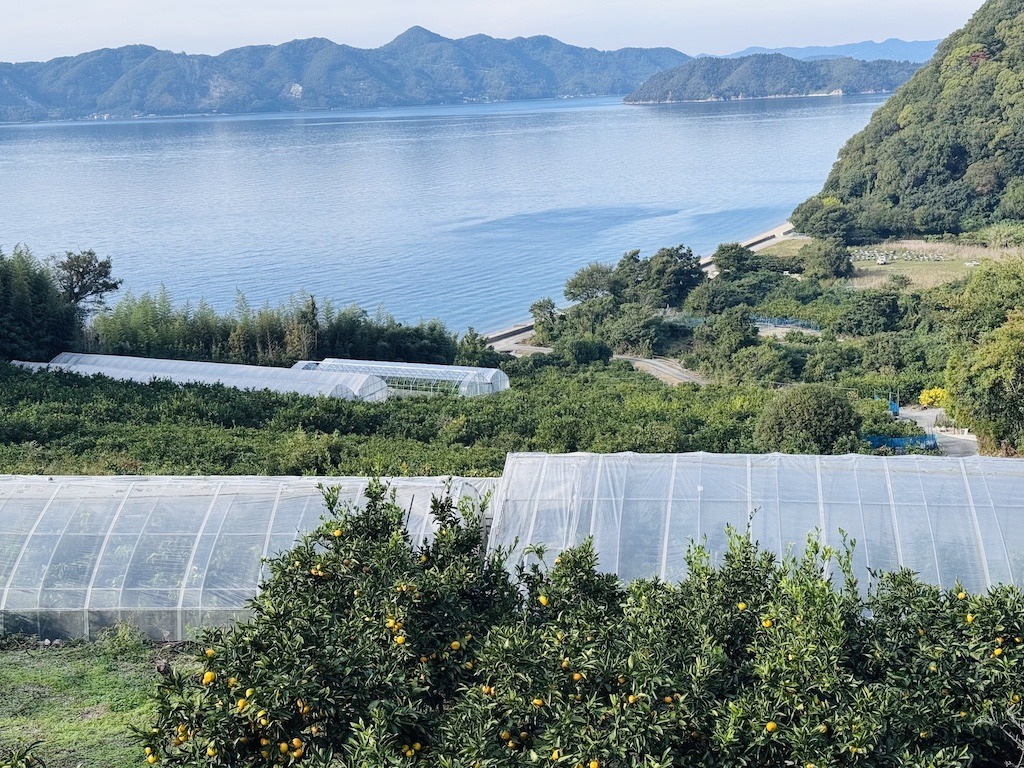
After retracting our route across two bridges, we arrived back on Ohmishima. The west side of Ohmishima is a good reason to go off route on the Shimanami Kaido. Small fishing villages and miles of orange groves line the way.
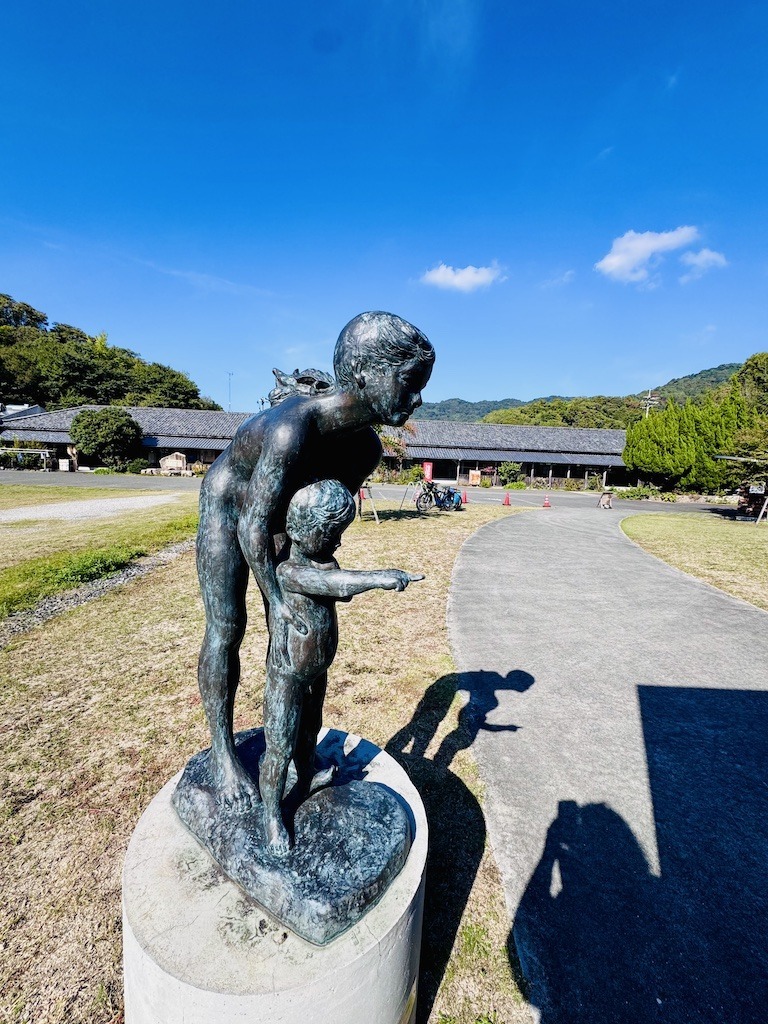
A stop at the Ken Iwata Mother and Child Museum was definitely worth it. The outdoor sculpture park displays 44 statues by Ken Iwata relating to the theme of mother and child. Some of the sculptures were particularly poignant as we had visited the Peace Park at Hiroshima before our bike trip.
We had intended to ride up to the ferry at Sakari to visit Ōkunoshima Island, also known as Rabbit Island. However, with our many stops, by the time we reached Miyaura Port, we had run out of time, and it was starting to rain. Therefore, a quick journey up the hill got us to our accommodations for the night.
Miyaura Accommodations
We stayed at Miyaura Goten, a beautiful guest house with attractive gardens. I loved the upscale hostel vibe the place gave off. Guests gathered in the shared lounge and kitchen for meals and conversation. Make sure to order the wild boar curry dinner that the host makes. Plus, finish it off with his homemade gelato. It was a great celebration of the 80th birthday of a woman cycling Japan on her own.
The area around Miyaura has lots ot offer. There is a well-stocked grocery store and other services. In addition, Oyamazumi Shrine is the oldest shrine in Ehime with an unparalleled collection of samurai arms and armor. Mare Gracia, a hot spring bathhouse, is a short ride away.
Related post -> Biking the Ojos Negros Greenway in Spain
Day Six: Ohmishima Island to Onomichi
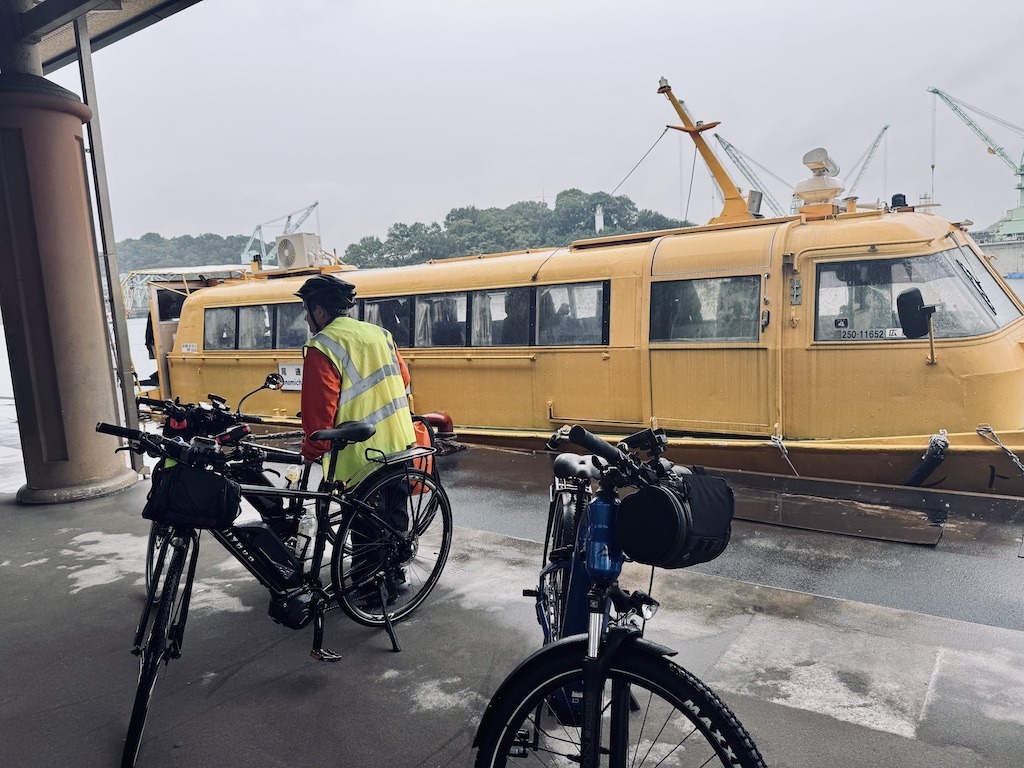
After a gorgeous five days of perfect weather, we woke to a deluge of rain. We had already planned a short ride as we needed to get a train from Onomichi to our next adventures in Kyushu. Therefore, we planned to cycle to Setoda Port and take the ferry to Onomichi.
We didn’t make any stops in the pouring rain, so it took 1.5 hours to cycle to the port to catch the 10:30 ferry. Consequently, we were back in Onomichi to return our bikes in a flash. We had used ferries a few times during the trip and found them an efficient and economical alternative to explore off the beaten path.
Related post -> 18 Best Bike Trails in the United States
Wrap Up of Biking the Shimanami Kaido and Yumeshima Kaido in Japan
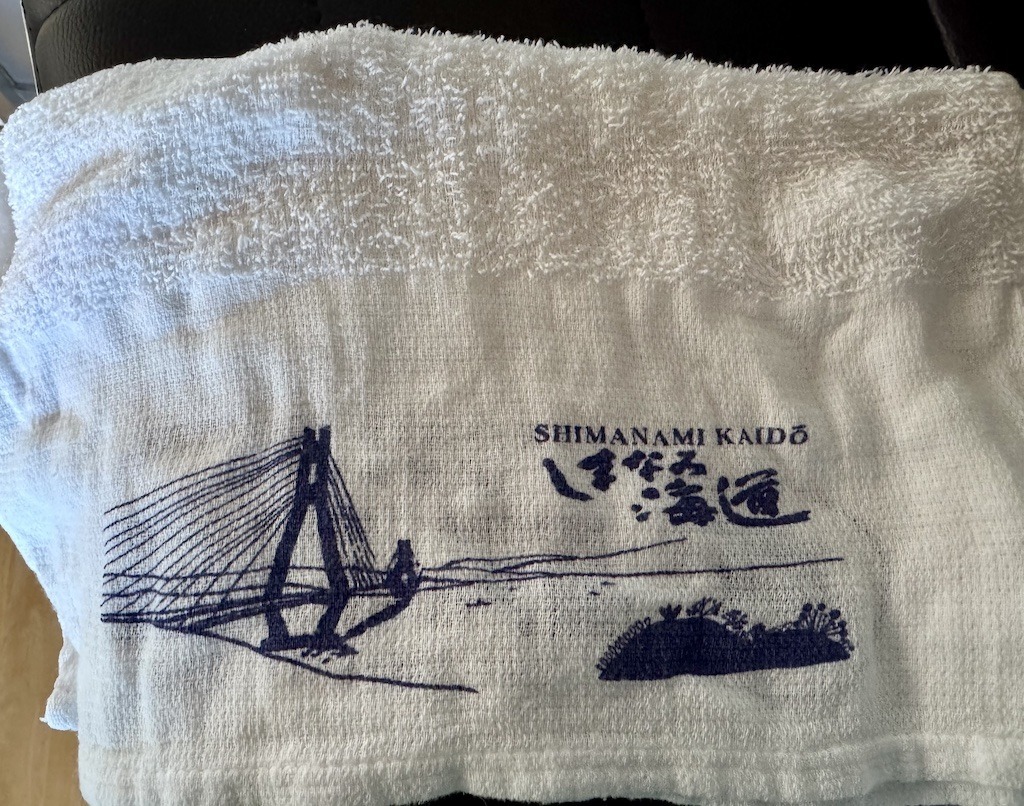
After a glorious six days biking the Shimanami Kaido and Yumeshima Kaido, I’m thankful we meandered along to see the simple life of the islands.
We were happy to have e-bikes because even though the main blue line route is fairly flat, the entrance roads to the bridges are quite steep. In addition, we often explored routes that had hills, so it was nice to have some assistance. The routes on the Seto Inland Sea Islands are suitable for all levels of cyclists. I strongly recommend taking your time to see the slice of Japanese life offered on the islands. Whenever “there is nothing to see” is when you will have a chance to experience something most visitors to Japan miss.
Pin it!
8 Comments
Kate B · November 19, 2025 at 5:00 pm
I’ve never been to Japan. I loved reading this post and appreciated that it’s not just all about visiting the cities!
Julia · November 20, 2025 at 10:58 am
Hello! Japan looks so mysterious, especially those corners which are not known well. Tourists mostly prefer to visit Tokyo and some other large towns, but you review shows another side of the country.
Agnes · November 20, 2025 at 11:52 am
What an amazing trip! I love that you took the slower route instead of rushing through the Shimanami Kaido. Stopping to explore shrines, quiet villages, and those peaceful coastal views sounds like the perfect way to soak in the spirit of the Seto Inland Sea. Your 6-day journey really shows how much you can discover when you step off the main blue-line path and follow the quieter corners of the islands.
Anna · November 20, 2025 at 4:00 pm
Your slow-travel approach to the Shimanami and Yumeshima Kaido is wonderful — the quiet islands, ferry hops, small villages, shrines, and lookout points make the whole journey feel so alive. Thanks for the inspiration!
Cristina · November 21, 2025 at 4:08 pm
I’ve never been to Japan, but I will definitely consider this slow travel option. I love the look of the landscapes.
Le · December 3, 2025 at 2:10 pm
By reading your blog that inspires me and my husband to do the the same journey as yours in next spring.
Elizabeth · January 12, 2026 at 1:43 pm
Your blog has been the most useful I have found for planning our trip in June. Thank you!
Karen · January 12, 2026 at 2:00 pm
Thank you. I’m so glad it can be helpful. Enjoy your trip. Contact me with any questions.