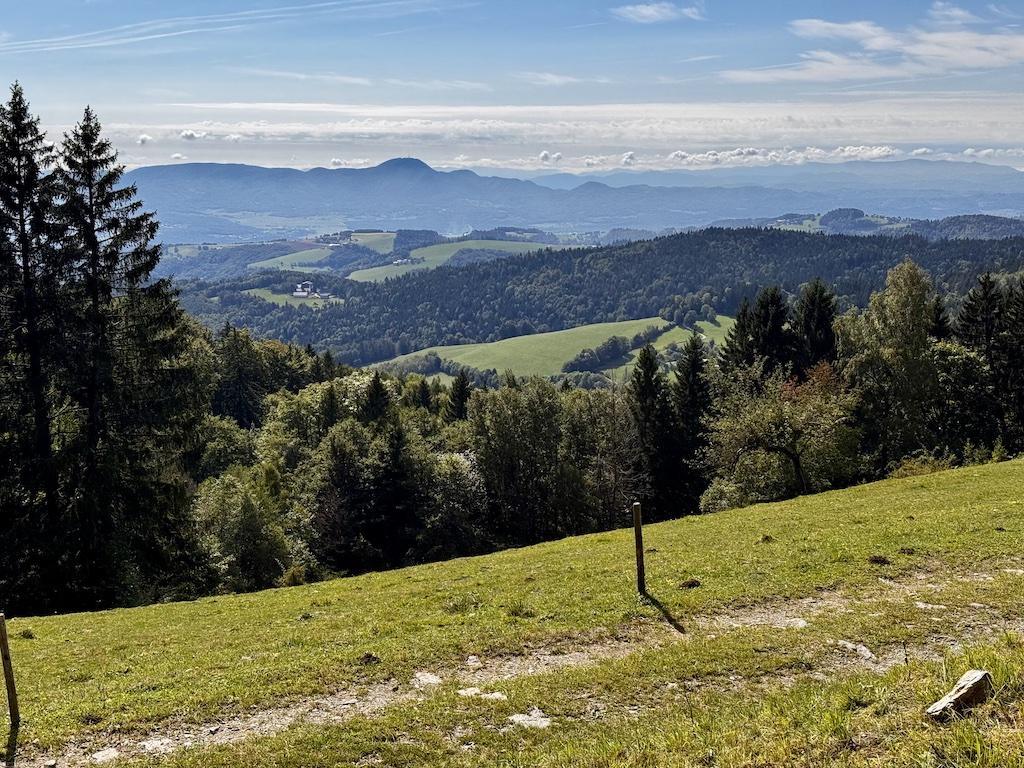
An E-biking trip in Slovenia is an amazing way to see this gorgeous country. Many visitors favor the western part of Slovenia for its popular outdoor adventures. For good reason, places such as Lake Bohinj, the Soca River Valley, and Triglav National Park spark excitement for outdoor explorers.
However, after seeing many of western Slovenia’s sights, I was eager to explore the quieter eastern part of the country. I decided a 6-day cycling trip would let me slow travel through the mountains, farm fields, wine hills, and historic cities of Eastern Slovenia. The people of Slovenia are warm and friendly, so a biking trip is a spectacular way to spend more time interacting than driving.
Related post -> Outdoor Adventures of the Logar Valley of Slovenia
Posts may contain links to products and services I love. I may make a small commission from them, at no extra cost to you. Thank you for supporting my blog. Visit the privacy policy for more information.
Logistics of E-Biking in Slovenia
Multi-day bike trip routes in Eastern Slovenia have not been well developed. It’s hard to find a biking outfitter who does multi-day trips in this area. Therefore, I was excited to put together a cycling itinerary to explore the best outdoor areas in Eastern Slovenia.
While this post is about an overnight bike trip in Eastern Slovenia, I highly recommend using bikes to explore some of the amazing sights in the western part of the country. Here are some ideas for cycling day trips I would do in a minute.
- E-bike tour through the Soca Valley to explore the area where the movie “The Chronicles of Narnia” was filmed.
- E-bike trip along the spectacular coast of Slovenia, including a food and wine tasting at the end.
- E-bike rental for a self-guided ride to the Škocjan Caves and the surrounding karst hills. Bike pickup is near the train station, so no car is needed.
Bike Rental for E-biking in Slovenia
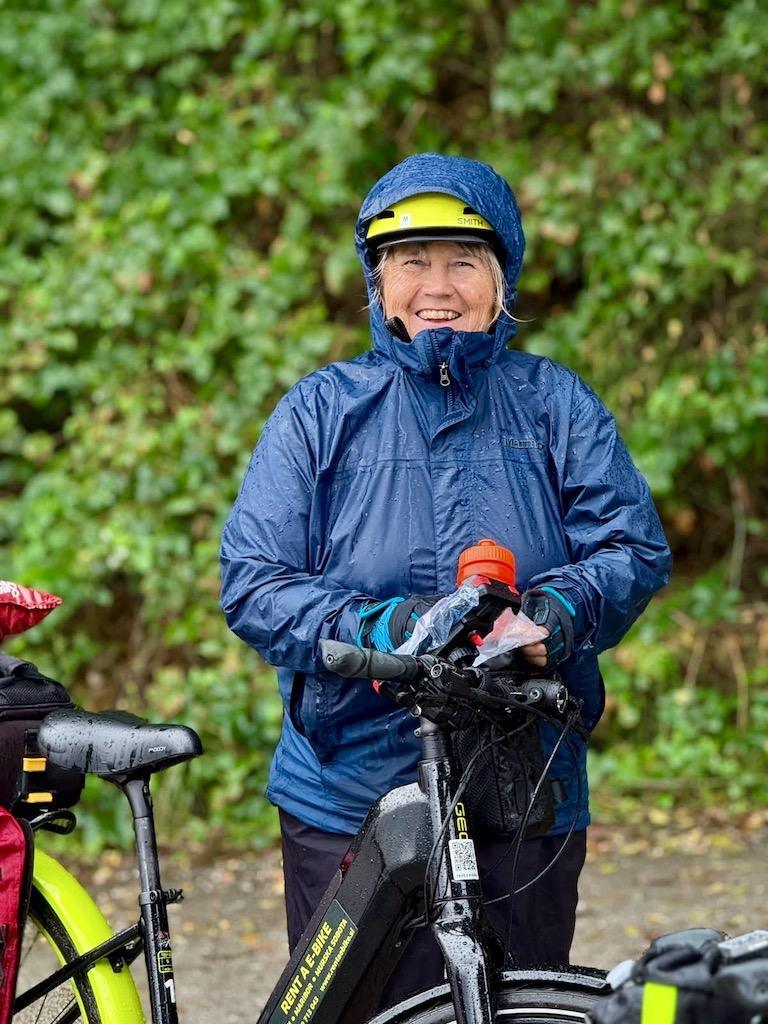
While biking is popular in Slovenia, touring E-bike rental for multi-day trips in the eastern part of the country was challenging. I finally decided to use Rent a E-Bike based out of Ptuj. The prices were reasonable (30 euro/day), and they transported the bikes to Maribor for a nominal fee so we could start and end there. The owners went out of their way to make sure we had easy logistics and good communication.
The bikes had great power and were in tip-top condition. However, they were city bikes with slick rather than knobby tires. As it turned out, they worked fine on the gravel and forest paths we used on occasion. The bike bags they provided were not big enough for a 6-day trip so we brought our own panniers. Since the racks were set up for the company’s bike bags, it was hard to attach standard panniers to them. But with help from the owner, we were able to jerry-rig a workable solution.
As multi-day cycling trips are more popular in Eastern Slovenia, I believe the outfitters will adjust their equipment offerings.
Transportation for E-biking in Slovenia
To get around Slovenia and see other parts of this gorgeous country, it’s best to have a car. I use and recommend Discover Cars to find your rental car in Slovenia. They work with reputable agencies offering excellent prices. For example, I had a flat tire on the trip, and the car rental company was quite helpful. In addition, there are many toll roads in Slovenia, so buy a toll pass from the rental car company. The e-vignette costs €16 per week and €32 per month.
Since we biked in Austria before our Slovenia trip, we took the train from Vienna to Maribor. The train took just under 4 hours. The cheapest way to get tickets for travel in Europe is to use Omio, an excellent and easy-to-use online ticket vendor.
Related post -> An Excellent Bike Tour on the Danube River Cycle Path
Communication for E-biking in Slovenia
For reliable data and precise navigation, I used an e-SIM in my phone. I used Sim Local’s unlimited e-SIM for fantastic coverage in all areas of Europe we visited. It was easy to install and worked flawlessly. Use my code OUTDOOR to get 10% off a Sim Local e-SIM.
Related post-> Airalo vs Sim Local: Which Is the Best eSIM for International Outdoor Adventure Travel?
Bike Apps
I use the Komoot app, a popular route planning and navigation app for biking and hiking. It’s possible to plan a daily route and get audio and visual turn-by-turn navigation to follow it. Save the route at the end to have a record of the biking you did on the trip.
My friends on the trip used Veloplanner and found it very useful for planning navigation in Slovenia. Whatever app you use, make sure you have a sturdy bike mount for your smartphone so you can follow directions while riding.
Itinerary for E-Biking in Slovenia
Maribor to the Pohorje Hills
The bike company delivered our bikes the night before the trip. We stayed in a wonderful apartment in Maribor where we could lock the bikes safely in the gated courtyard. Bajta na obzidju had 2-bedroom apartments right near the old town. The staff was incredibly nice, helping us do our laundry and storing our extra luggage for the duration of our trip.
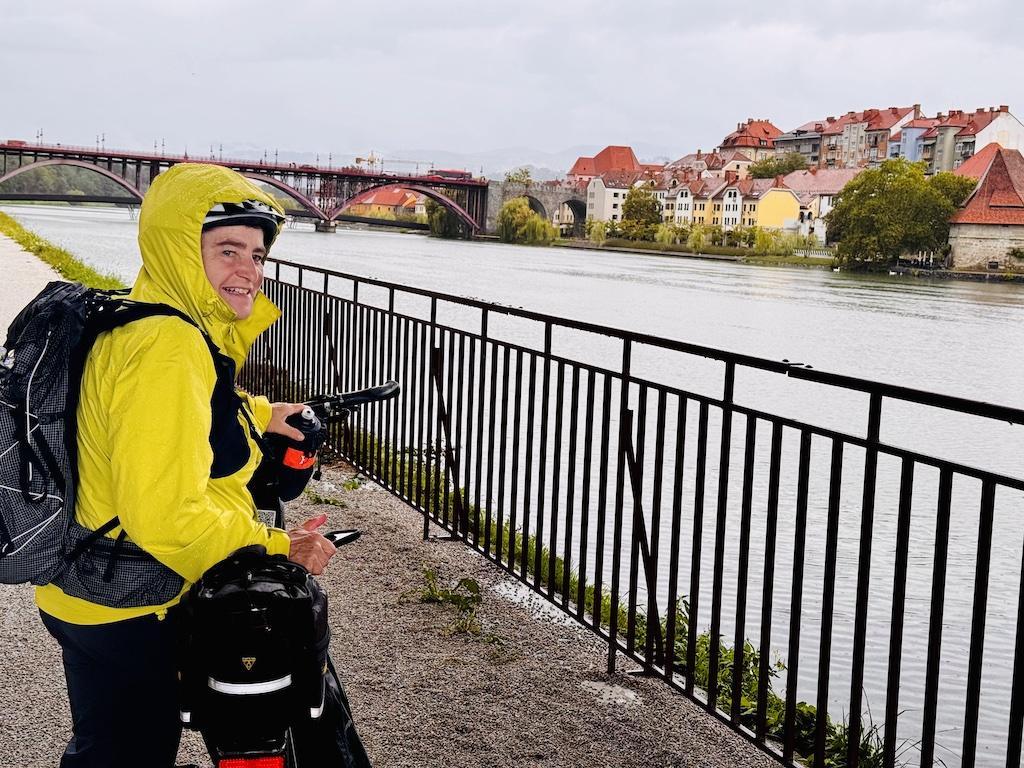
The morning brought pouring rain. We huddled under cover of the supermarket in Maribor after buying our food for the day and considered our options. We waited a bit until the driving rain subsided to regular rain. I was happy to have a good raincoat and rain pants,
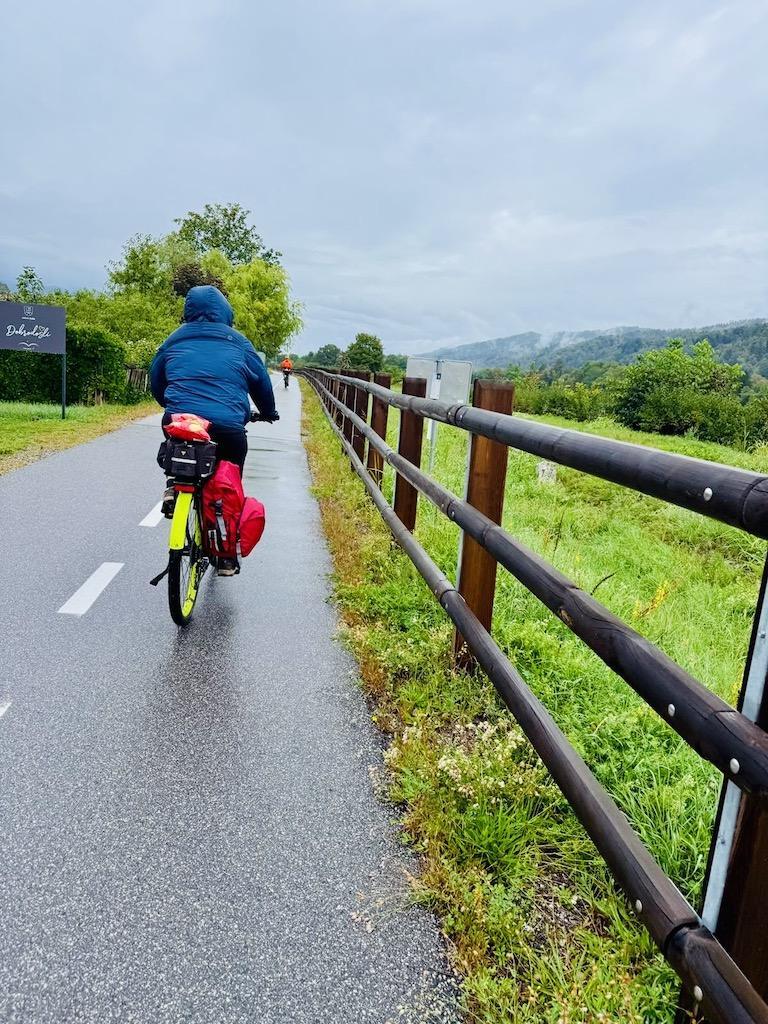
The first part of the ride that day was on the Drava Cycle Path, which connects Italy, Austria, Slovenia and Croatia along a route of approximately 710 km. The path is under construction in some places; however, it provided a gorgeous journey beside the Drava River until we reached Ruše.
The Pohorje Hills
From Ruše, we headed into the Pohorje Hills, a forested mountain range with hiking and biking trails and ski slopes. The climb was steep. Even with e-bikes, there were hills we had to push our bikes up.
The forested terrain opened up occasionally for panoramic views over the countryside. At times, we rode up sweeping paved switchbacks. Other times, the route took us on woods roads and even across the access roads of a ski resort.
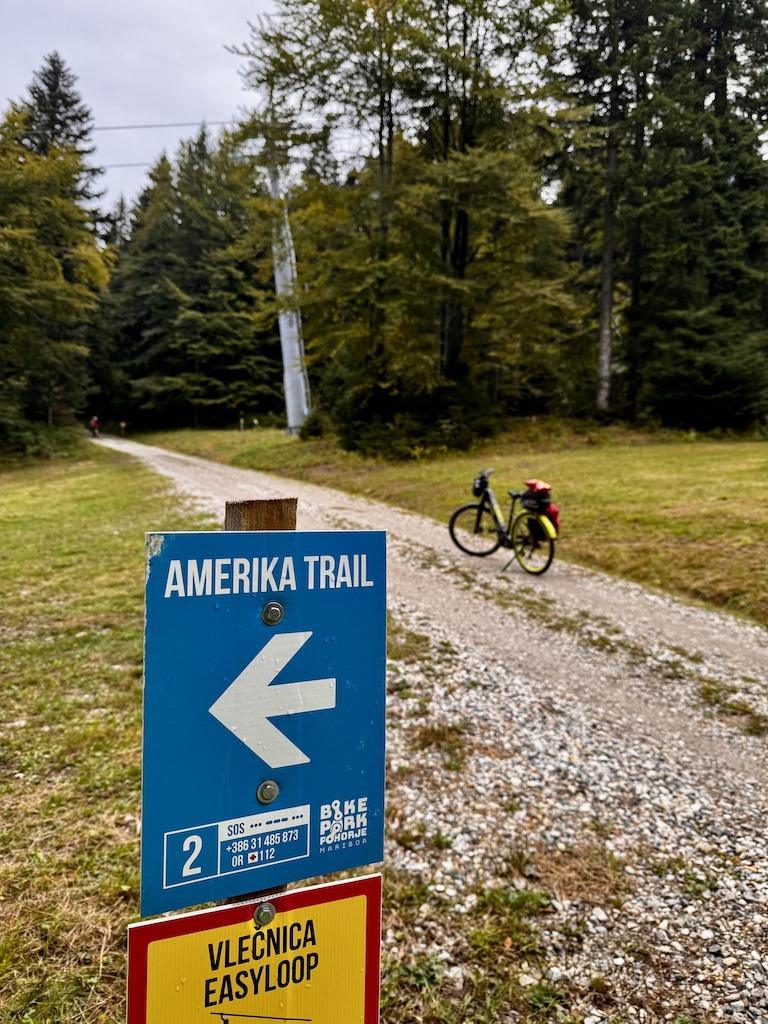
We reached our mountain hut accommodations on a summit in the Pohorje Hills after a challenging but satisfying day. The route was 30 km with a 1050 m climb.
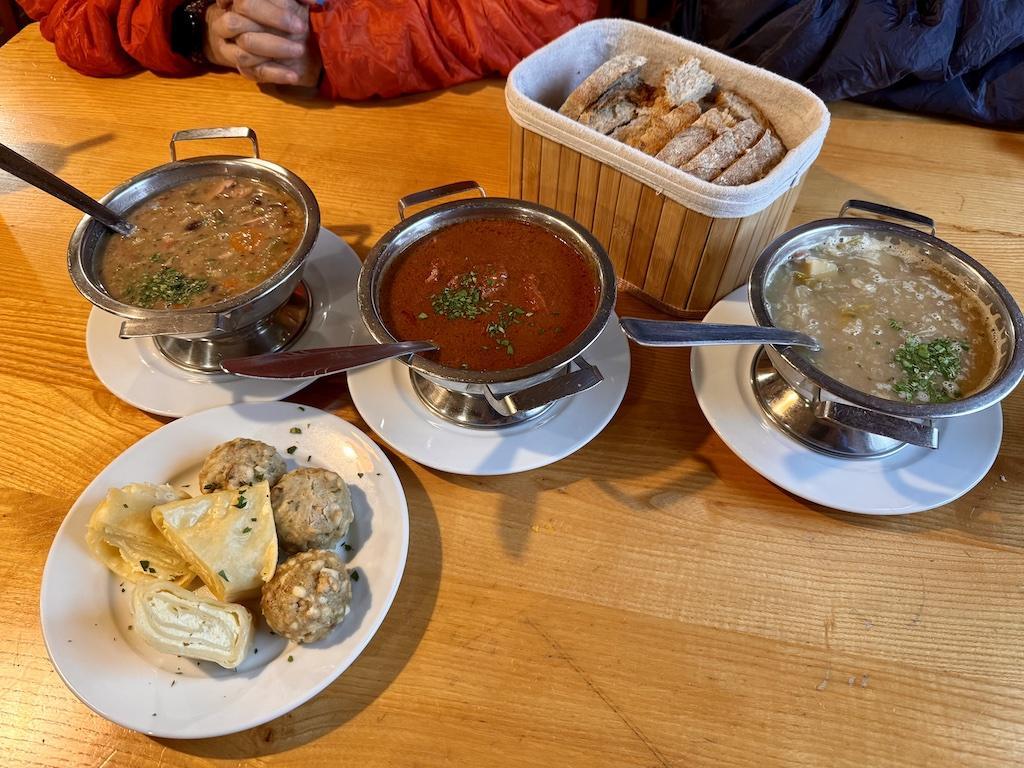
Ruška Koča, the oldest Pohorje mountain hut, was our cosy retreat for our first night; a classic mountain hut with simple private rooms. The warmth of the staff drew me in immediately. The chef helped us store our bikes in the dedicated bike shed with charging ports, and then offered to make us a dinner of typical Slovenian fare.
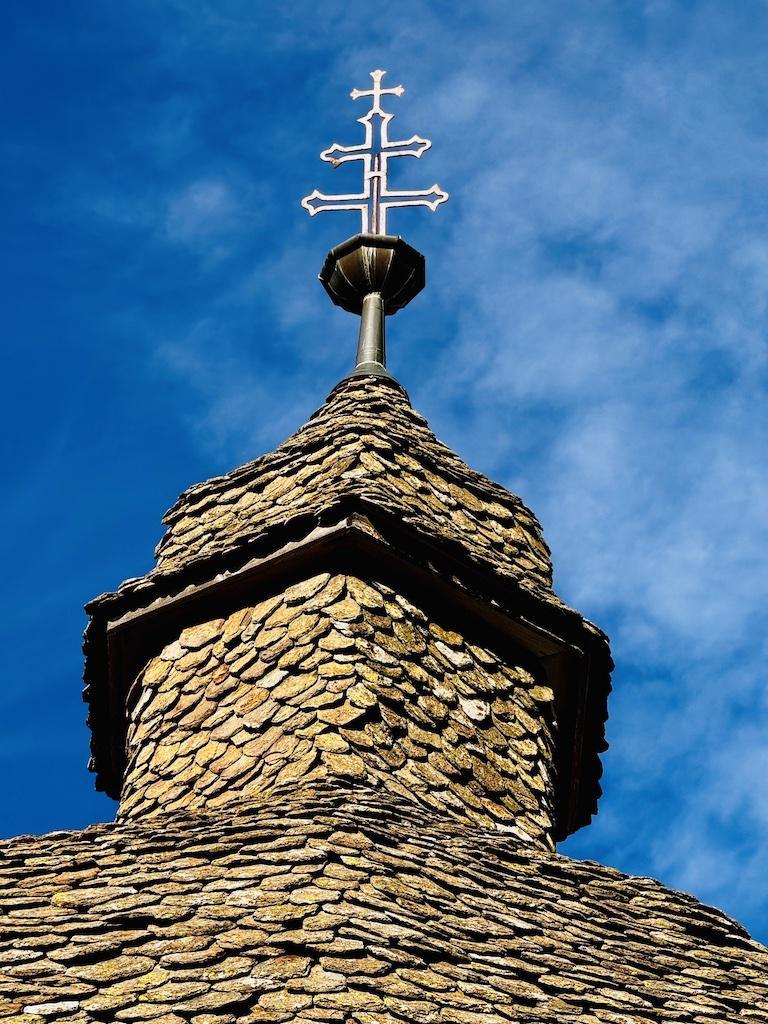
Church of St. Areh
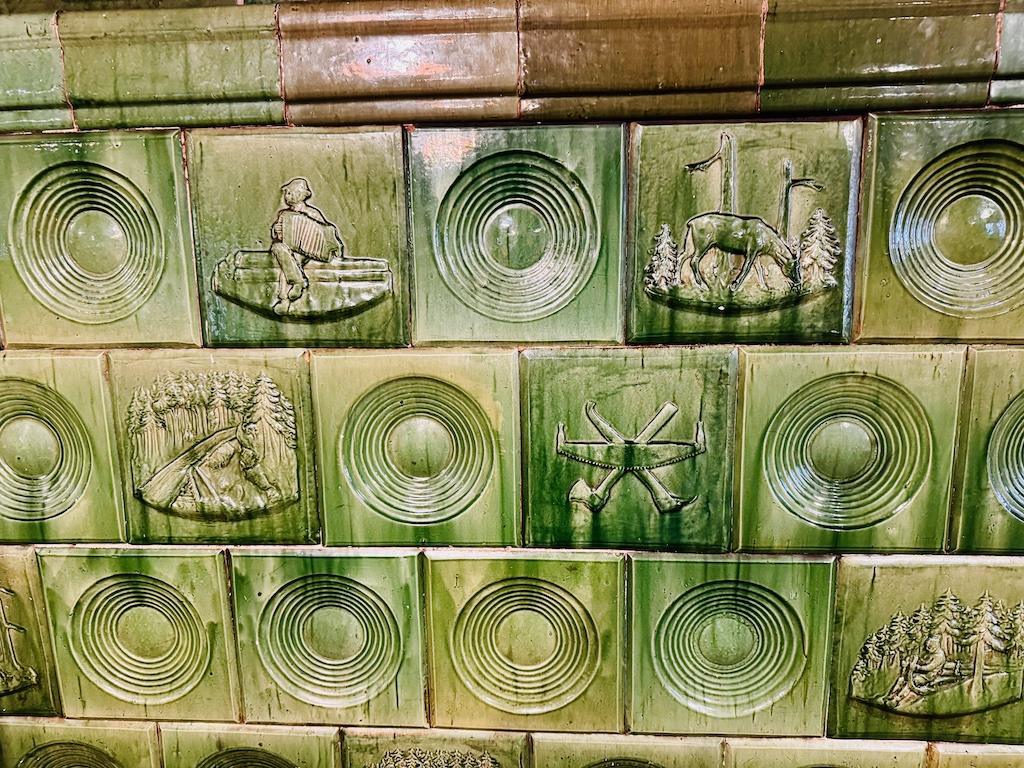
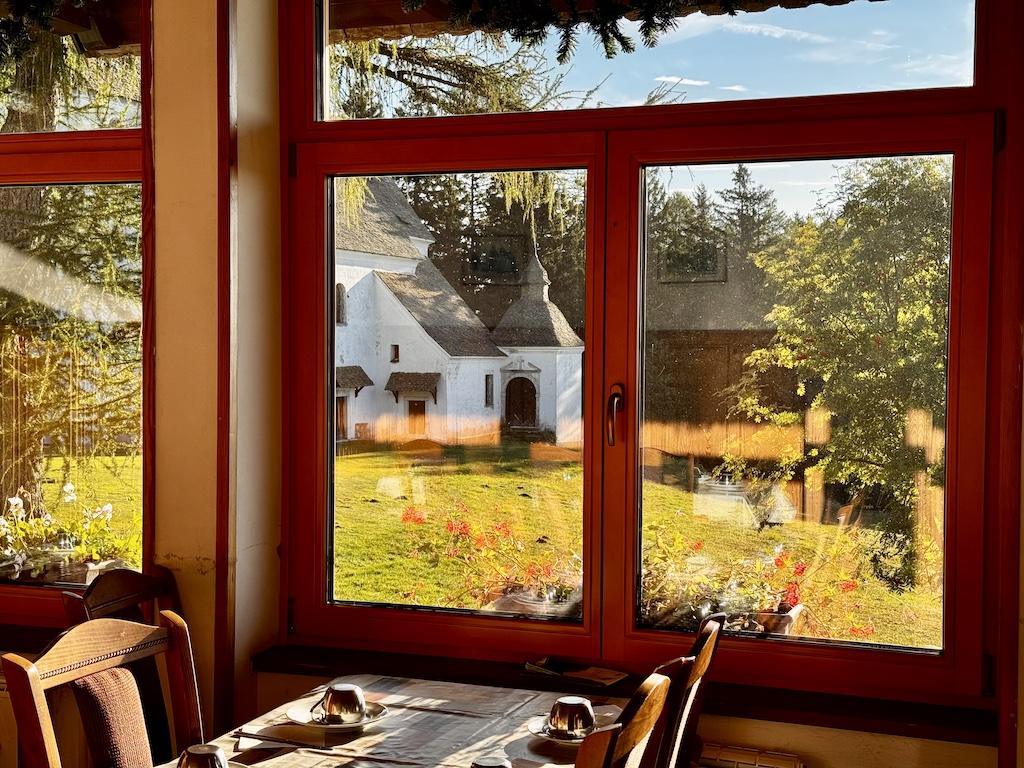
Built in the 13th century, the Church of St. Areh is located next to Ruška Koča. The roof is made of flat stones intricately arranged in overlapping layers. It is located in an open field in the forest with a view of the gorgeous surrounding mountains and valleys. In addition, many hiking trails also start here.
Ruška Koča to Slovenska Bistrica
What goes up must come down. Therefore, day two of the bike trip involved an exhilarating descent of the switchbacks on the south side of the Pohorje Hills. The distance for the day was 33 km.
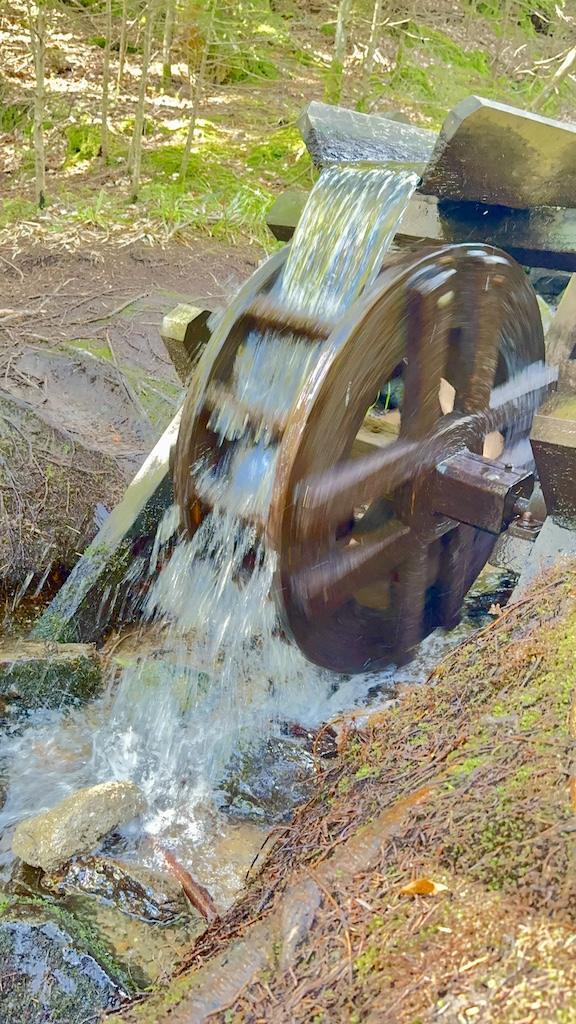
We explored the sights of the Pohorje Hills on the way down to Slovenska Bistrica. First stop was the Skalca Water Wheel. The water wheel is the traditional method of harnessing the power of mountain streams for milling or sawing.
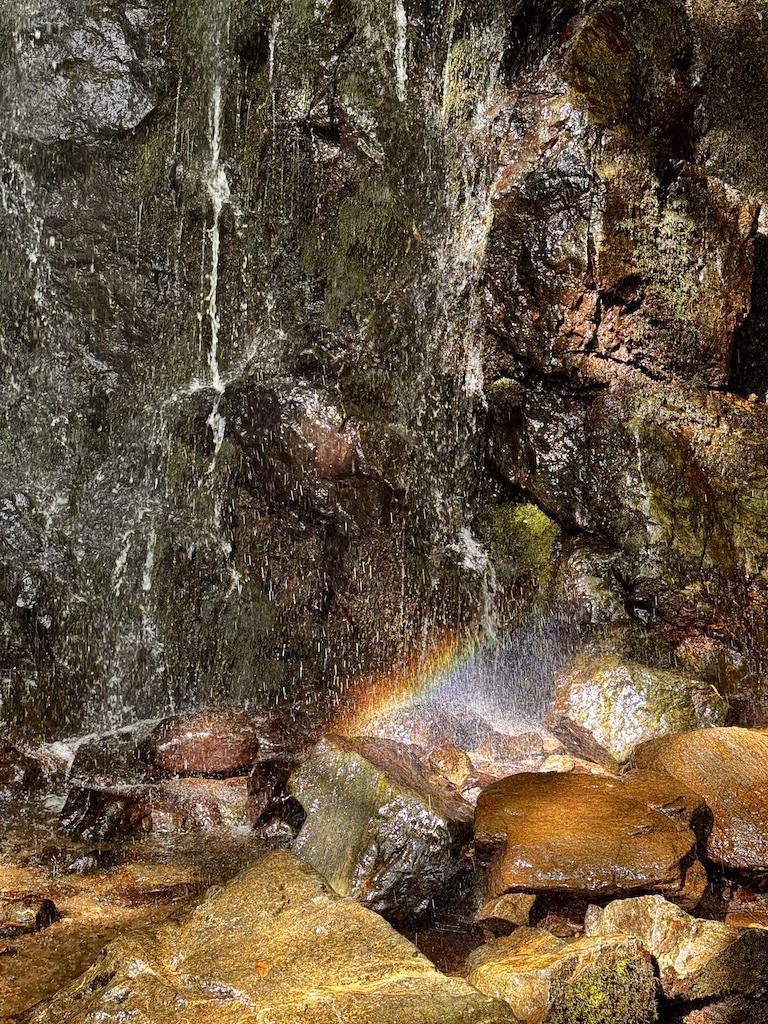
Continuing, we explored a gorgeous glen featuring the Fram Waterfall (also known as Slap Skalca). Slap means waterfall in Slovenian and I can’t think of a more appropriate word for cascading water hitting rock. The short hike was through mature forest with beams of sunlight sneaking in. I met some folks collecting mushrooms there. I’ve found it common to find locals out in pursuit of wild mushrooms. It’s always fun to admire what they have collected. You will find wild mushrooms in the delious soup served across the country.
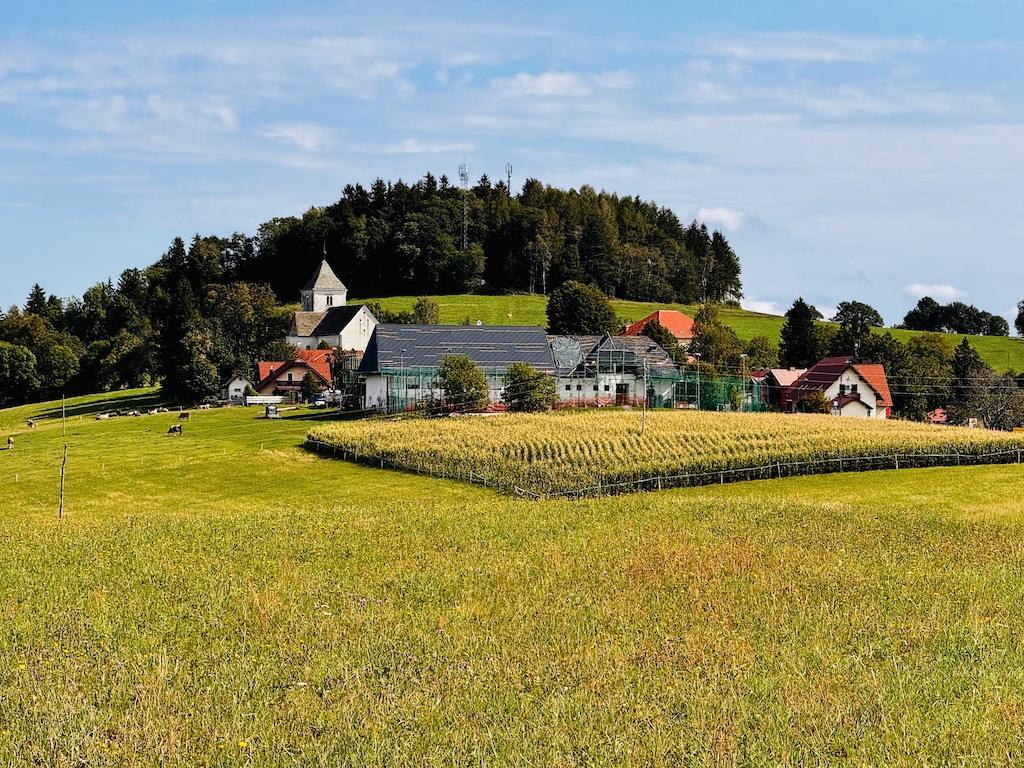
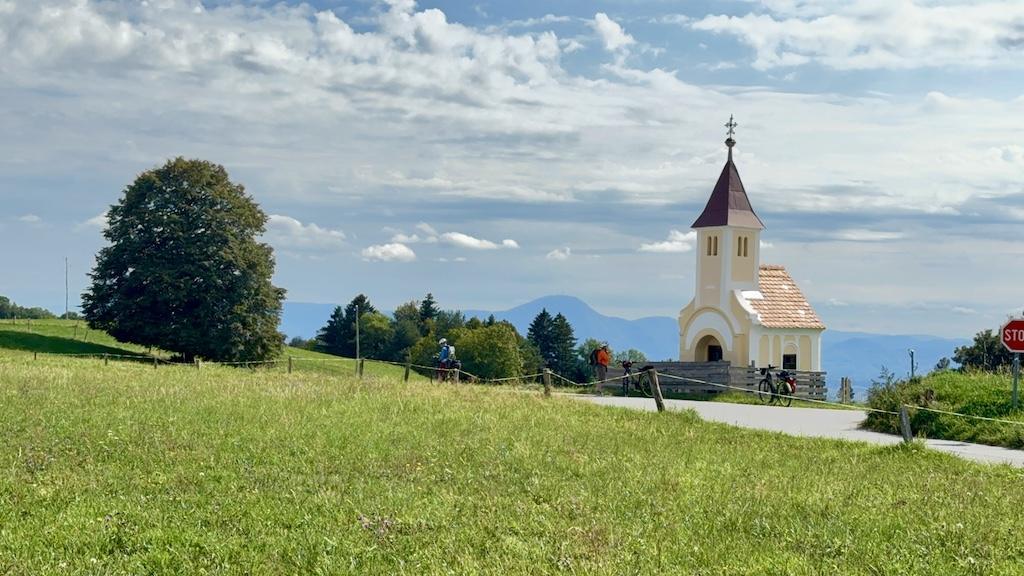
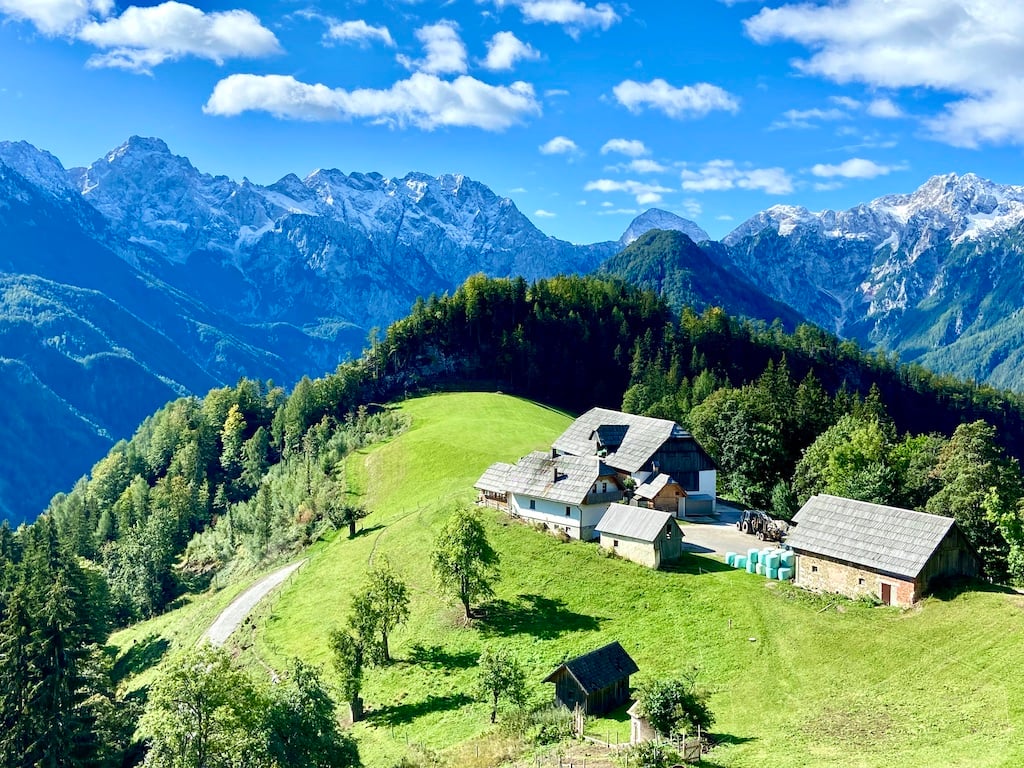
After our mid-morning coffee stop at Mariborska Koca, another historic mountain hut, we headed toward Slovenska Bistrica. We rode along a ridge with immense valleys on either side. The farmland scenery was breathtaking. A picturesque town and a tiny church clung to the high plains.
Staying in Slovenska Bistrica
After two days in the mountains, Slovenska Bistrica was a welcome place to resupply the lunch food and snacks we carry on the trip. A scenic town square was surrounded by historic buildings. Our accommodations for the night were at a yoga retreat center well located by everything. The OM Yoga Center had 4-person rooms with bunk beds for us to sleep. It was a budget alternative with small rooms; however, the friendliness of the owner and the quiet grounds were definite perks of staying there.
I cherish the times I have with locals when we share our lives across language and distance. It is an affirmation of the common stock of humanness we come from despite our histories, customs, or ways.
Slovenska Bistrica to Ptuj
The day started by biking through tiny villages of neat stucco and brick houses. Each house was orderly and well kept. I learned that the widespread social expectation, environmental consciousness, and personal pride of Slovenians resulted the cleanliness. Houses are often spruced up with planters of flowers affixed to the windows.
Next, we joined the bike path beside farm fields of alfalfa, soybeans, pumpkins, and corn. Herons and egrets found food. Hooded crows rose up ahead of the bikes. Long-tailed hawks soared over the fields. From the flat lands, we could see the mountains we had ridden in the days before.
We anticipated a short day to Putj, so decided to take a short side trip to Majšperk. A huge church on a prominent outcropping drew my curiosity. Therefore, we rode up a steep hill to the Basilica of the Virgin Mary the Protectress.
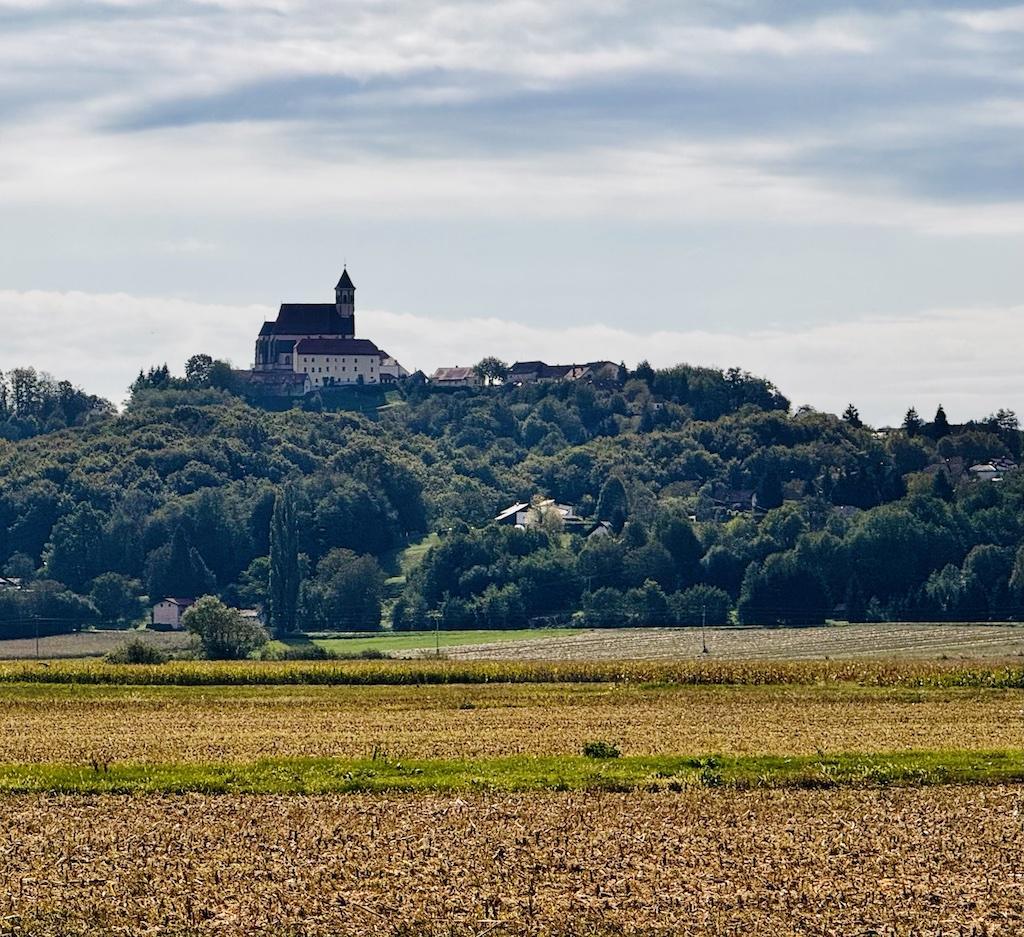
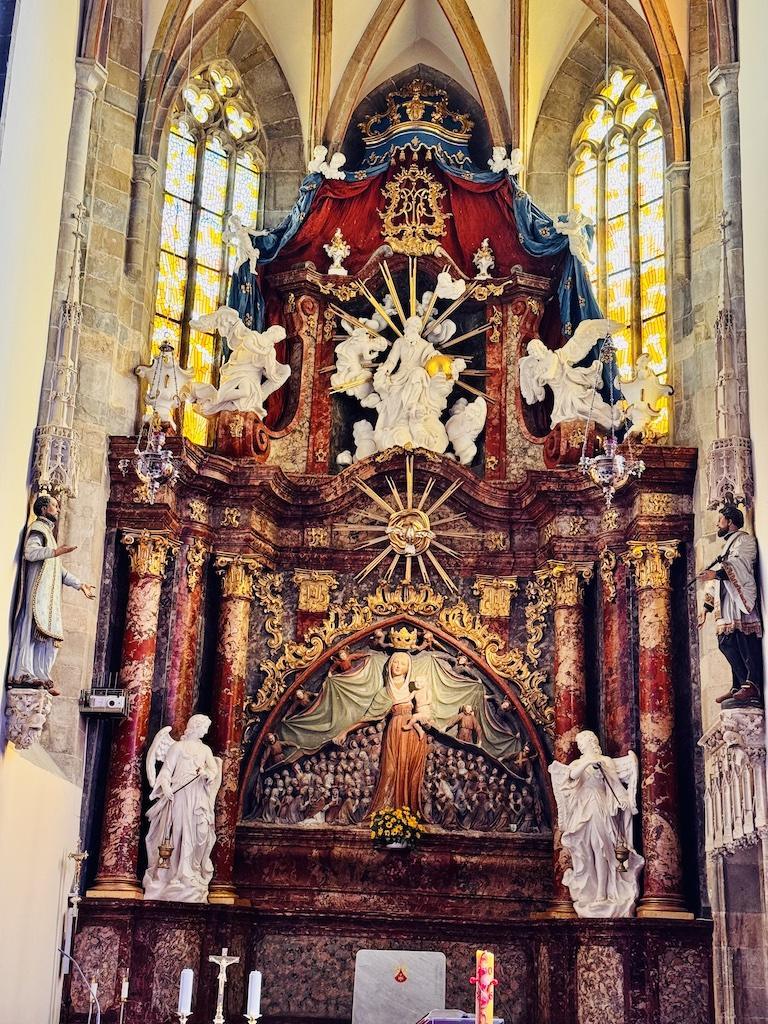
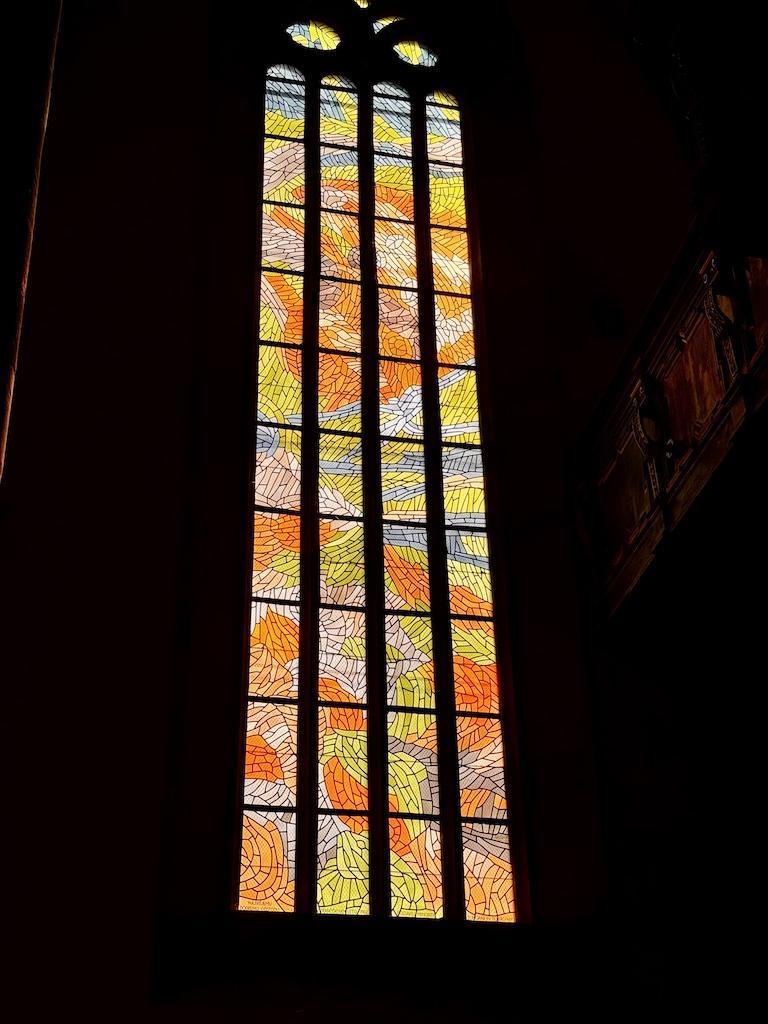
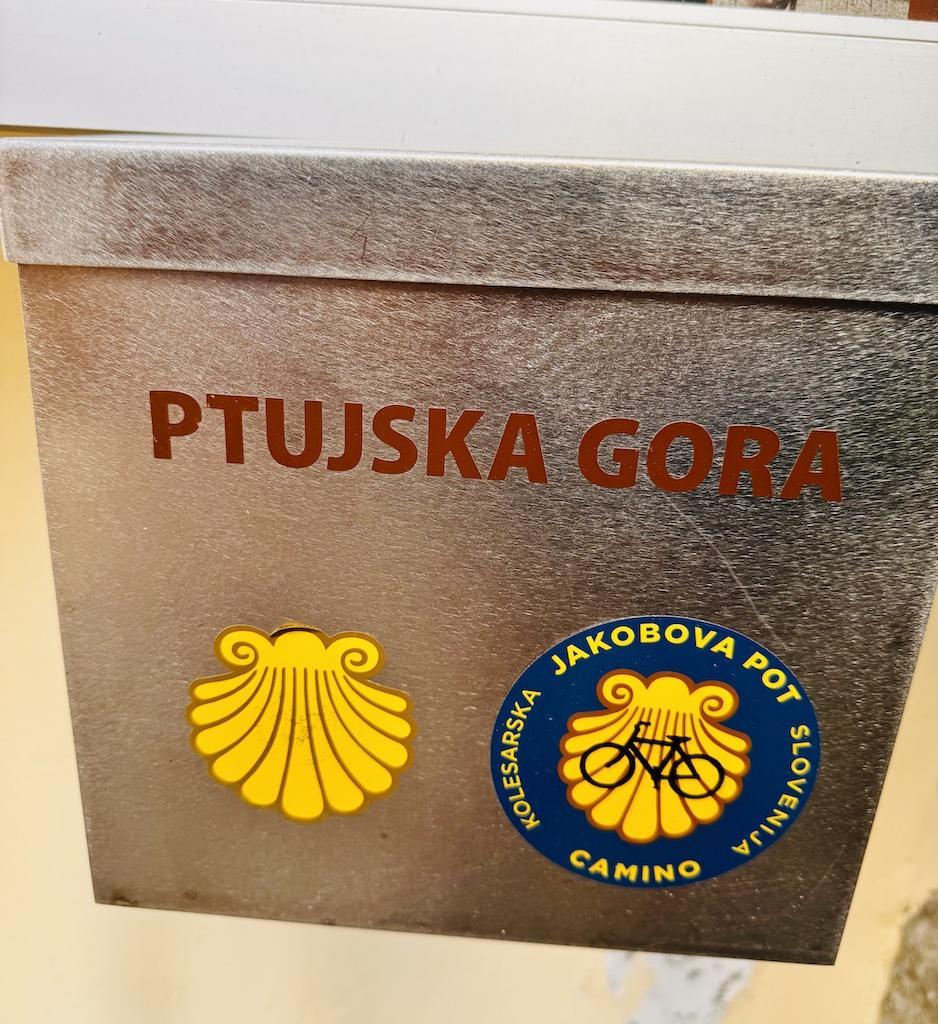
The side trip turned out to be a moving experience. Not only was the church a Gothic masterpiece of beauty, but the route to the mountain village of Ptujska Gora is an important pilgrimage site. As all three of us on the bike trip had done a pilgrimage on the Camino de Santiago in Spain, we were elated to visit a pilgrimage site in Slovenia.
Staying in Ptuj
The panoramic view of the city of Ptuj welcomed us to this historic city. Ptuj is Slovenia’s oldest recorded town, inhabited since the Stone Age. Since Ptuj sits on the Drava River, our 39 km ride had brought us back to the river we started on.
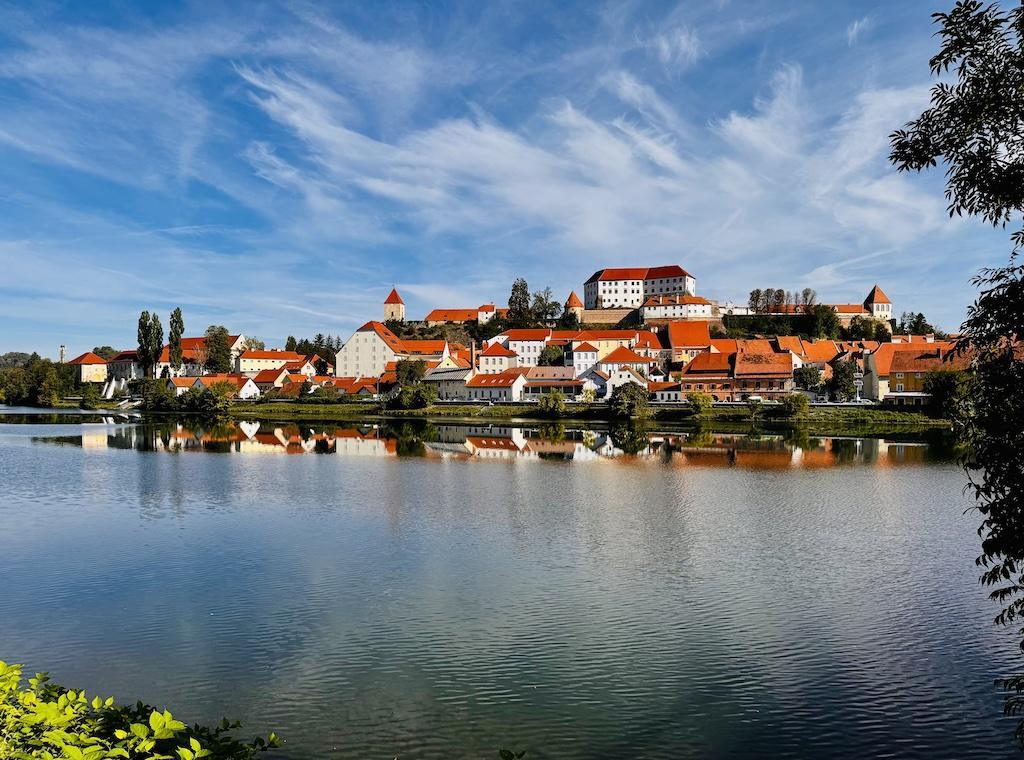
A visit to Ptuj Castle before it closed was our first order of business when we arrived. The medieval stronghold overlooking the city was built in the 11th century. A museum of regional history fills the rooms of the castle. Collections of musical instruments and medieval weapons can be seen.
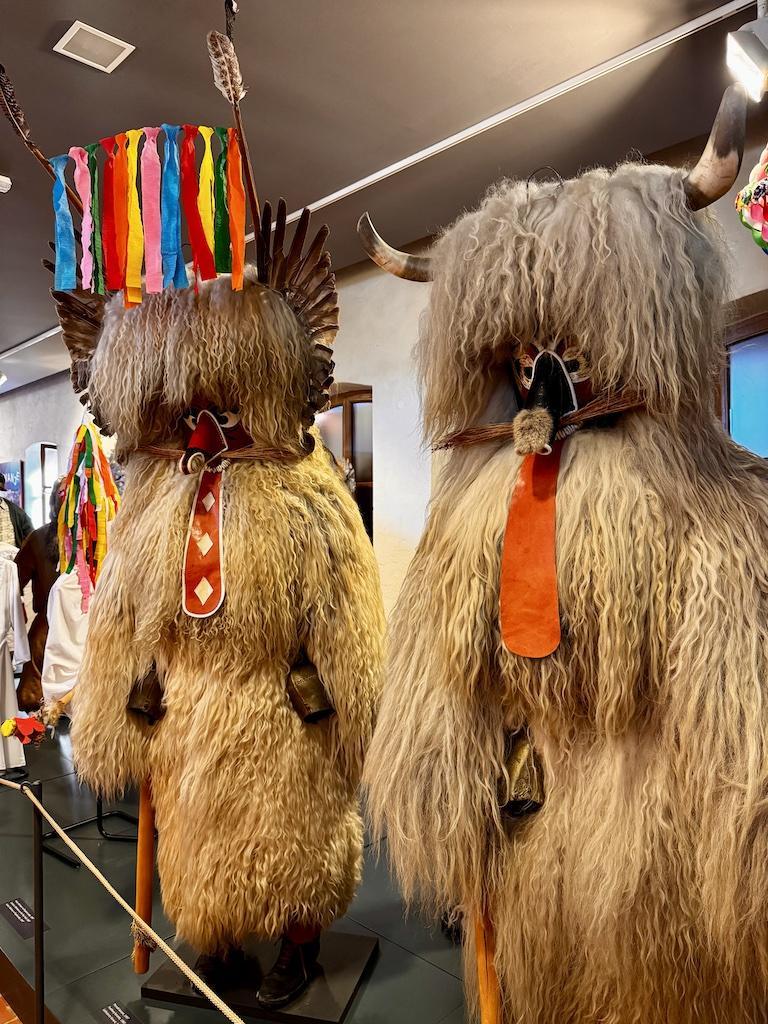
An exhibit of Kurent carnival masks fascinated me. The Kurent is a traditional carnival character dressed in sheepskins, masks, cowbells, and other decorative finery. Their purpose is to drive away winter, ward off evil spirits, and bring fertility and good luck. These ethnographic characters appear only from Candlemas to Ash Wednesday. The Kurent is one of the important symbols of the Slovenian identity.
Our accommodation in Ptuj was unique and beautiful. Sobe Proštija is a former parish priest’s residence with spacious rooms and a private courtyard with a small vineyard and lush greenery. The location in the old town is a short distance from the castle and other sights. As a tired cyclist, one of my favorite perks was the free massage chairs right outside the room.
Ptuj to the Jeruzalem Wine Hills
This day of biking was special as we changed environments to cycle in the wine hills of Eastern Slovenia. This is one of the most picturesque vineyard areas in the country, featuring winding roads and steep terraced hillsides. The area’s vineyards produce world-famous white and aromatic wines. For a cyclist, the quiet roads with breathtaking scenery are why I ride in Eastern Slovenia. The route was 37 km of up and down hills through the countryside.
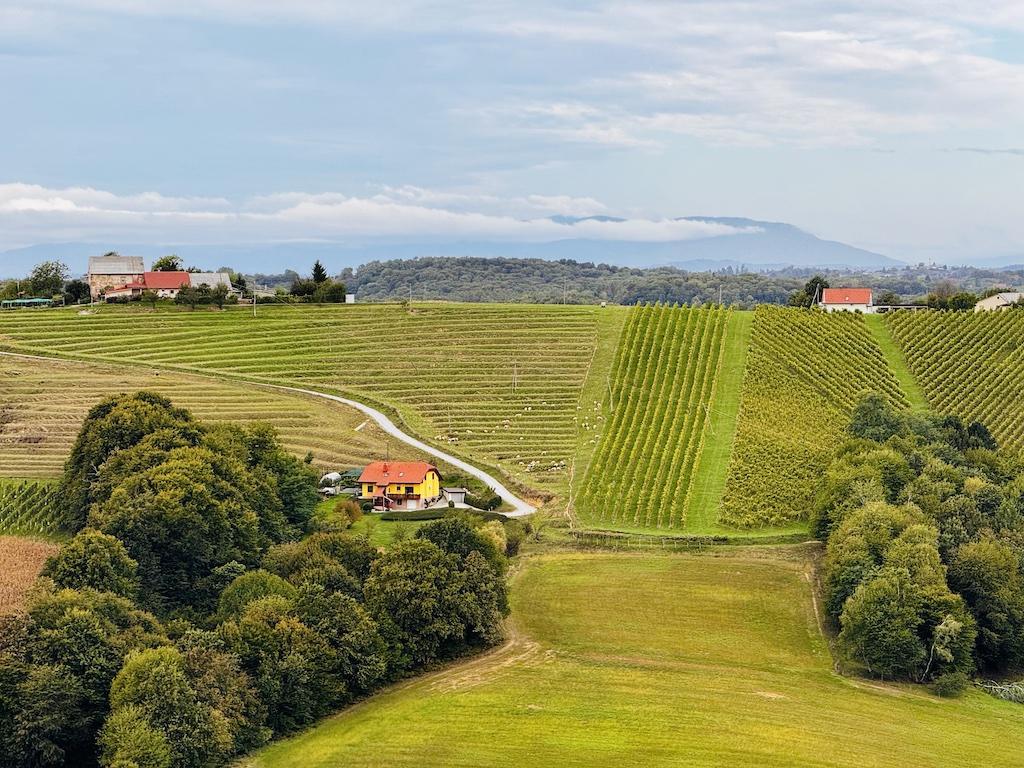
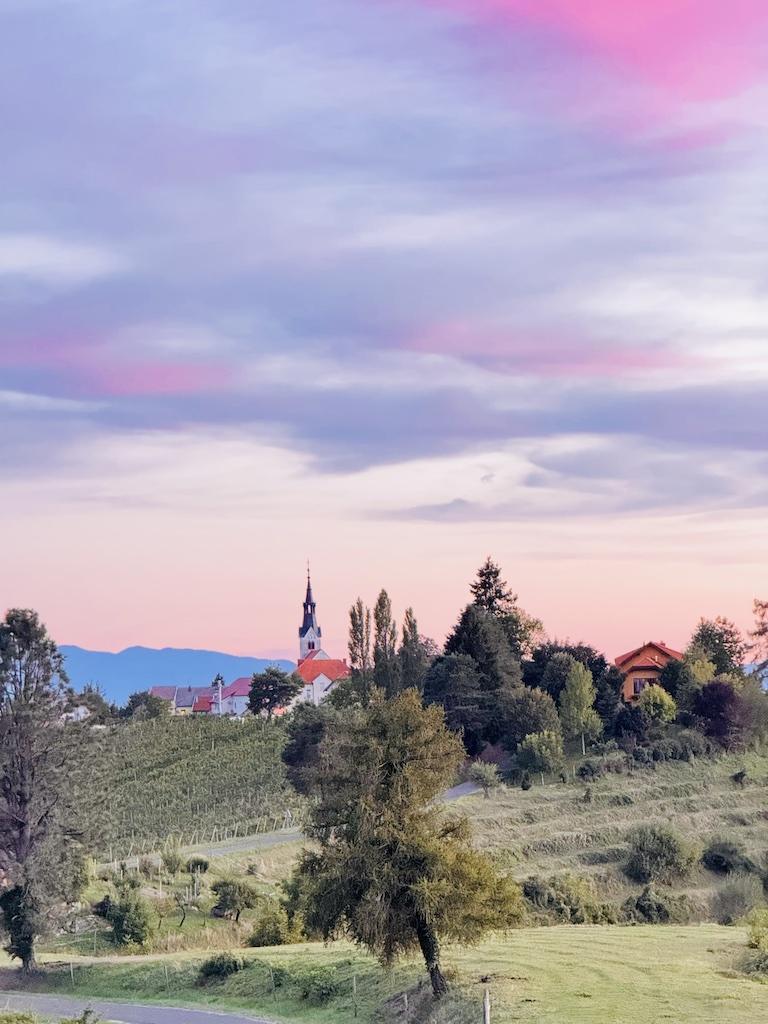
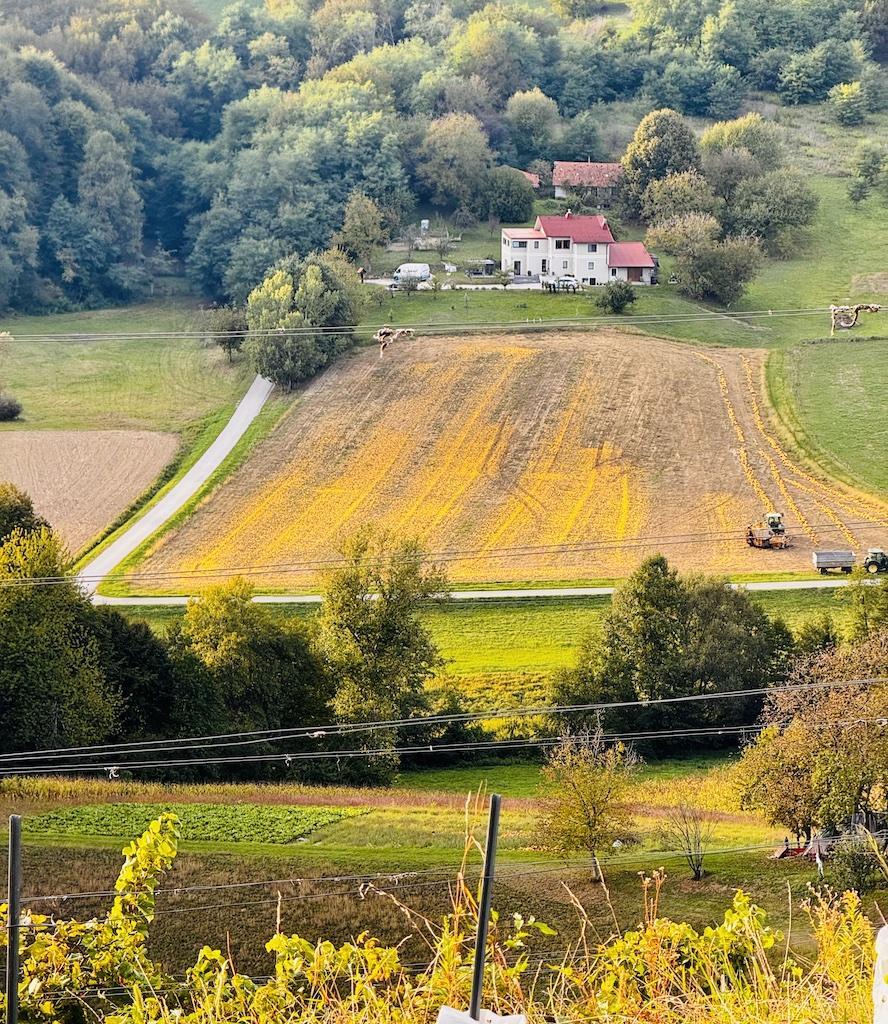
I hit a homer on picking a place to stay in the Jeruzalem Wine Hills. Taverna & Wine Jeruzalem is an inn, winery, and popular restaurant located on a hill over looking vineyards, churches, and pumpkin fields. The view from the terrace while sipping a glass of the taverna’s own wine was a trip highlight. The restaurant served some of the best food we ate on the trip. The room was spacious and they had a roomy shed to store and charge our bikes.
The pumpkin harvest
As we sat on the terrace at the end of our cycling day sipping a fine house white wine, I watched the harvest of a pumpkin field spread out at the bottom of the hill. At first, I thought the tractors were just grinding up the pumpkins to till them under for fertilizer. I thought is was a terrible waste of a beautiful pumpkin crop. However, with further research, I found out that the machinery was processing the pumpkins to harvest the seeds for making pumpkin seed oil. Turns out, premium pumpkin seed oil is a Slovenian culinary speciality.
At the resturant that evening, we had pumpkin soup with a sheen of pumpkin seed oil on the top. In addition, for dessert we shared an ice cream dish covered with pumpkin seed oil. So delicious!
Jeruzalem Wine Hills to Pernica
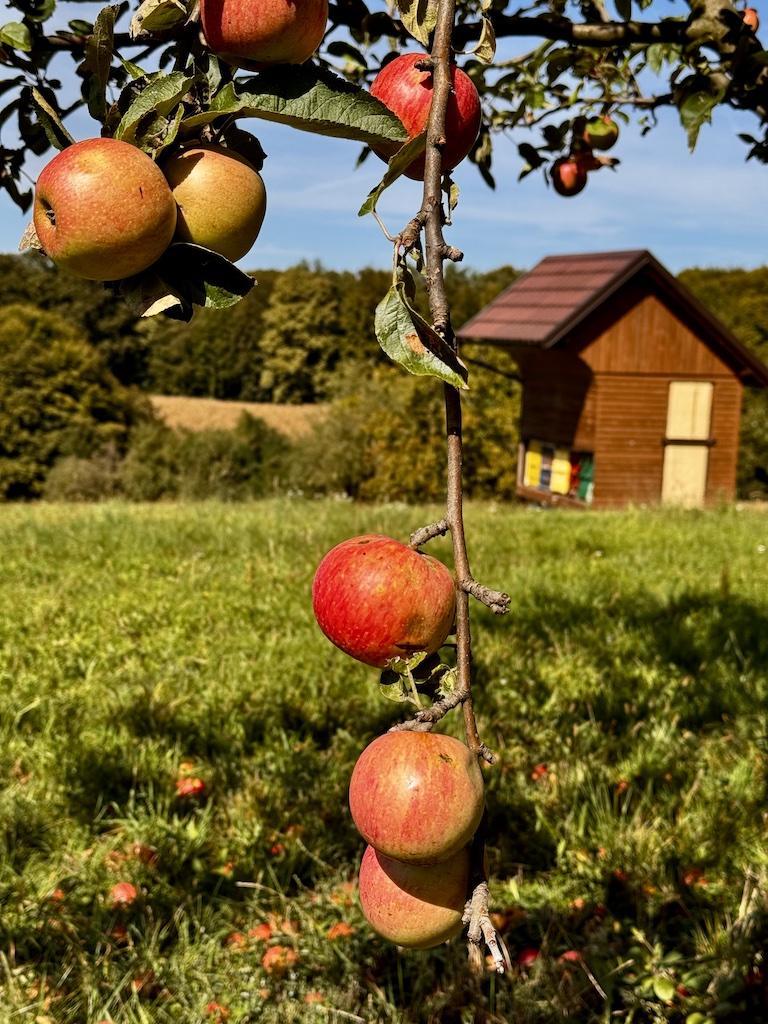
The bike elevation map for this day 5 ride looked like an erratic EKG. Up and down through the countyside we soared for 47 km. Vineyards yielded to apple orchards and colorful bee hives along the nearly traffic-free roads.
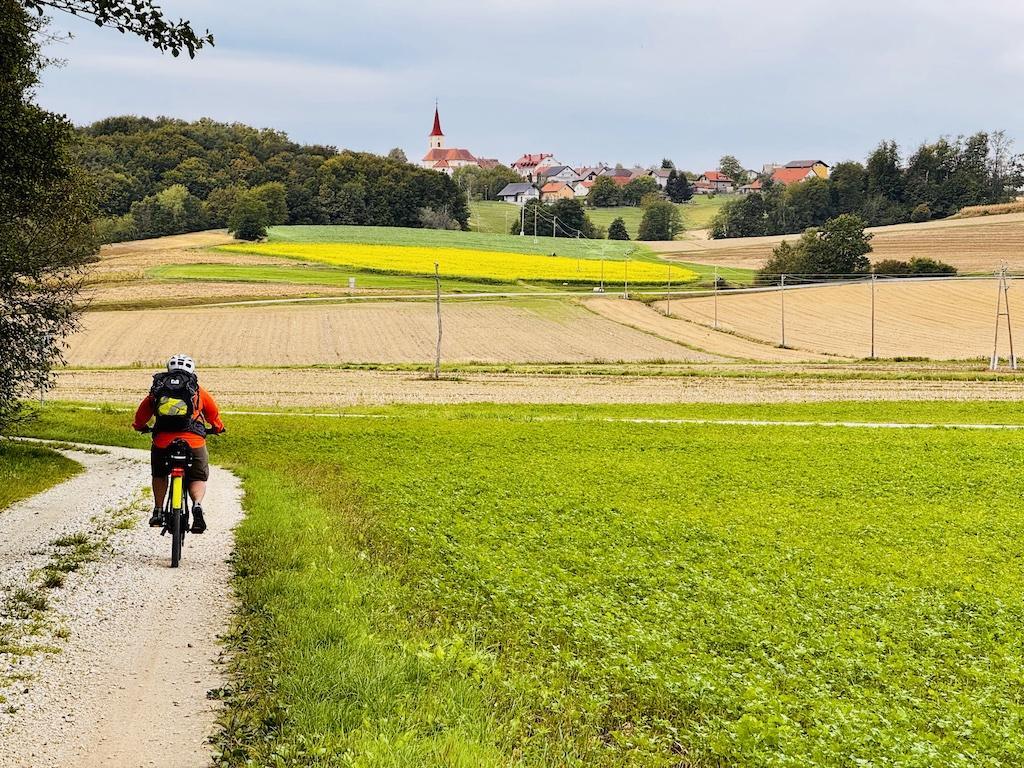
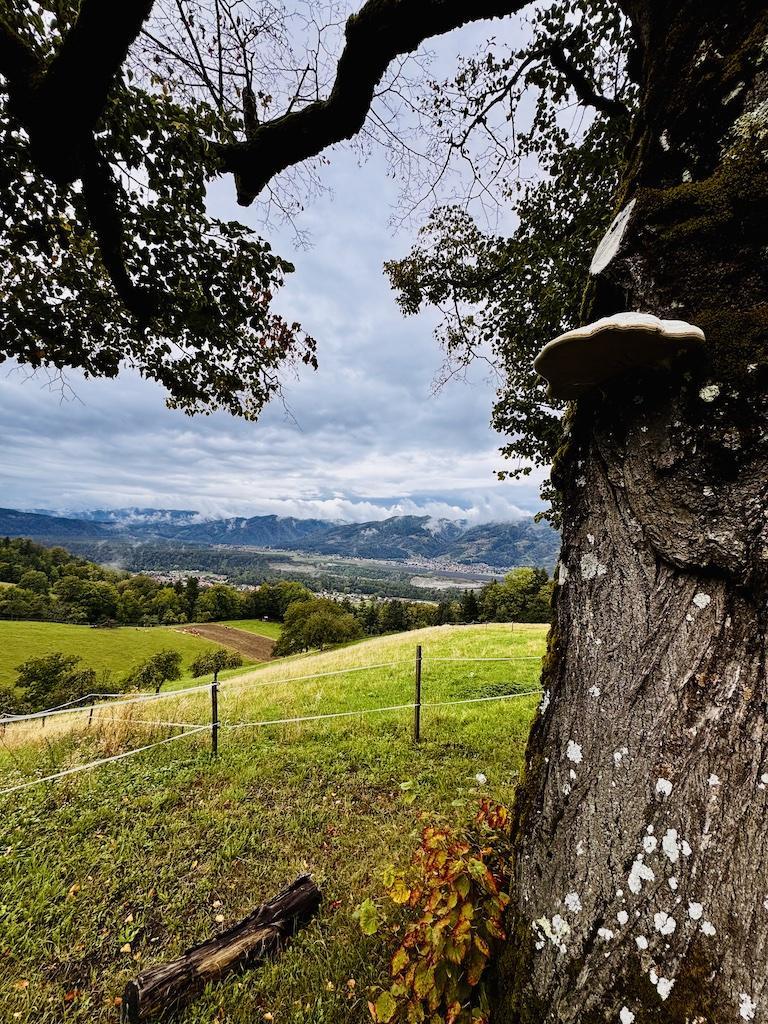
In the tiny village of Zavrh we found a public observation tower that gave a view over the landscape all the way to Maribor. It was wonderful to oversee much of the route we had cycled in the last few days.
That night we stayed at Šiker B&B Hotel near Pernica. The rooms were deluxe, the location on a lake was gorgeous, and the breakfast buffet the next morning was among the best we had on the trip. However, it was difficult to charge our bikes as they didn’t have outside outlets or a bike shed. We ended up bringing our bike inside to charge in the living room, but it wasn’t convienient. It would be a great place for someone traveling by car or on a bike you didn’t need to charge.
Pernica to Maribor
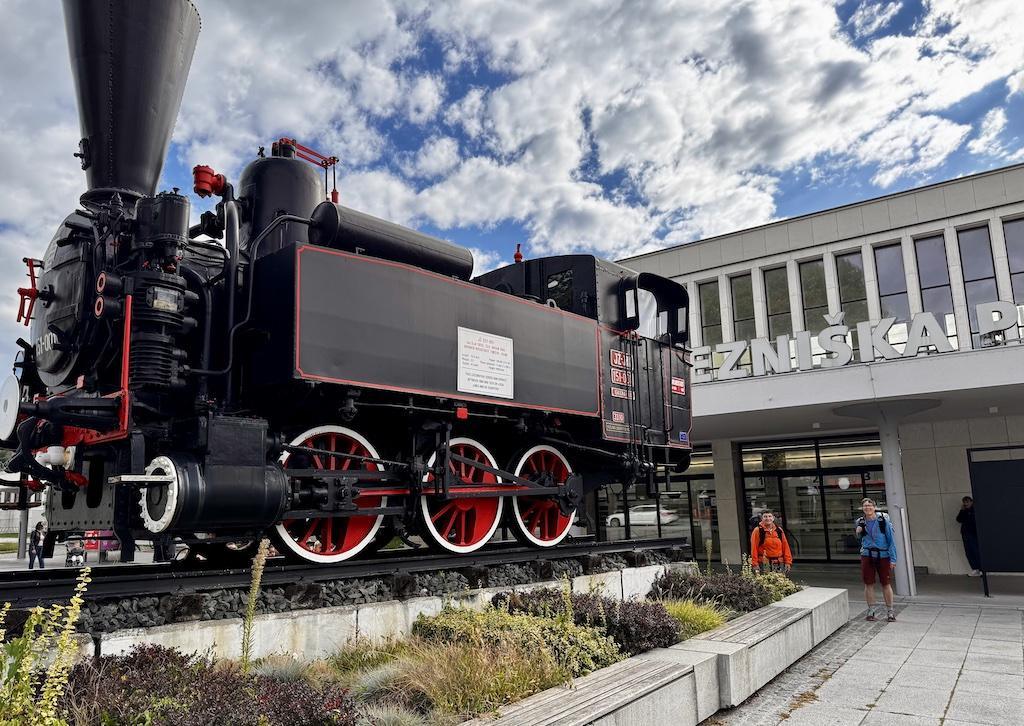
I intentionally planned a short last day as we needed to catch a train from Maribor to Vienna to fly out the next day. Therefore, we headed over the last big hill of the trip. After a 15 km ride we were back in Maribor. Our bike outfitters were prompt to pick up our bikes so we could get an early train back to Vienna.
Wrap Up of E-biking in Eastern Slovenia
An e-biking trip through Eastern Slovenia turned out to be one of my favorite ways to experience this beautiful country. Over six days, we traveled through forested mountains, quiet farming villages, rolling vineyards, and historic towns. Every day brought something different, from challenging climbs in the Pohorje Hills to leisurely rides through farm country. The scenery was spectacular, but it was the slower pace of cycling that made the trip so special.
I especially enjoyed discovering places that many visitors to Slovenia might overlook. We stopped at mountain huts, explored waterfalls, visited historic churches, and wandered through the medieval streets of Ptuj. Along the way, we met friendly locals, sampled traditional Slovenian food, and learned a little about the customs and traditions that make this country so interesting. These are the experiences that make a cycling trip more than just a way to get from one place to another.
Why E-biking in Eastern Slovenia?
Eastern Slovenia is an excellent destination for adventurous cyclists who want to get away from the more popular tourist areas. The routes offer a wonderful mix of mountain scenery, rural landscapes, cultural attractions, and quiet roads. The cycling infrastruction in Slovenia is excellent with many dedicated bike paths. Plus, motorists are friendly to cyclists.
Planning a multi-day trip takes a little extra effort because bike rentals and established touring routes are still developing in this part of the country. However, with some advance preparation and a good e-bike, it is entirely possible to put together a memorable independent adventure.
If you’re looking for a different way to explore Slovenia, I highly recommend giving Eastern Slovenia a try. You won’t find the crowds of the western mountain destinations, but you will find beautiful countryside, welcoming people, and plenty of opportunities for adventure. For me, that’s exactly what makes a great cycling trip.
Pin it!

0 Comments