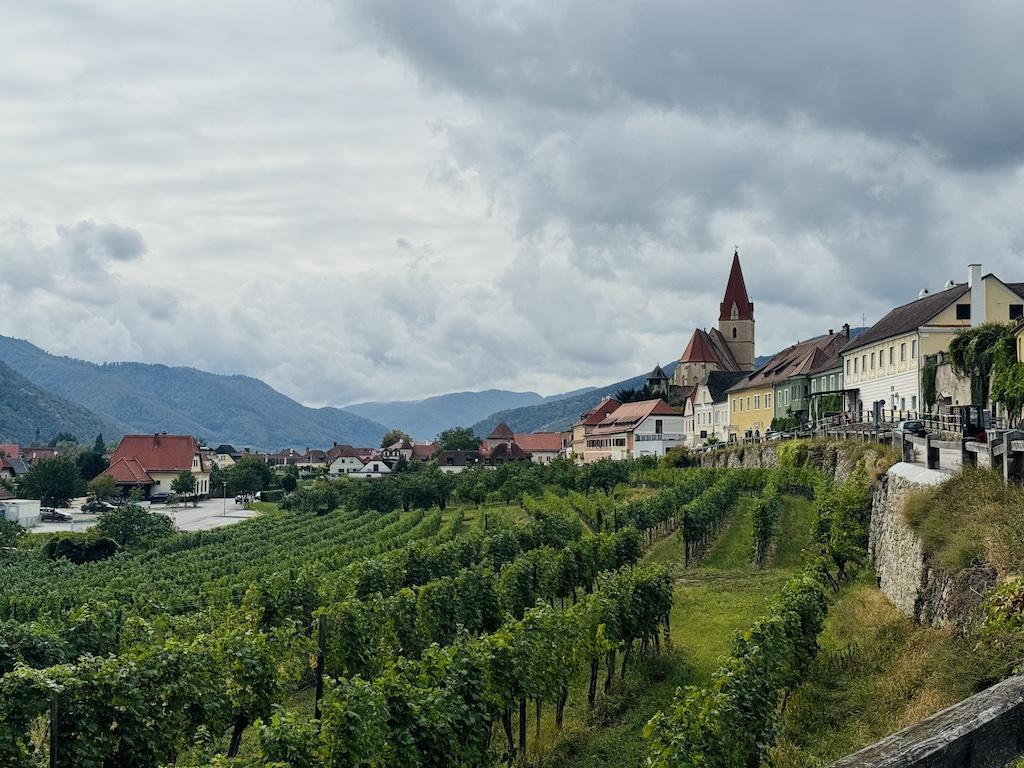
Biking along the Danube River in Austria is an exceptional way to explore the natural areas, historic villages, and vineyards of the area. The Danube Cycle Path makes it easy to travel beside the river. It is one of the most well-developed frameworks for cycling I have seen.
I did a 5 day/5 nigt overnight trip from Grein, Austria to Bratislava, Slovakia. Daily cycling distances ranged from 30–43 miles (50–70km). I used an e-bike so I could cycle leisurely, with plenty of stops to enjoy the historic and cultural sites along the way.
For easy logistics, I did a self-guided trip organized by EuroBike. The company offers dozens of bike trips all over Europe. You can find a EuroBike tour from Scandinavia to Greece and everywhere in between. The Austrian-based company has curated the most popular cycling destinations into multi-day experiences.
Posts may contain links to products and services I love. I may make a small commission from them, at no extra cost to you. Thank you for supporting my blog. Visit the privacy policy for more information.
Related post -> 18 Best Bike Trails in the United States
What is the Danube Cycle Path?
The Danube Cycle Path is an 1,800-mile (2,850 km) biking route that follows the iconic river, starting in Germany’s Black Forest and ending at the Black Sea. Biking the path gives an intimacy with the river that you won’t find with motorized means of transportation. It is well marked for the many bikers who enjoy day trips or overnight excursions.
Cyclists of all skill levels enjoy the bike trail along the Danube River as it is flat and runs slightly downhill, following the downstream current of the river. The availability of accommodations for all budgets along the river makes overnight trips a cinch.
Related post -> Biking on the Val del Zafán Greenway in Spain
Bike Touring with EuroBike
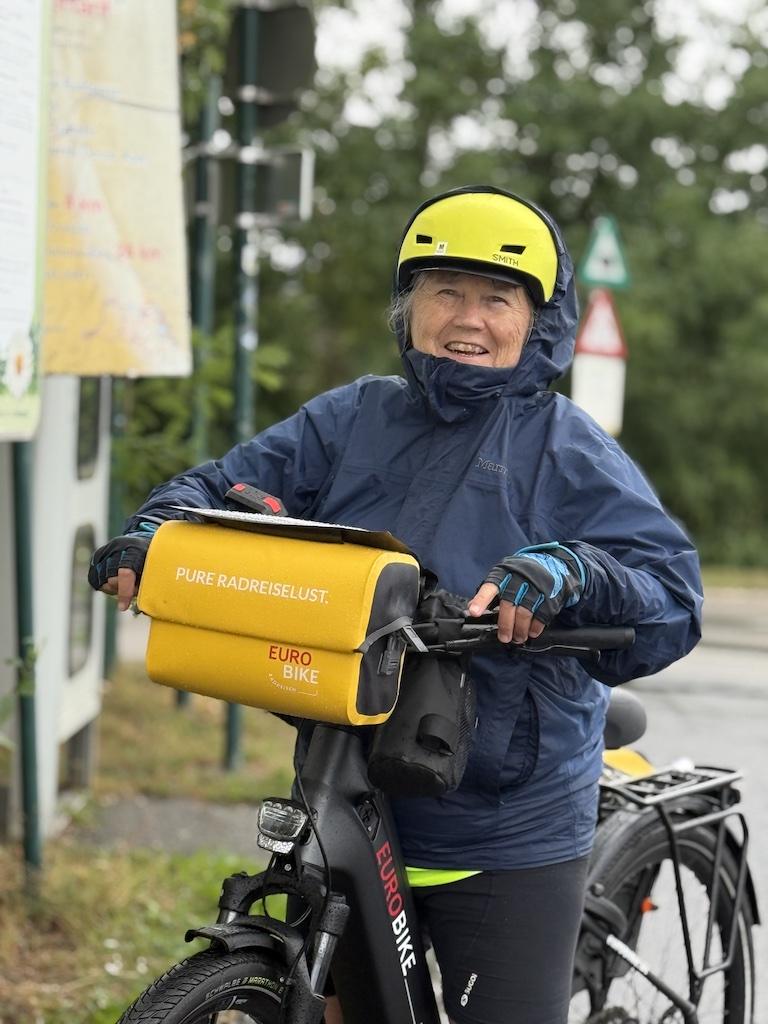
If you love the freedom of cycling on your own schedule and leaving all the planning work to someone else, then EuroBike is for you. The company has over 30 years of experience in planning self-guided biking tours.
The advantages of a EuroBike tour over putting together a DIY trip are significant:
Comprehensive route planning
You can pick your own adventure of EuroBike routes. On some itineraries, you can work up a good sweat all day or choose one more leisurely with lower mileage. Trips range from 5 days to almost two weeks.
Each cycling area and journey is carefully chosen to maximize the region’s awesome scenery. Travel documents comprehensively describe the route and the accommodations along the way. The EuroBike on Tour app provides daily navigation plus highlights key places to stop for scenery or sustenance. No need to fuss with unwieldy maps. I just secured my phone to the provided bike mount and followed the red line on the app.
Carefully chosen local accommodations
It’s easy to rave about the accommodations Eurobike puts you up in. Discovering a town’s local vibe is natural in the guesthouses or family-run pensions selected for you. I felt the local charm in the historic lodgings.
The indoor bike storage gave me peace of mind. I didn’t have to lock the bike to the back fence and worry about it all night. Many had convenient outlets to charge the bikes, too.
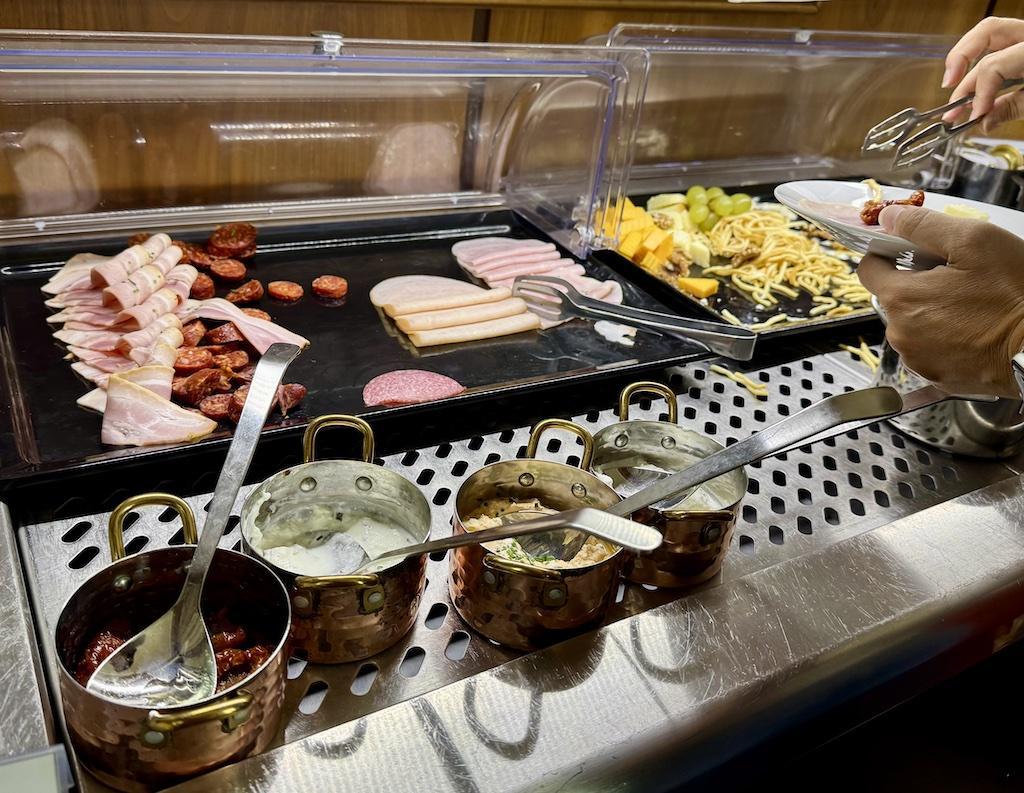
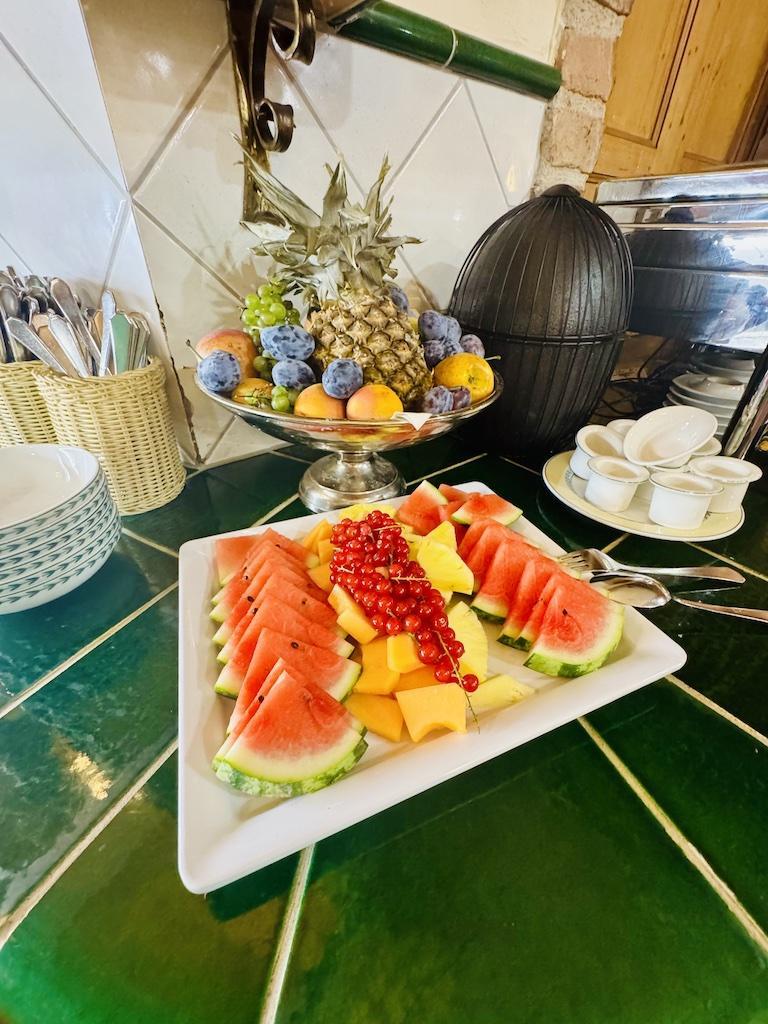
The inn’s included breakfast buffets were like a morning tasting menu of Lower Austria. Regionally sourced cheeses, meats, jams, breads, fruits, and other surprises graced the buffet tables.
Excellent cycling equipment
EuroBike maintains a rental fleet of top-quality bikes. If you don’t want to bring your own bike, you can rent one for the trip. Superior saddles, excellent suspension, lights, and ample gears make for a comfortable ride. I opted for an e-bike so I could take it easy and pause often to enjoy the culture and beauty. The e-bike was super sturdy with all the power I needed for the route.
I found it a little odd that the bike rental didn’t come with a helmet. They would essentially sell you a helmet to use, or you could bring your own. When I’m traveling extra light, including a helmet in my carry-on is complex. However, the helmet they sell would need to be lugged home too. So I did bring my helmet after all, but I noticed other EuroBikers along the way without helmets, which isn’t a good idea at all.
I particularly liked the bike bags included in the rental. A big yellow waterproof handlebar bag held tons of gear–water, snacks, raincoat and pants, phone, and other essentials. A rear pannier was for my extra layers in case it got cold.
Efficient luggage transfer
When I plan my own overnight bike trips, it’s always a hassle to find somewhere to store my extra luggage while I cycle with heavy panniers. Having luggage transfer made it possible to ride a lightweight bike during the day. Instead of lugging all my gear for the whole trip, I could carry just a few extra layers and essentials each day. I left my heavy luggage at the guest house each morning, and it magically appeared at the next night’s accommodation through the efficiency of the EuroBike staff.
EuroBike discount
Use the code OUTDOORADVENTURESAMPLER for a 10% discount on a biking or hiking trip.
- Valid per person/booking on the base price. Cannot be combined with other discounts.
- For online bookings, simply enter the discount code in the final booking step under “Booking” in the “Other requests and notes” tab. The deduction won’t appear in the checkout, as bookings are only accepted on request and usually confirmed within 3 days, but no later than 2 weeks.
- For phone bookings, just mention the discount code when booking.
- Valid for Eurobike and Eurohike.
Related post -> Biking the Ojos Negros Greenway in Spain
Itinerary for Biking along the Danube River
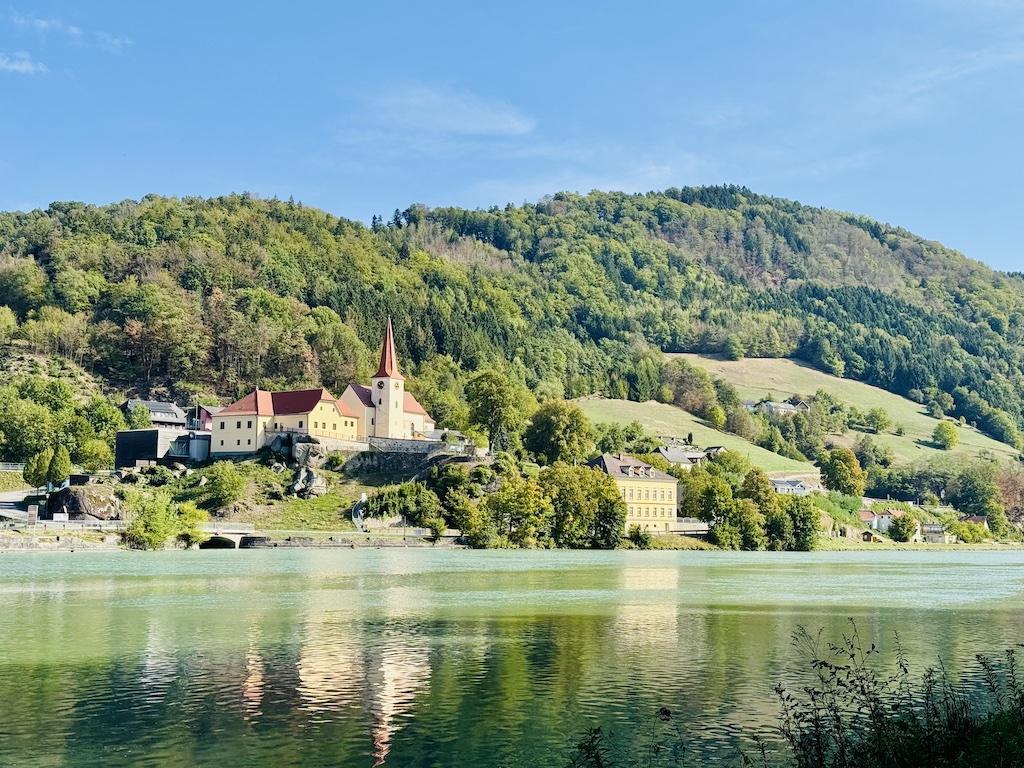
Day One of Biking along the Danube River: Exploring Grein
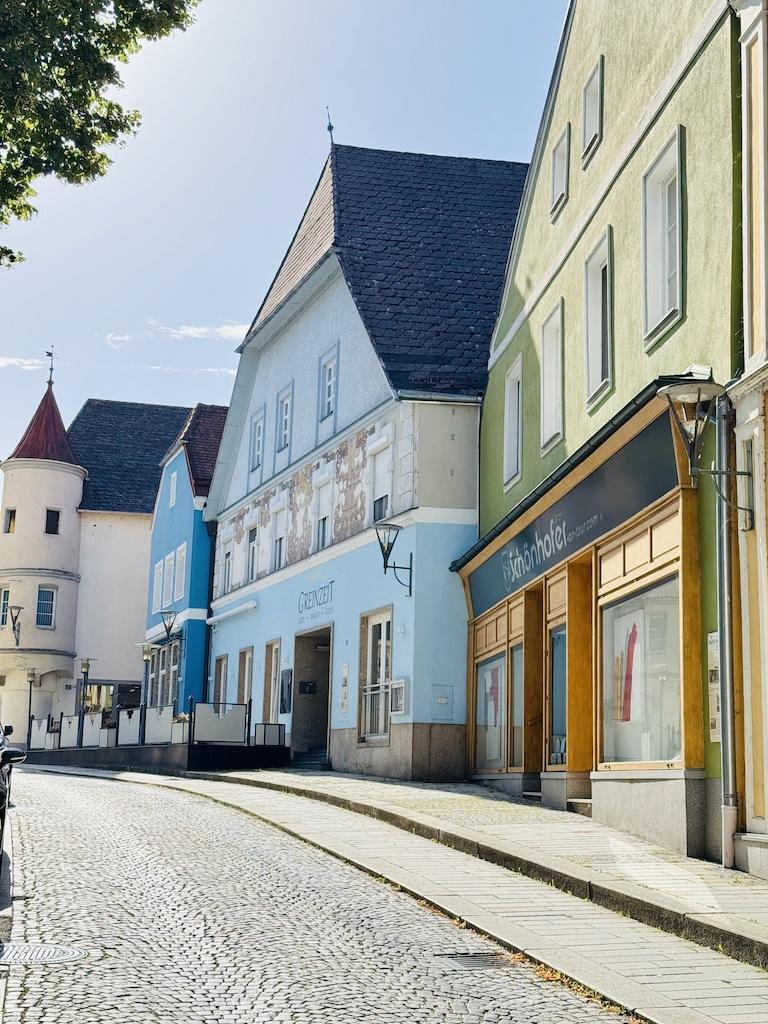
Grein is a fairy-tale riverside village located about a one-and-a-half-hour drive from Vienna. As the bike trip started in Grein the next day, I took a train followed by a bus from the Vienna airport. It was simple to get to Grein on public transportation.
After a quick nap to quell the jet lag, I explored Grein with its colorful historic buildings, panoramic waterfront, and the impressive Greinburg Castle overlooking the river. The Austrian hospitality of the Pension Martha was a perfect start for the night before the trip. Our bikes were waiting for us when we arrived, and I took a quick spin around town to try the bike out.
Some Eurobike tours include a briefing the first night by staff; however, all the pre-trip briefing for this trip was by email and phone.
Day Two of Biking along the Danube River: Grein to Melk
The bike ride for the day started on the south side of the river, across from Grein. Polished wooden ferry boats were zipping back and forth across the Danube, transporting cyclists and their bikes. We opted to cross on the bridge, but in hindsight, I wish we’d taken the ferry, since we saw few more ferries as we headed downriver.
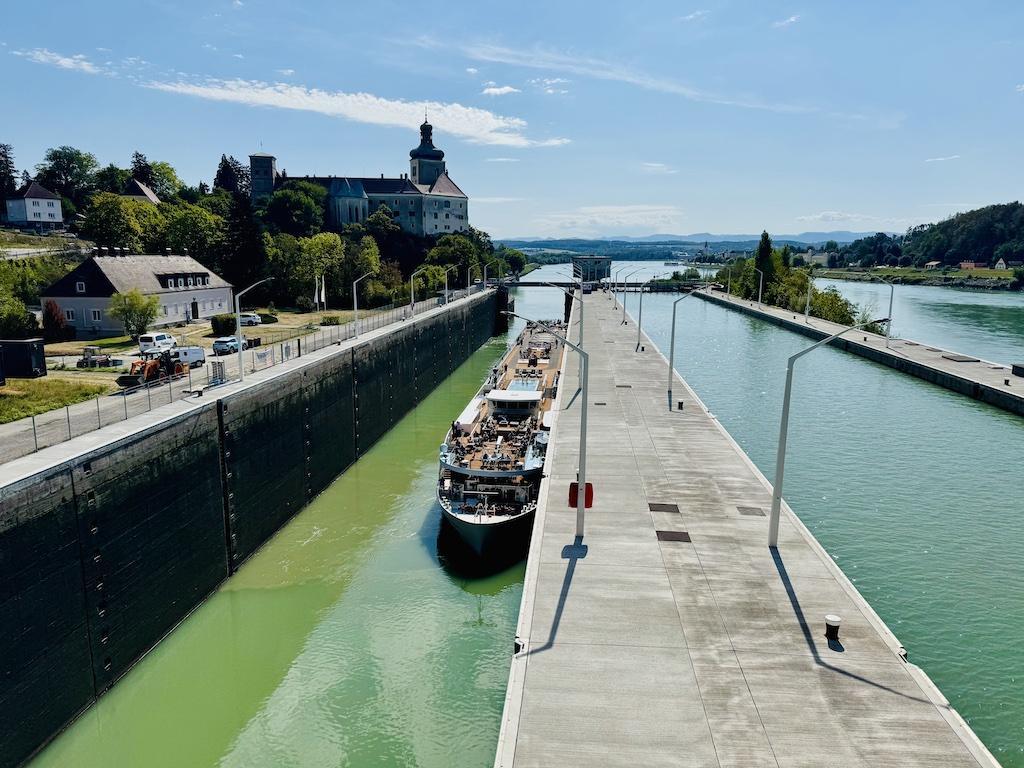
From the south side of the river, we saw green hills framed by historic castles and churches. We recrossed the river on Persenbeug Dam and saw the locks that transport big ships up and down the river. The Persenbeug Castle is adjacent to the lock system. Emperor Karl I, the last Emperor of Austria, was born here on August 17, 1887.
Our morning coffee stop was at the quaint town of Gottsdorf. We sipped our beverages and sampled the local cake while sitting under a 700-year-old linden tree(which is called a lime tree in Austria) and watching a villager tend her flower boxes from her second-story window. It was one of the many chances to become embedded in the local culture on our leisurely biking days.
We arrived at our lovely inn, the Hotel Donauhof, in Emmersdorf by mid-afternoon. This allowed for a visit to Melk Abbey later, followed by a wine tasting arranged by Eurobike.
Melk Abbey
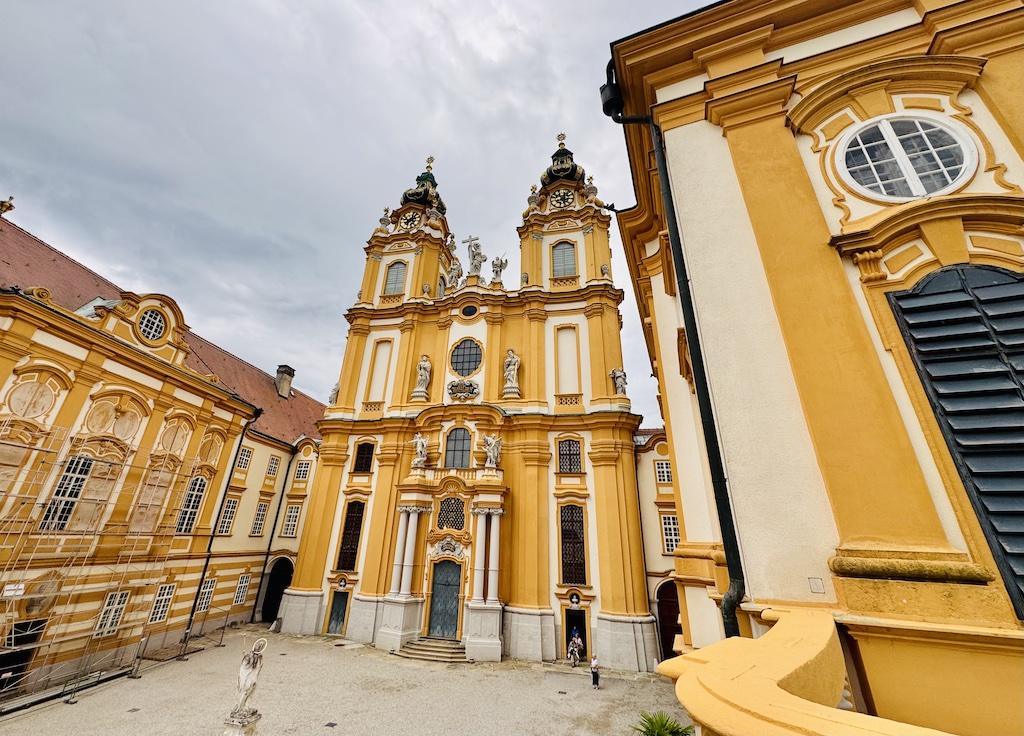
Melk Abbey is a magnificent Benedictine monastery famous for its ornate golden halls, impressive library, and beautifully frescoed church. I opted for the audio tour to understand the history and appreciate the breathtaking Baroque architecture of this must-visit attraction.
The wine tasting at the Weinverkostung Hotel zur Post restaurant was a perfect introduction to our travel through the Wachau Valley the next day. I learned that 94% of the wines produced in the Wachau Valley are white wines, such as Grüner Veltliner and Riesling. Different sections of the valley yield different grapes based on the prevailing microclimate and soil. The knowledgeable host also told us about the Venus of Willendorf, a 30,000-year-old fertility goddess figurine found in the valley.
We stayed at the restaurant for a delicious dinner after the wine tasting. Consequently, we biked back in the dark on a rainy night. The lights on the bike made it a fun adventure that was another highlight of the day.
Day Three of Biking along the Danube River: The Wachau Valley
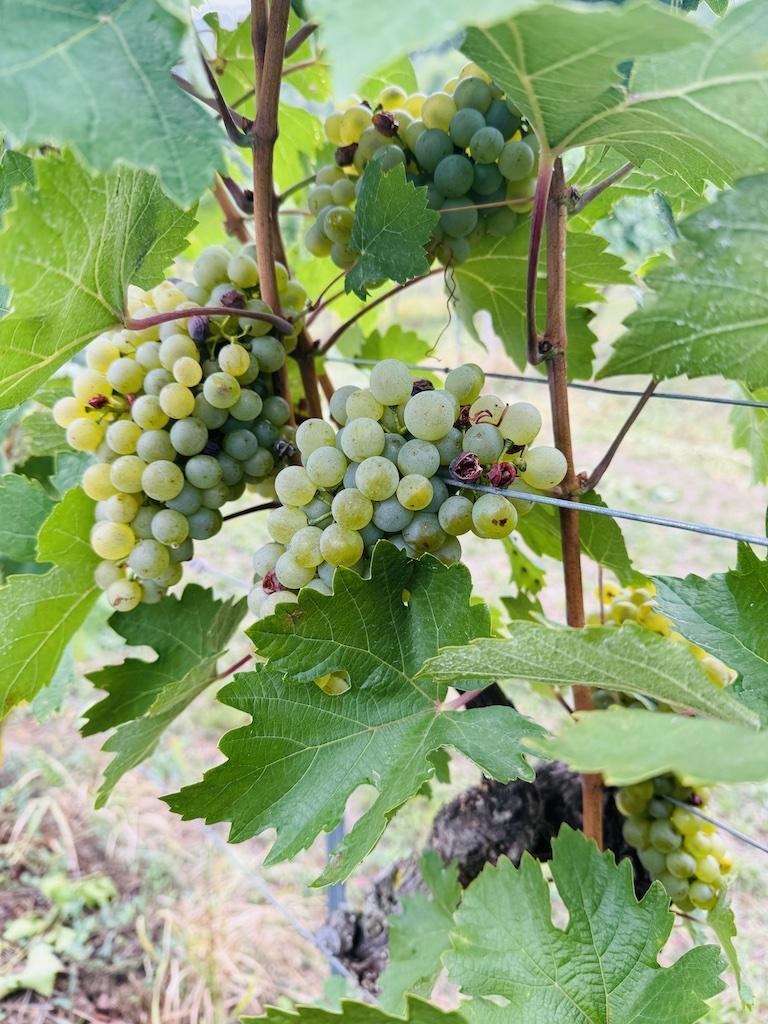
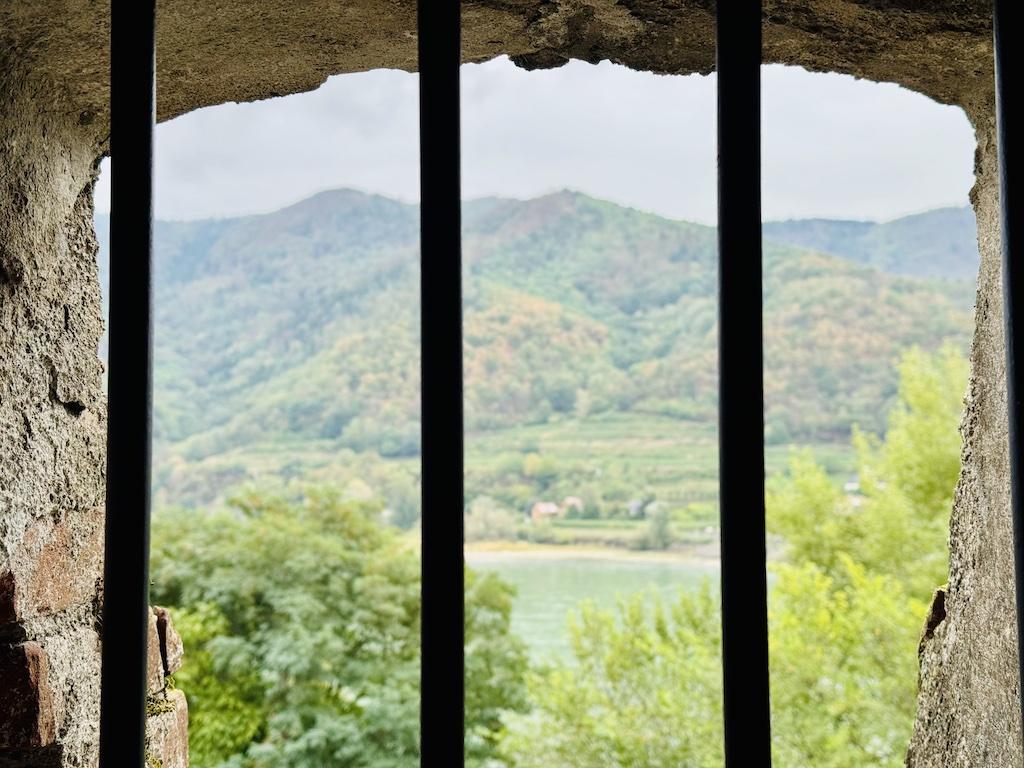
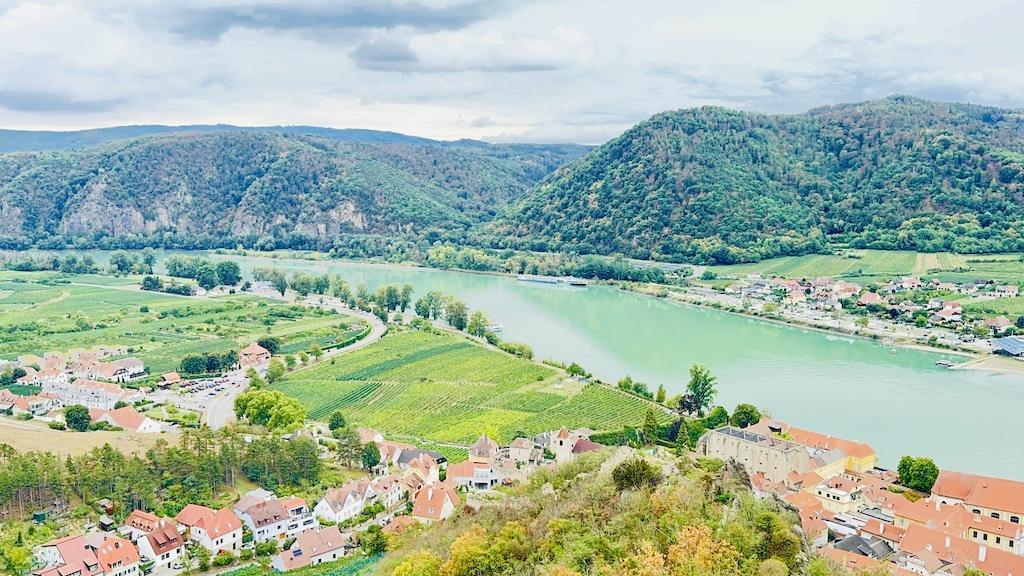
The Wachau Valley was the crown jewel of the bike trip. The valley stretches between Melk and Krems and is known for its terraced vineyards, picturesque medieval villages, and orchards of apricots, pears, and apples. Because of its high-quality landscape, the Wachau Valley is a UNESCO site.
The Venus of Willendorf
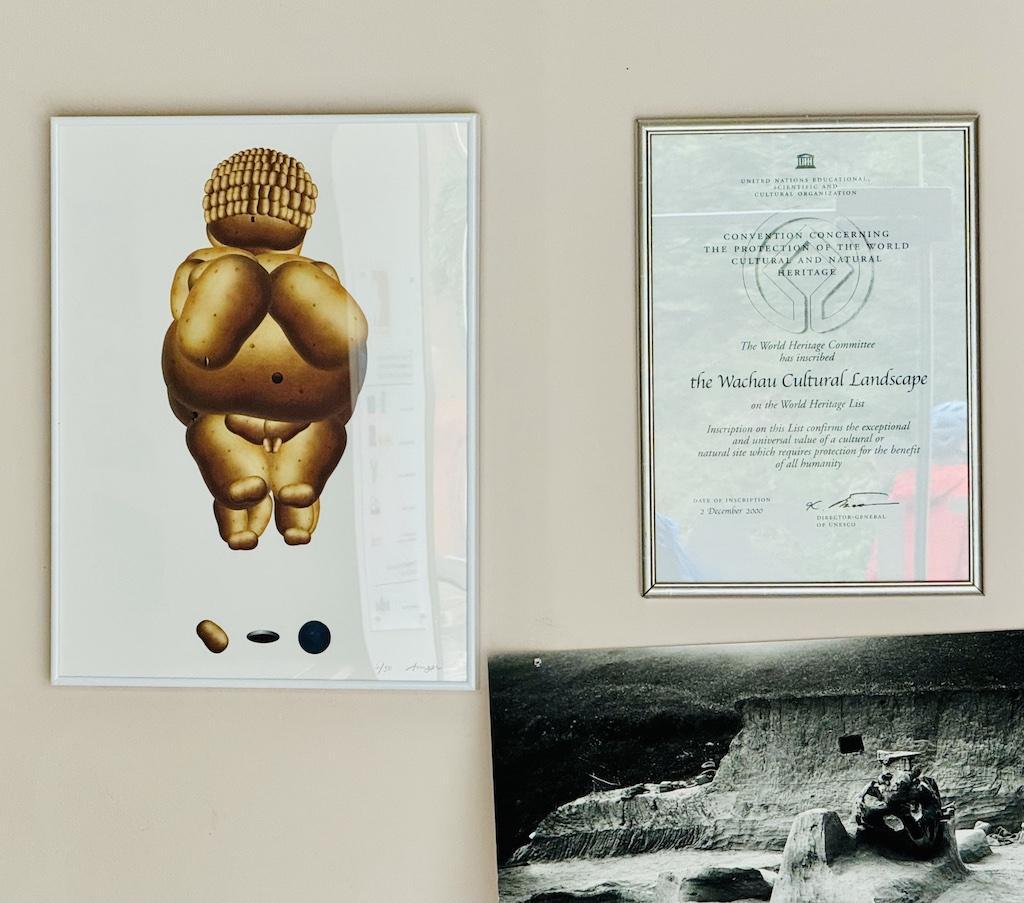
Our first mission was to find the Venusium museum and learn more about the Venus of Willendorf. The palm-sized, 4.3-inch (11.1-cm) Upper Paleolithic female figurine was created nearly 30,000 years ago. We arrived in Willendorf; however, the museum itself was closed. While the original statuette is in Vienna, the museum is just steps from the discovery site and is worth a visit. Photos of the tiny fertility goddess were on display outside the museum.
St. Michael Church in Weißenkirchen
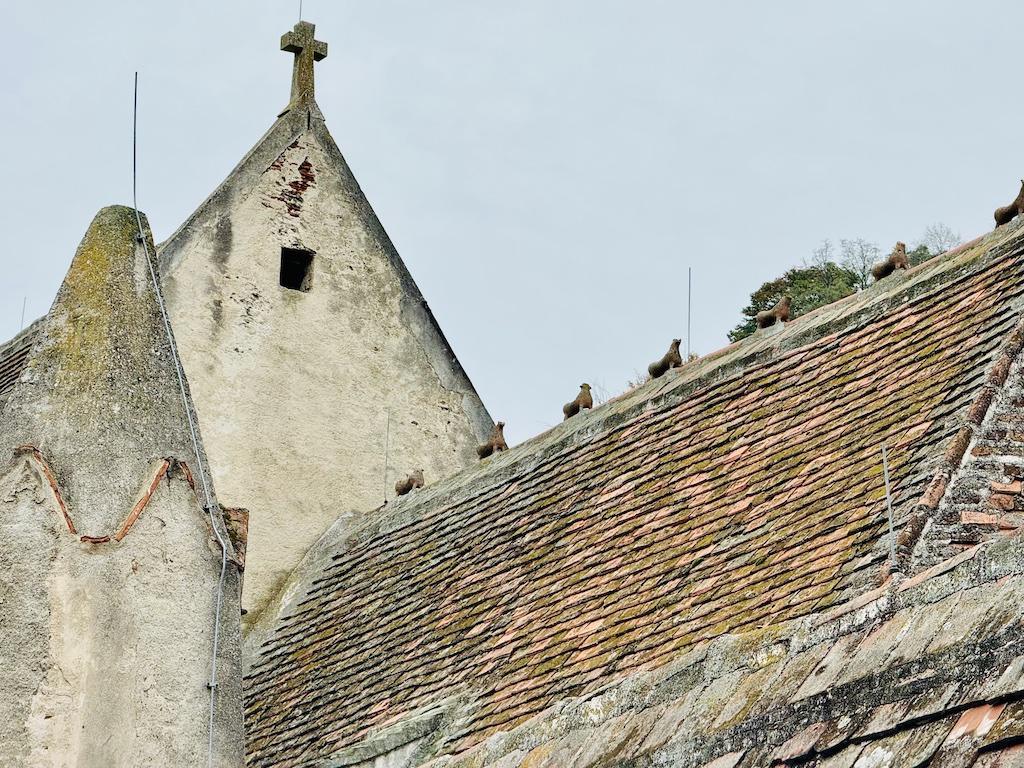
Our next stop was the St. Michael Church in Weißenkirchen, the oldest parish of the Wachau, first mentioned in 987. The church was fortified during medieval times, including adding loopholes for using weapons and thick walls for protection. The church’s most curious feature is a row of seven small animal figures perched along the roof ridge that the locals call rabbits. According to the legend, an exceptionally harsh winter brought so much snow down from the steep hillside behind the church that it piled up to the roof. The hungry rabbits hopped across the deep snow and took refuge on the church roof. When the weather warmed, and the snow melted, the unfortunate animals found themselves stranded high above the ground, and turned into terracotta figures.
Visiting Dürnstein
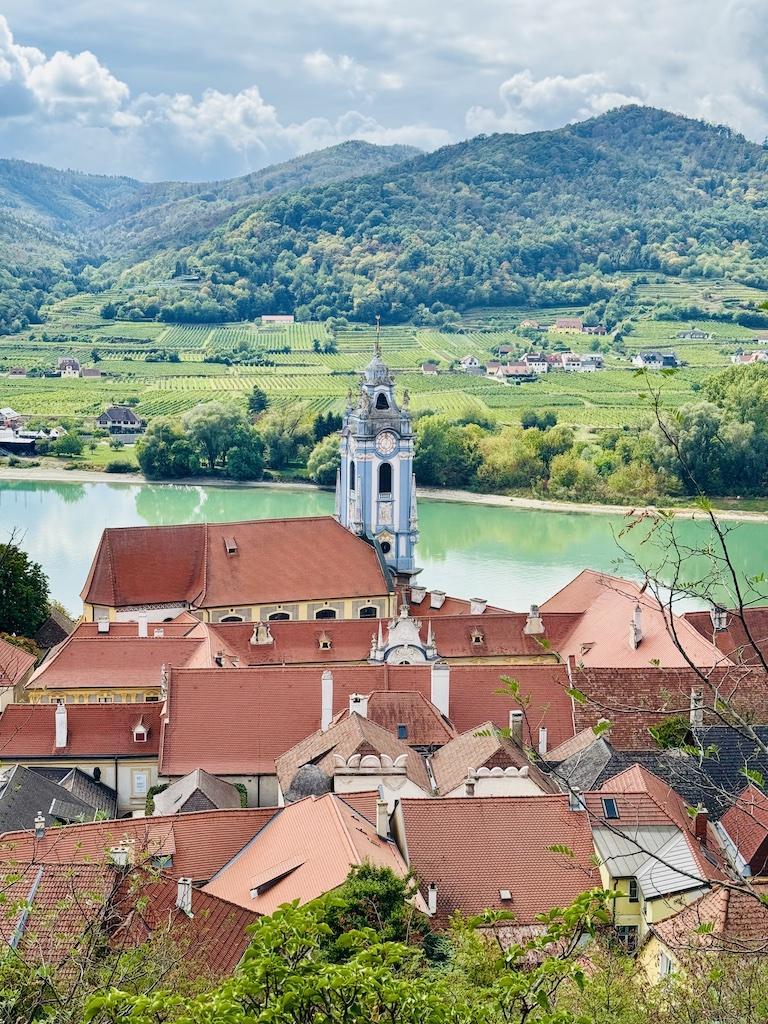
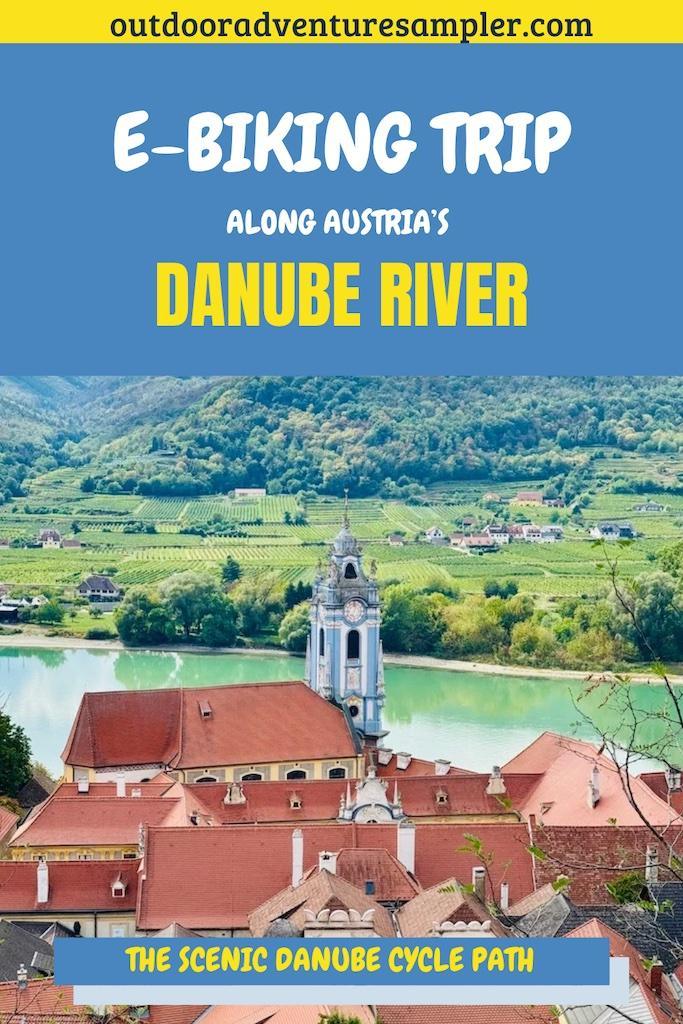
Ask anyone what the prettiest village in Austria is; don’t be surprised if they say Dürnstein. This picturesque gem is a popular destination in the heart of the Wachau Valley. Cobblestone streets, colorful historic buildings, and a distinctive blue-and-white church tower add to the town’s storybook splendor.
High above the terracotta rooftops stand the ruins of Dürnstein Castle, where England’s King Richard the Lionheart was held captive in 1192–1193 after the Crusades. The hike to the top of the castle ruins is steep but only takes about 30 minutes. The panoramic view of the Danube River, Dürnstein Abbey with its blue-and-white tower, and rows of grapes in the vineyards make the hike a must.
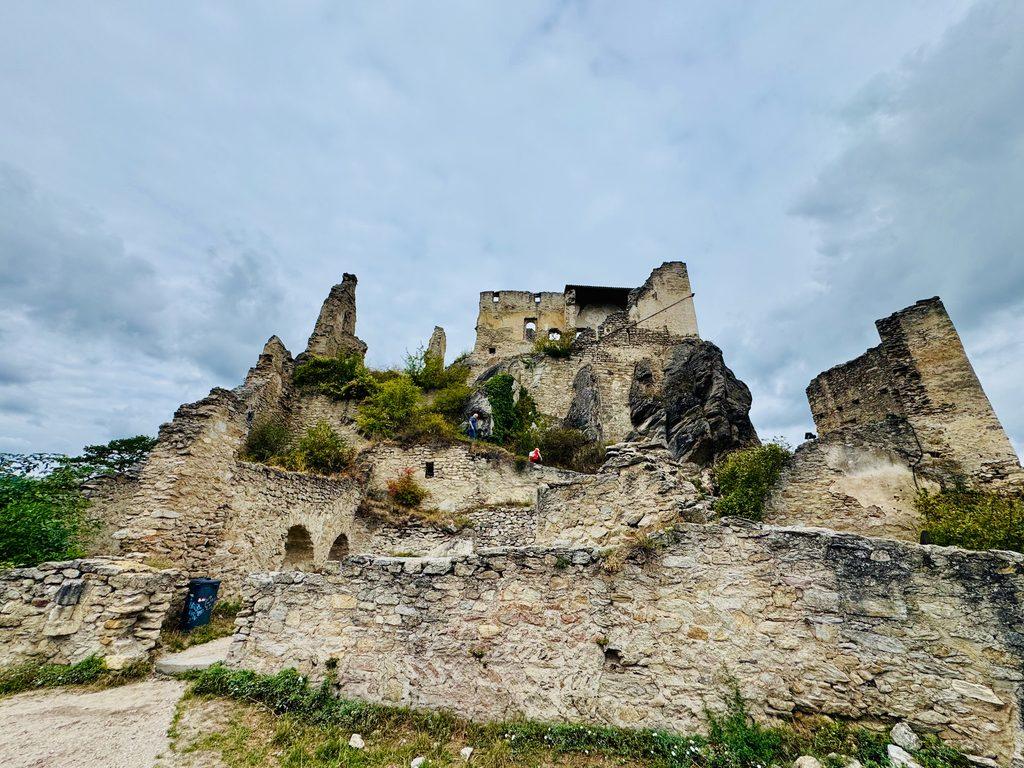
Afterward, stroll through the charming town and sip apricot liqueurs and other local products. Traditional wine taverns (Heurigen) and historic cellar restaurants lining the river are worth a visit.
After spending a couple of hours in Dürnstein, we headed to our hotel in Traismauer. The Hotel Zum Schwan is a traditional family-run guesthouse with a 350-year history. My friends stayed in the nearby Bed, Bike & Breakfast Inn, which was totally set up for cyclists. It would be a good choice for a DIY trip.
Related post-> Recommended Bike Routes of the Eastern Townships of Quebec
Day Four of Biking along the Danube River: Traismauer to Vienna
Our day cycling into Vienna was rainy and chilly. However, with a good raincoat, rain pants, and insulation, the ride was quite comfortable. EuroBike provides top-notch waterproof biking bags. The huge yellow handlebar holds anything you need to keep handy. I used the rear pannier for extra clothing. The rest of our luggage was transported by EuroBike to our next accommodation.
Additionally, the misty day amplified the bright greens of the foliage. It was also the first time we cycled right next to the Danube for any length of time. The bike path was in a remote zone away from roads and towns. Birds on the river kept us company. Bevies of swans, diving ducks, and an occasional flash of an iridescent kingfisher entertained us on our shoreline travels.
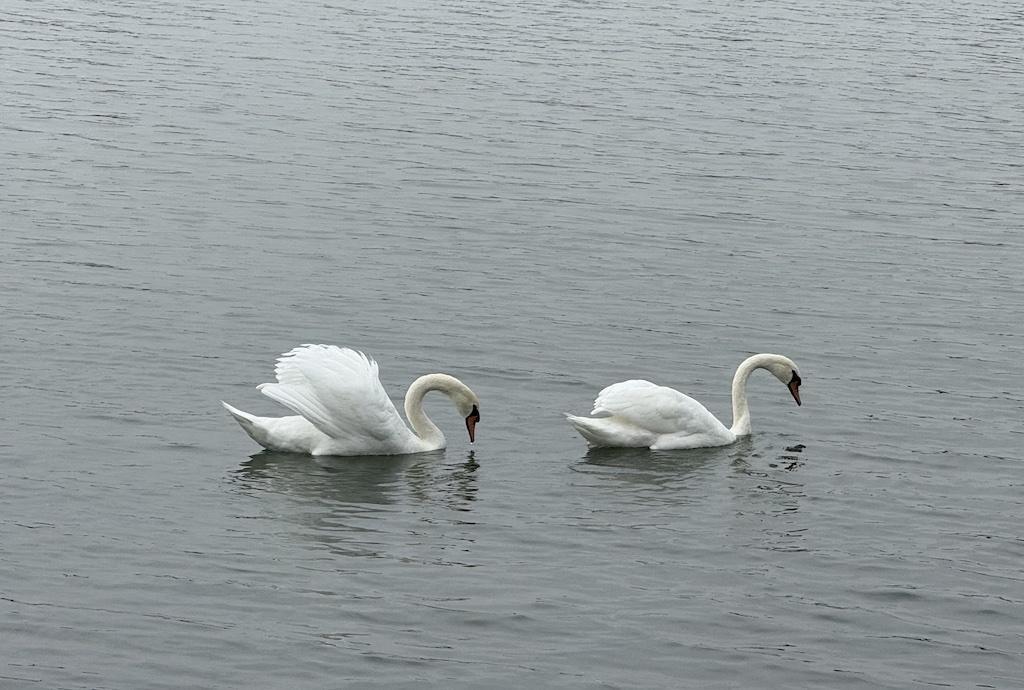
Eventually, I glimpsed the skyscrapers of Vienna, and we transitioned away from my reflective river peace to the bustle of the city.
Honestly, I was a little skeptical about the safety of biking through a major city to find our hotel in the heart of the city. As it turned out, the route took us along Danube Island, a long, narrow island in the river that offers miles of paved bike paths and green space. Once we crossed the bridge to the streets of Vienna, I was pleasantly surprised by the excellent biking infrastructure of the city. Dedicated bike lanes, bike traffic lights, and circular ramps to bridges took us to our hotel safely.
Our Vienna accommodation was the sharp, modern Simm’s Hotel. The hotel is located steps away from transportation to all parts of the city. We took the subway directly to St. Stephen’s Cathedral in the heart of Vienna.
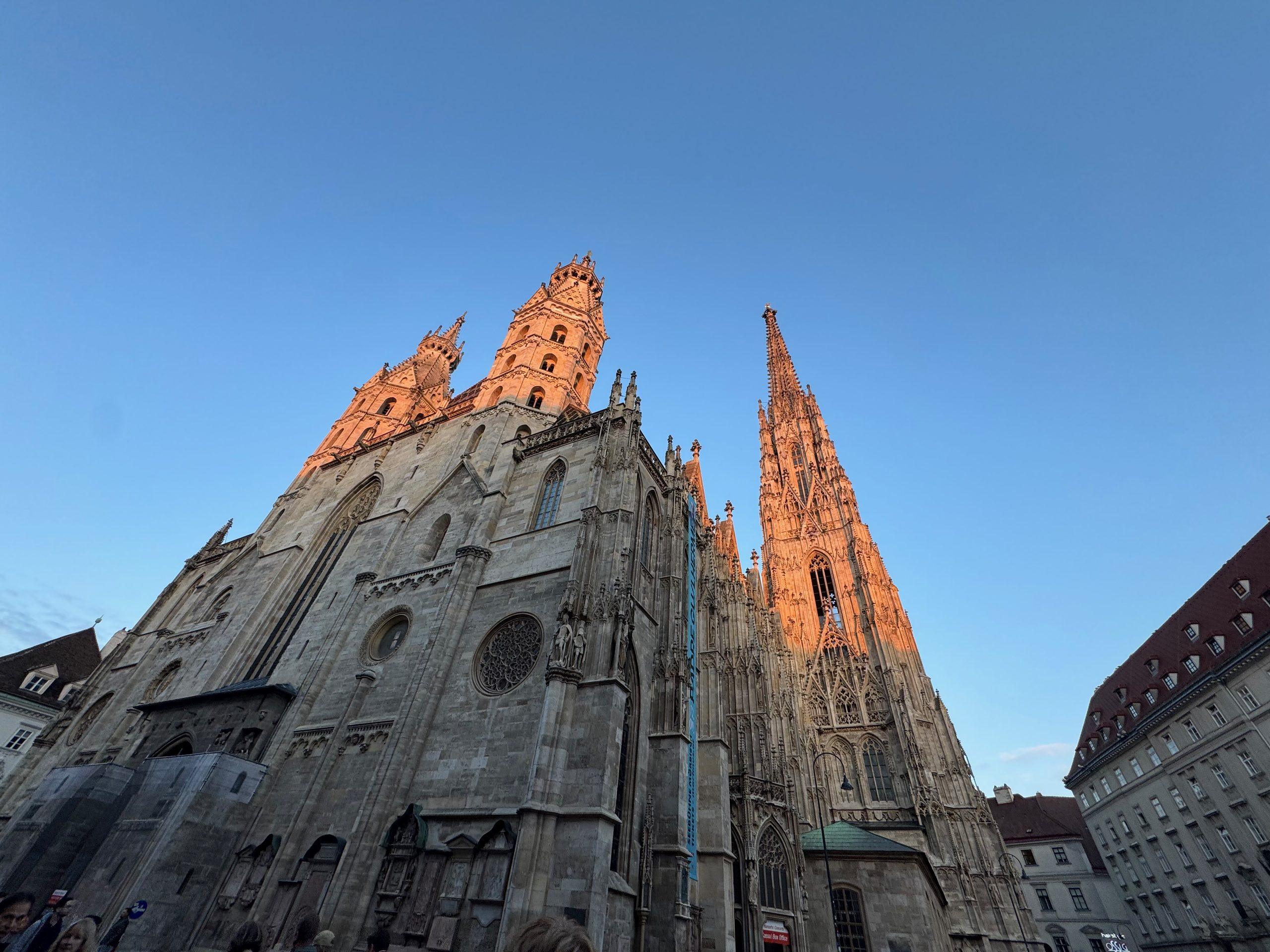
Day Five of Biking along the Danube River: Vienna to Bratislava
A bright, sunny day accompanied us as we left Vienna on the city’s excellent bike routes, headed to Bratislava, the capital of Slovakia. The ride was mostly through Danube-Auen National Park, a forested riparian zone of the Danube River. Although we couldn’t see the river on the elevated bike trail, a beautiful mature forest festooned with mistletoe and wildlife was our muse for the day. By lunch, we had reached the charming medieval town of Hainburg, known for its well-preserved city gates, historic walls, and hilltop castle ruins. We watched barges and paddleboarders ply the waters from outside a riverside cafe. Soon, the buildings of Bratislava appeared in the distance across the farm fields.
Many cyclists break up the ride from Vienna to Bratislava into two days, staying at Bad Deutsch-Altenburg for one night. However, on e-bikes, we had no problem happily traversing the 43 miles(70 km).
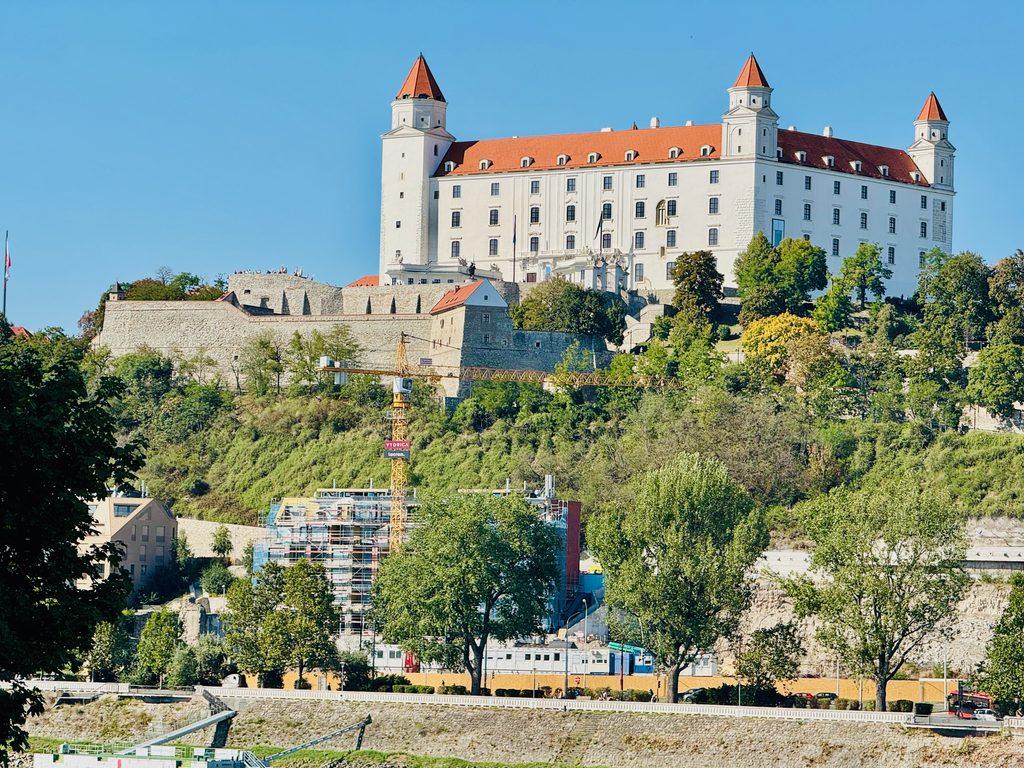
I was surprised by how much I liked this city. The impressive Bratislava Castle overlooking the river welcomed us. After checking into our accommodations and leaving our bikes in the bike storage, I headed out to a community fair in Old Town, steps away from our hotel. Today, the cobblestone lanes, lively cafés, museums, and quirky statues blend the history of Old Town with a modern vibe.
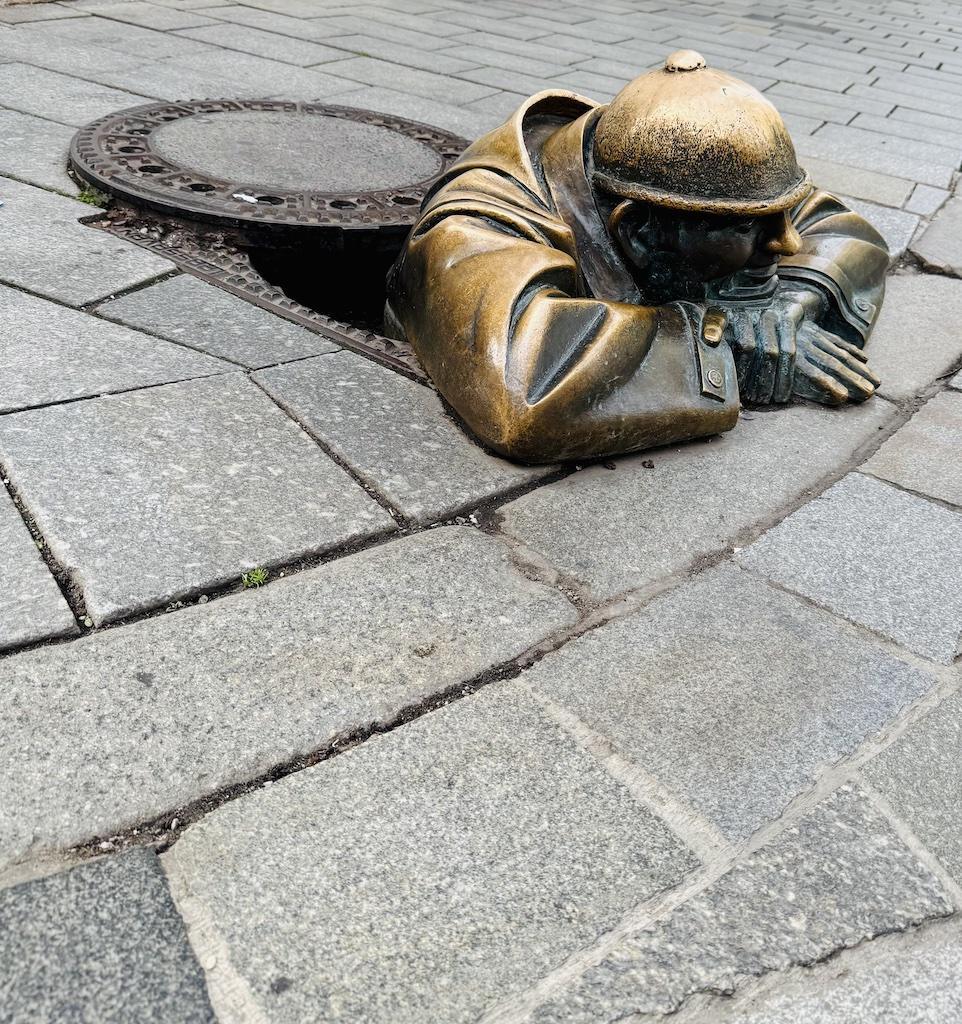
My favorite of Bratislava’s curious street art was the famous “The Watcher” bronze statue, a smiling sewer worker peeking out of a manhole. It was created in 1997 as part of an effort to bring humor and personality back to Bratislava’s Old Town after the Communist era.
What to Do in Bratislava
Take the time to explore this under-the-radar city. We did a walking tour to understand the history of this city with many evolutions over time. Bratislava is also an excellent stop to enjoy a boat trip on the Danube. After seeing it from the bike path for days, cruising on the river itself is a highlight. Don’t miss Slovakia’s traditional foods. Kofola, Slovakia’s iconic soft drink, is worth a taste.
The Hotel Devin was my favorite place we stayed on the trip. Stunning river views from generous balconies, spacious rooms, and a huge breakfast buffet with so many delicious dishes were highlights. Coincidentally, we ran into some folks who run a bike company in Japan, whom we met while biking the Shimanami Kaido. Small world!
Related post -> Biking the Shimanami Kaido and Yumeshima Kaido in Japan
Logistics of Biking along the Danube River
EuroBike provides access to an app with precise route guidelines. However, I also like to use my Komoot app, a popular route planning and navigation app for biking and hiking, simultaneously. There were times on this trip I wanted to do side trips. Komoot is perfect for planning out the route and giving voice directions to follow it. I use my premium Komoot account on all my bike trips.
For reliable data and precise navigation, I used an e-SIM in my phone. I used Sim Local’s unlimited e-SIM for fantastic coverage in all areas of Europe we visited. It’s easy to install, and it worked flawlessly. Use my code OUTDOOR to get 10% off a Sim Local e-SIM.
Transportation by train or bus is super easy along the Danube River. If we had any problems on the trip, we could have simply loaded our bikes on the train to go to the next stop. I use Omio for reliable transportation reservations that usually are cheaper than buying at the station.
Related post-> E-biking Trips in Scotland You Don’t Want to Miss
Wrap Up of Biking along the Danube River
If you are looking for an easy cycling trip with gorgeous scenery and immersion in history then biking along the Danube River on the well marked and maintained cycle path is just the thing for you. Note that you won’t be alone on the path as it’s a popular ride. However, since most cyclists are going downstream on the path it’s simple to space out. It’s even fun to catch up to groups you have met before on the trail as there is a community feel about riding the route.
We did the trip in early September to avoid the heat of the summer. It was an excellent time to enjoy the harvests of fruits and the ideal biking temperatures. We experienced some rain, however, it didn’t detract from the wonderful experience. With everything waterproofed, and lots of stops to get warm and dry, I enjoyed the quiet of the bike trail.
EuroBike is an excellent company if you want to leave all the planning and logistics to someone else. You can certainly find rental bikes, book your own accommodations, and carry your own gear on a self -designed trip. However, the years of experience and know how you from EuroBike is hard to match.
Pin it!


0 Comments